Pre-school support a right for all children
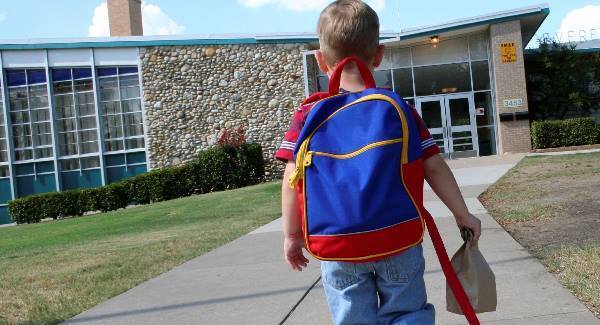
DECIDING on which pre-school your child attends is never easy, but when a child has additional needs to consider, the decision-making process is even more challenging, now depending on your child’s medical needs and level of disability, what pre-school settings are available in your area, and what supports you have to hand, such as access to an early intervention team and personal assistants.
The vast majority of children with special needs attend mainstream pre-schools, and only a small proportion of those require extra support that cannot be provided solely by staff in the pre-school of choice.
The Government hinges all policies related to education on the ethos of inclusion. In relation to pre-school education, a cross-sectoral group was set up a few years ago to develop a policy on inclusive pre-schooling for children with special needs and, as with everything to do with policy development, the wheels of progress turn at a painfully slow pace. However, if real inclusion is the objective, then real investment is needed in the additional training and support required by mainstream pre-school staff to be more open to and able for the enrolment of young children with all degrees of special needs in their facilities.
Currently, this is not the case across the board, with some parents expressing difficulties in sourcing pre-school placements.
Just as we have acknowledged that there is a ‘soft barrier’ to enrolling children with special needs in some primary schools, , the same barriers can equally be found in a number of pre-schools across Ireland.
This can be as a result of fears about a child’s disabilities and not being open to finding a way around the challenges that may present during the child’s placement, a well-warranted fear that support from outside services such as early intervention occupational therapists, speech and language therapists, physiotherapists, and psychologists may not be accessible to the preschool if they need advice; or the child requires specific interventions to make the placement even mildly successful; and in cases where the child evidently requires more medical, care-related and behavioural support, that no additional support will be available.
Parents will make decisions based on where they think their child will get the most support. For some children, a specialist setting is seen as the only option, but often times after making inquiries at mainstream pre-schools and getting negative responses. Many areas do not have special pre-school settings run by disability services so mainstream is the only option. For pre-school managers who have never had a child with special needs pass through their doors and who may be reluctant to take on a child with additional needs, my advice is to give it a go regardless of whether additional support may be available.
My daughter, with multiple disabilities, was the first with any form of additional needs in her pre-school and the manager was open to ‘giving it a go’. Yes, it was both physically and psychologically demanding on all staff, but they worked their way around issues. The staff went above and beyond what normally would be expected of them and maybe, had we had access to a personal assistant at the time, they would never have had the opportunity to learn what their true capacity and ingenuity really was.
I am acutely aware of children who have high levels of extra needs that do require additional assistance. Where this is the case, we really do operate a postcode lottery in terms of whether a parent can source funding for a personal assistant. Some disability services may provide a few hours assistance a week, while, in other areas, there is no budget at all for such provision which means a parent has to pay for it themselves.
Let’s remember that every child is entitled to the ECCE scheme, but only children of parents with deeper pockets or who are lucky enough to be attached to a disability service who can give a few hours support will be able to avail of one of the few Government schemes that was set up on the basis of equity for all children.
If some children can’t avail of the ECCE scheme because the necessary training and supports are not forthcoming, then policy makers and politicians can’t really claim that Ireland treats all of its children equally.
-