Opposition finds Boylan’s victory hard to swallow
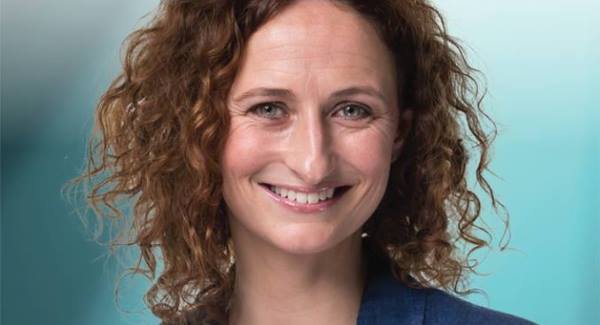
The unknown quantity, the mystery woman, the twice-failed Kerry South and Killarney election candidate, she of zero political experience, was off to Europe as easy as if she was stepping on a bus leaving seasoned campaigners looking like they’d just scaled Croagh Patrick barefoot.
She called herself an ecologist. She called herself a feminist. She called herself Ni Bhaoighealláin before she decided to stand in Dublin and Anglicised her surname in a move that in one fell swoop elevated her from seventh to first place on the alphabetically ordered ballot sheet.
She denied it was a cynical ploy, insisting she had temporarily adopted the Irish version out of (presumably failed) ambitions to become a Gaeilgeoir. Either way, it didn’t matter. She started out “practically anonymous” as her party leader Gerry Adams said, and now everyone knew her names. It shouldn’t have been a surprise.
The Sinn Féin activist’s other job was as project manager for the Global Action Plan, an environmental initiative funded by Ballymun Regeneration that bears the slogan, “Creating the Climate for Change”.
True to those intentions, she became a one-woman political climate-changer.
Sure, Mary Lou had been there before her but not as a poll topper. McDonald took the last seat in the constituency in 2004 and then lost it in 2009. Hers was the barefoot climb, not the cushioned bus ride.
Not even Eamon Ryan would attempt to tackle that kind of climate change but then Ryan was busy recycling his personal popularity after being tossed on to the political rubbish tip in the 2011 general election.
It was looking quite good for the former Green minister in the same way that it was looking very bad for Emer Costello.
“It certainly looks like it’s going to be a hill that’s maybe a little bit too steep to climb”, conceded Labour’s sitting MEP when she braved the RDS count centre around 6pm.
Shaken in appearance, consoled by supporters in vigorous group hugs and consoling ousted city councillors in turn, she accepted the almost inevitable but not without several defiant declarations of “we’ll be back.”
Fianna Fáil’s Mary Fitzpatrick had taken the long walk under watching eyes through the cavernous count venue earlier although with far less reason for discomfort than her Labour rival.
Fitzpatrick was still in with a shout for the third seat although she seemed determined to keep a neutral tone and an open mind lest she later be accused of unfounded optimism.
Insisting that it was too unpredictable to call, she cited — without naming — the unexpected performance of Ms Boylan. “just look at the candidate who was so successful in this campaign and has ran away with it.
“Who could have said somebody would come from nowhere, no track record in Dublin, and still take the lead and steal the first seat and probably have a surplus?”
It was a constituency and a campaign that was full of such questions.
How could all three sitting MEPs be in danger of elimination?
Why did Paul Murphy struggle to hang on to the Socialist Party vote?
What party would Nessa Childers choose to join next if she was reelected?
Why was Brian Hayes made to sweat instead of being the shoo-in he was expected to be?
And how will the translators in Brussels cope if Lynn Boylan ever succeeds in becoming a Gaeilgeoir?
Hard to swallow, hard to pronounce, but at the moment, a hard act to follow.