Health ministry: A poisoned chalice?
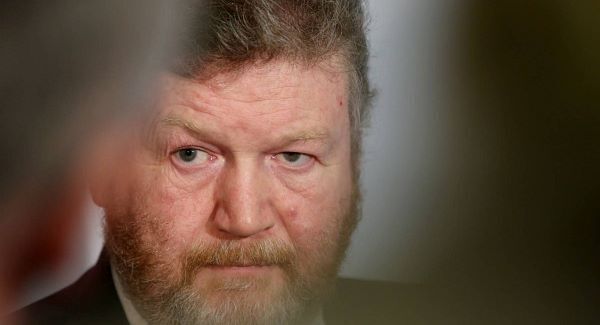
James Reilly does not rate highly with many people as health minister, but who would want his job, asks Catherine Shanahan.

Health ministry: A poisoned chalice?

FOR A flavour of how the general public ranks our health minister, log onto popular health consumer website irishhealth.com

An online poll conducted by the website in March asking respondents to grade James Reilly’s performance during his first three years in the job recorded a resounding thumbs down. Seven in 10 rated him “poor”. A miserable 4% considered him “very good”. The bulk of the remainder rated him “average”.

Almost 600 people took part in the poll, a not-insignificant sample.

One could, of course, argue that online polls are ridiculously easy to manipulate — but the opportunity is open to interested parties on either side of the fence.

Besides, there is a theme of negative responses in polls relating to Dr Reilly conducted on irishhealth.com, which has almost 160,000 registered users.

Six months into the job, an online poll asked if respondents believed the minister could improve the health service. A majority — three in five — said “no”. Sixteen months in, another poll asked if they believed the minister had improved the health service — 82% said “no”.

How anyone can be expected to glean positive results from a health service where change is regularly roundly resisted by unions and which is plagued by inefficiencies in financial management — as highlighted in a succession of consultants’ reports — is anyone’s guess.

Indeed, Dr Reilly’s department’s day-to-day spending had overrun by €100m for the year to the end of April, up from €55m.

On the upside, there have been some successes, notably in tackling hospital waiting lists. Forcing sick people to wait on trolleys for treatment has fuelled thousands of negative headlines over the years and a smart minister knows that this is a good place to start. Within weeks of coming to power, Dr Reilly announced the setting up of a Special Delivery Unit dedicated to reducing trolley numbers and clearing waiting lists.

A cynic might dismiss the SDU as a PR stunt designed to appease a public weary of hearing about waiting lists, but it does appear to have achieved some success. According to Health Service Executive figures from January, there has been a 34% fall in the number of emergency department patients waiting on trolleys for ward bed accommodation from January 2011 to January 2014.

Similarly, there had been an overall improvement in adult waiting lists. There were 1,764 adults waiting more than eight months for treatment at the end of January 2014, compared to 3,073 in the same period last year.

Another smart political move was to give nurses responsibility for counting numbers on trolleys, a decision the minister announced at his first Irish Nurses and Midwives Organisation annual conference in May 2011.

For years, there had been a daily clash between the HSE and the INMO, each disputing the other’s trolley watch figures. Now these figures rarely make the news. Of course, this was helped in part by the introduction in hospitals of an “escalation” policy where extra “beds” are placed on wards to take patients out of the emergency department. This has proved controversial among the nursing fraternity but the policy persists. From a number- crunching point of view, it helps keep trolley figures down.

Equally populist was the announcement in April 2011 by the minister of plans to dramatically overhaul the HSE in the knowledge that the public viewed it as an extremely toxic brand. He promised to legally abolish the HSE board structure by the end of the year.

It took a bit longer than planned, but finally, in July 2013, the Health Service Directorate replaced the HSE board, in line with the Government’s blueprint for health reform ‘Future Health’. It is unlikely that the change registered in the public consciousness. There has been so much shifting of deck chairs among HSE management elite that while titles may change, faces remain largely the same.

Anyway, a name change from board to directorate is meaningless unless one is aware of the context in which it has taken place — as a stepping stone to an unbelievably ambitious and extremely convoluted plan to reform the health service with an end point of introducing universal health insurance, Dr Reilly’s holy grail.

Alongside the more obvious successes, there has been much that caused disquiet, in his personal as well as political life. In July 2012, it emerged that Dr Reilly was to become the first member of an Irish government to be named in Stubbs Gazette — a publication that lists debt defaulters.

Dr Reilly was one of five investors in a nursing home against whom a €1.9m judgment was made by the High Court. The court set a deadline of April for Dr Reilly and the four others to pay over the money but, because of “complex litigation” and protracted negotiations, the deadline was missed.

THE naming of the minister was embarrassing personally and for the Government.

There was further furore later in the year, with Dr Reilly extremely lucky to survive following allegations he bumped a site in his own Dublin North constituency up a list of priority sites selected as locations for primary care centres.

Although an internal audit found “no impropriety” on the minister’s part, his junior minister, Róisín Shortall, who resigned over the affair, described his explanation about additions of 15 sites to her original list of 20 as “absolute codswallop”. In explaining his moves, he stood up in the Dáil to argue what he did was based on “logistical, logarithmic progression”. The minister arguably survived because he stood by his party leader during a political heave in 2010.

There have been other unpopular moves, including the decision to scrap the mobility allowance and the motorised transport grant for people with severe disabilities. Such was the backlash that although the mobility allowance scheme was closed, payments continue to be issued at the rate they were payable on the date of closure of the scheme (February 26, 2013) on instruction from the Department of Health.

The HSE said last week that, from an operational perspective, “this means that the cohort of people who are currently in receipt of the Mobility Allowance will continue to be paid by the HSE at their existing rate until a further instruction issues from the Department of Health”.

Failure to get actual building work underway on the National Children’s Hospital is another sore point. Last November, the minister made a big fuss of outlining progress made on the “first anniversary of the Government’s decision to locate the new children’s hospital in Dublin 8, co-located with St James’s Hospital on its campus”. The project has taken so long to get off the ground people are starting to doubt it will ever actually happen.

Hiking of the prescription charge for medical card holders from 50c to €2.50 didn’t win the minister any fans. GPs have argued that cost, any cost, is a barrier to patients seeking care.

Then there has been the alleged gradual stripping away of discretionary medical cards from the old, the vulnerable, and the infirm (roundly denied by the Government) in a move that GPs claim is designed to fund the Government plan to introduce free GP care for the under-sixes. This is perhaps the minister’s most populist move.

It’s hard to drum up objections among the electorate to anything that comes for free, especially where kids are involved. However, as GP after GP argued at last week’s IMO conference, what is the point in giving free GP care to all under-sixes, when the parents of many are more than able to afford the fee?

What’s more, the under-sixes’ gain is at the expense of those with long-term illness. This is perhaps the biggest failure of our minister for health. The original plan was to offer free GP care first and foremost to those with long-term illnesses, in other words, those with an actual need. It hit too many hurdles along the way and the plan was abandoned.

The Government, desperate to get away from this failure, has even replaced the contents of a press release on the Department of Health website entitled “Free GP care for persons with long-term illness” with a blurb about free GP care for under-sixes.

TO SAY GPs are incensed is an understatement. The provision of free GP care to under-sixes comes with a new contract for doctors. They are so opposed to the contract that they have yet to even enter “talks about talks”.

Opening up free access to GP care is essential if the Government is ever to succeed in its ultimate plan to introduce universal health insurance (UHI), a system they say will mean equal access to care for all. A white paper outlining its UHI plans was described at the IMO conference as “indecipherable goobledeegook”.

It does seem incredibly complicated and is yet to be costed. Ongoing comparisons with the Dutch health insurance model have sent chills down the spine in light of the spiralling costs in the Netherlands. However, the Dutch model involves a typical payment in excess of €5,000 towards the cost of long-term care, an element not included in our proposed model. Also, the Dutch system is primarily funded by premium payments while here, the Government insists general taxation will prop it up.

The scale of reform taking place in the health service, albeit at a snail’s pace, sometimes gives the impression the minister is simply winging it as he goes along. Every day, there’s another fire to fight. He’s fortunate, or clever, enough to have a primary care minister —Alex White — to take the heat from GPs.

They have a legitimate crib, in that the Government plan for reform is largely predicated on taking much of the activity out of acute hospitals — where treatment is at its most expensive — and bringing it back to the community, which GPs argue is incredibly under-resourced. Those resources are about to be stretched further with free GP care for the very young.

Yet despite the impression of winging it, much of what the minister has done is outlined in brief in the Programme for Government and in nauseating detail in ‘Future Health’. He does, it appears, actually have a plan. Whether he can bring people along with him or whether the scale of reform is simply too ambitious and/or too divisive for either staff or the public to entertain, remains to be seen.

Already his job has been speculatively linked to Transport Minister Leo Varadkar in the upcoming Cabinet reshuffle. Mr Reilly says he’s in for the long haul but the bottom line is winning votes. If viewed as a liability in this respect, he may be in for the chop. But who in their right mind would actually want his job?

x

More in this section

Revoiced

Newsletter

Sign up to the best reads of the week from irishexaminer.com selected just for you.

Cookie Policy Privacy Policy Brand Safety FAQ Help Contact Us Terms and Conditions

© Examiner Echo Group Limited