The strong arm of the law
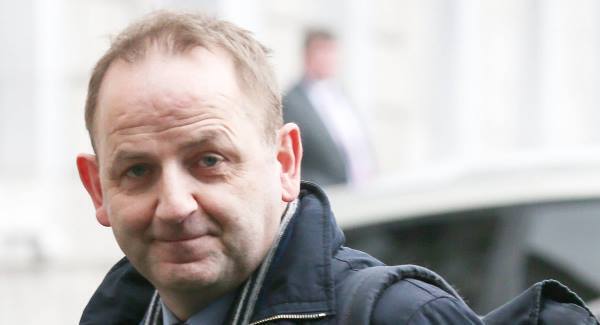
Garda whistleblower Sgt Maurice McCabe says hundreds of Pulse records were ‘erased and falsified’ after he highlighted serious malpractice in the cases to top brass, writes Michael Clifford.

The strong arm of the law

THE hassle started when Sergeant Maurice McCabe made to leave the hotel room.

He got up from his chair, two boxes of documents in his arms, and headed for the door. The documents were evidence, McCabe believed, of serious garda malpractice.

His progress was impeded by Assistant Commissioner Derek Byrne. The senior officer told him that he wasn’t leaving with the files. McCabe claims that Byrne restrained him by the shoulder and arm, and then blocked the door. As far as the assistant commissioner was concerned, the files weren’t going anywhere.

There were two other officers present — Chief Superintendent Terri McGinn and Sergeant Dominic Flynn, who was there as a representative of McCabe’s staff body, the Association of Garda Sergeants and Inspectors.

Flynn got up and moved between the two men, trying to bring calm to the situation. The assistant commissioner then took the box from Sergeant McCabe, settling the matter.

The scene was a rented room in the Hillgrove Hotel in Monaghan. It occurred on October 11, 2010, and can now be seen as the first steps towards what may ultimately turn out to be a major shift in the culture of the national police force.

The meeting in the Hillgrove Hotel was called to inform McCabe of the results of a series of complaints he had made about malpractice and corruption in the force. McCabe had been station sergeant in Bailieborough, Co Cavan, since 2004. He had arrived in the job as a very well-regarded officer. Prior to that, he had been station sergeant at Clones in Co Monaghan.

By his account, he first began to encounter problems at Bailieborough about two years after he began work there. Issues which he regarded as major were not being addressed; detected offences not being followed up; crime not being investigated.

Later, he would estimate that up to 40 offences a month recorded at the station received little or no follow-up or investigation.

As station sergeant, he found himself between a rock and a hard place: Responsible for the smooth running of the station, but unable to receive the support of management in addressing problems.

He made what he regarded as repeated efforts to get some back-up, but he reckoned none was forthcoming. The final straw, he would later claim, was a case involving alleged sexual harassment of a female officer by another member. According to McCabe’s later allegations, this issue was never addressed by management despite repeated attempts by him to have it done so.

As a result, he decided to throw his hat at it. He resigned as station sergeant on March 19, 2008, with a view to reverting to an ordinary sergeant’s position within the station, heading up one of the units.

Later, McCabe would claim that he had acted impulsively in resigning. According to one source familiar with the case: “He was trying to call their bluff, get some back-up from management by threatening to resign, but they called his bluff and let him go.”

One interpretation is that management didn’t want the hassle of a station sergeant pulling members up for not doing the job or serving the public properly. Better to have somebody who might turn a blind eye and get on with the day-to-day stuff of keeping heads above water.

Within weeks, McCabe regretted his impulsive decision. He applied for his old job, but was turned down. Nobody else had been appointed as station sergeant at the time, and to this day the incumbent in Bailieborough is acting on a “temporary” basis.

By then, he was upset at his treatment. He felt he had been doing his job to a standard that wasn’t welcomed by management because it meant more work. He approached the legal representative of AGSI with a view to pursuing a grievance procedure, as per practice in the public service. On hearing of his problems, the AGSI solicitor suggested there was more at issue than a grievance, and he should lodge a formal complaint.

Out of that procedure grew a dossier of cases which McCabe claims illustrated serious malpractice. The cases ranged from officers turning up drunk for duty to a complete failure to investigate the most serious of criminal complaints.

In total, he made 42 allegations of malpractice, wrongdoing or corruption that he had encountered at Bailieborough. These included “bullying and sexual harassment” of a female garda; non-investigation of a number of complaints, including one of “serious injury road traffic collision involving the loss of an arm”; a number of “alleged assaults”; an “alleged rape”, and “alleged hijacking, false imprisonment and sexual assault”. He also complained of “members reporting late and drunk for duty”. His complaint also included the observation that 40 incidents a month were not followed up on.

The investigation into McCabe’s allegations was led by Assistant Commissioner Byrne. At the time of most of the cases complained of, Byrne was the assistant commissioner for the Sligo division, which included Bailieborough.

The investigation reached a preliminary conclusion in autumn of 2010. McCabe was invited to a meeting at the Hillgrove Hotel in Monaghan to be informed of the findings.

At the meeting, Byrne handed McCabe five sheets of paper outlining the findings. Eleven of the complaints were “upheld”, 22 “not upheld”, and five were “ongoing“. (Some of the complaints were interlinked).

McCabe was taken aback. He found it difficult to fathom that many of the most serious allegations, which he believed to be fully backed by the evidence, had been rejected. Among the complaints not upheld was one in relation to the investigation of the terrorising of mini-bus passengers, including sexual assault, by a group of drunken men. The case had been settled by a garda who facilitated the offering of €150 in compensation to the female complainant. (This case was reported in last Saturday’s Irish Examiner).

To demonstrate how he believed he was right, McCabe went out to his car, and returned with two boxes of documents. Included were printed-off pages from the Pulse system, which, McCabe said, illustrated how hundreds of cases were not followed up on, as per his complaint.

This prompted the confrontation in the hotel room between Byrne and McCabe, with Byrne taking possession of the documents.

Following the meeting, McCabe made a complaint against the assistant commissioner, accusing him of assault. The matter was investigated, a file sent to the DPP, which ruled that no prosecution was merited.

As a result of the incident in the Hillgrove Hotel, Byrne was relieved of responsibility for further investigation into McCabe’s cases.

The documents he took possession of are understood to have been returned to the Cavan/Monaghan division.

What is now known is that within the following six months or so, the Pulse entries for many of the cases that McCabe had highlighted were changed. This is completely contrary to Garda regulations, and effectively wiped hundreds of detected offences from the record.

For instance, dozens of these cases involved recording motorists driving without insurance. No charge or summons was issued. The changed record, however, changed the Pulse entry in many of these cases to “undetected“. How exactly a motorist could be “undetected” driving without insurance is not clear.

Alterations to documents also involved changing the entire narrative of detected offences. One example involved after-hours drinking, at 2.50am in May 2010. The original narrative read: “Pub [named] checked and found in breach of liquor licencing laws. At least 40 persons on premises. Fresh drink still being served. Night in full flow. Proprietor on premises but very intoxicated.”

The incident was marked as “detected” and the proprietor as a “suspect” offender, but there was no follow-up by investigating gardaí.

Some months after the meeting in the Hillgrove, where this case was among those presented by McCabe, the Pulse entry was changed.

“Premises checked. All in order,” the new narrative read. The incident was now marked as “undetected”. How exactly a check on a public house where all is in order ends up on Pulse, not to mind written up as “undetected”, is anybody’s guess.

In the round, McCabe would later claim that he had proof that hundreds of these records were “altered, erased, and falsified” in the months after he had brought them to the attention of senior management.

The outcome of the meeting in the Hillgrove Hotel convinced McCabe that the truth would not be accessed within the force. Somebody less determined might have left it at that.

“He wouldn’t let it go,” one source said.

“He felt he’d been wronged, and he knew that he was right in the cases he’d complained about. Nothing was getting done about any of it. Any other time something like this ever arose, it eventually ran into the sand.”

In January 2012, McCabe made another complaint. The superintendent, who had been at Bailieborough during the sergeant’s turbulent time there, was due for promotion. McCabe was objecting to the commissioner’s recommendation for the promotion on the basis of the malpractices that had occurred under the superintendent’s watch.

McCabe brought his complaint to the then-confidential recipient, Oliver Connolly, whose role was to receive complaints from members in confidence and pass them on for investigation. This complaint involved 12 different cases.

Connolly passed on the details of the complaint to the Department of Justice, and the matter was referred to the commissioner. Effectively, Commissioner Martin Callinan was investigating his own decision to promote the superintendent. Callinan found that there was no substance to the complaint.

On February 9, 2012, Connolly met with McCabe to deliver the news that his complaint was rejected. By then, McCabe was taping all meetings to do with his ongoing difficulties. He believed himself to be isolated within the force, and he believed efforts had been made to discredit and smear him.

Elements of that conversation would eventually be read into the Dáil record. Connolly was receptive to McCabe’s difficulties, but he also pointed out what he regarded as political realities.

“I’ll tell you something, Maurice, and this is just personal advice. If Shatter thinks you’re screwing him, you’re finished,” Connolly said at one point.

Fast-forward nearly two years, and the focus of malpractice in the force had switched to abuse of the penalty points system. Assigned to Mullingar’s traffic corps, McCabe came across wholesale abuse. He discovered that his concerns were shared with Garda John Wilson, whom he knew from his time in Clones.

Their efforts to have the abuse highlighted have been well aired. Ultimately, last January, McCabe’s anonymity was lost due to his appearance at the Public Accounts Committee to give evidence on the penalty points matter.

On February 5, Mick Wallace read into the Dáil record sections of the transcript of McCabe’s conversation with Oliver Connolly, dating from two years previously. The Independent TD read another section into the Dáil record in December 2012, but this time it was different. McCabe was no longer an anonymous whistleblower. A number of public figures who had encountered him vouched for his integrity.

The political timing was also notable. Minister for Justice Alan Shatter was under pressure for his handling of the penalty points matter, and now this. Fianna Fáil smelt blood.

The Irish Examiner was the only paper to report Wallace’s comments, but. following the report, Fianna Fáil justice spokesman Niall Collins raised the matter in the Dáil.

Fianna Fáil latched onto this element of Shatter’s difficulties. Contact was made with McCabe through John McGuinness, who had got to know the garda from his interactions with the Public Accounts Committee.

Fianna Fáil leacer Micheál Martin met him in Portlaoise on a Friday evening, and McCabe handed over a dossier of cases. The following Tuesday, Martin told the Dáil of the shocking contents of the dossier.

On February 27, the Taoiseach appointed barrister Sean Guerin to review the dossier to see whether further investigation was required. Guerin is expected to report back to the Taoiseach early next week.

x

More in this section

Revoiced

Newsletter

Sign up to the best reads of the week from irishexaminer.com selected just for you.

Cookie Policy Privacy Policy Brand Safety FAQ Help Contact Us Terms and Conditions

© Examiner Echo Group Limited