Health budget in firing line over department overspend fears
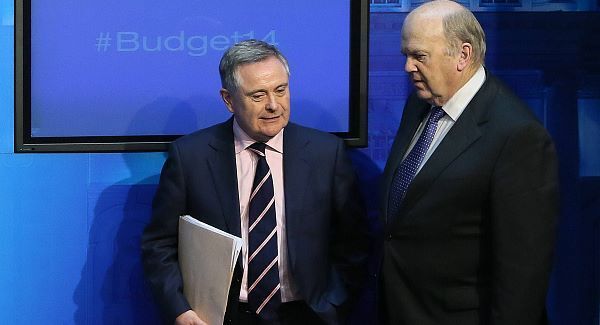
Public Expenditure Minister Brendan Howlin should drop his faux surprise over concerns the HSE will fail to meet its Budget 2014 cutback targets — he has been repeatedly warned about the scenario since October, writes Fiachra Ó Cionnaith

Health budget in firing line over department overspend fears

He can't say he wasn’t warned.

On Sunday, Public Expenditure and Reform Minister, Brendan Howlin, chastised the HSE over growing concerns it cannot “live up to” its Budget 2014 targets.

Speaking on RTÉ’s The Week in Politics programme, the Labour TD said, despite an independent report commissioned by HSE bosses showing almost €200m in the €619m cutbacks plan will not happen, the service is still obliged to find the savings.

“Like every other department, I know it is going to live up to the targets because it is part of the overall budgetary arithmetic,” he said.

The no-nonsense stance was sparked by a PA Consulting report which said the HSE will only bring in €212m through the Haddington Road deal, instead of the €290m planned.

It further stated €108m in “unspecified pay savings” is not just unspecified, but non-existent.

Effectively, the situation means that just four months into the year the HSE is already holding its hands up to say the Budget 2014 plan has a €186m, “unrealisable”, Haddington Road hole running through it — an issue that, if unresolved, poses potentially serious questions for patient care.

But while Mr Howlin’s insistence that the level of savings must still occur has been met with some surprise, in many ways it shouldn’t.

For the past six months senior health service officials, including Health Minister Dr James Reilly, have raised clear concerns over whether the level of cuts to the system this year can be achieved.

The current financial gap, which Mr Howlin insists must be plugged, is the inevitable result of the issue failing to be addressed.

THE problems first emerged last October when the lead-up to Budget 2014 was dominated by 11th-hour discussions between Dr Reilly and Mr Howlin over whether health could sustain any more reductions.

With budget day fast approaching and no end to the impasse in sight, a deal was struck allowing Mr Howlin to have full oversight of all health cuts as they occurred.

The agreement, which both departments insist was their own decision, was signed off on in a bid to ensure the outlined savings would be implemented, and that Mr Howlin would have a clearer view of what could be achieved.

It effectively resulted in Dr Reilly being ordered to implement the reductions as planned.

Despite holding the coalition line, Dr Reilly’s comments at the press conference announcing the then €666m in cutbacks underlined his department’s private insistence the scale of the targets — including Haddington Road — may not be met.

“We’re going to face a really challenging year,” the minister said as the figure was revealed. “This is the year we get out of the bailout, but for health this is going to be our toughest year.

“We are facing into the most challenging service plan [a HSE document based on the Department of Health’s budget allocation] in our history,” he warned.

Two months later, in December, Mr Howlin’s target for health budget cuts again faced scrutiny after repeated delays to the HSE 2014 service plan — a document which provides specific details on how the Department of Health’s funds will be used on the frontline.

After two delays to the document’s publication, meaning it was not published for a record 41 days, the report was eventually released with two key changes and at least one glaring gap.

Despite Mr Howlin initially insisting on a €113m medical card cut, this was reduced to €23m — which factored into the reduction of planned savings from €666m to €619m. The figure was reached with the help of a €108m cut described as “unspecified pay savings” which raised concerns the HSE’s numbers did not add up.

While HSE director general, Tony O Brien, publicly said the plan was challenging but could work, in private correspondence to Dr Reilly he said the initial medical card cuts were “against the advice of the HSE and the Department of Health.”

Concern over the health budget grew further in recent days after news the system was €24.5m over-budget by the end of January.

After the PA Consulting report which has led to the latest public comments from Mr Howlin was published, a HSE spokesperson said there is no more room to manoeuvre on certain issues.

Despite accepting the importance of the Haddington Road savings, the spokesperson said only 73% of the health service target could be achieved.

She said the targets are “unrealisable” and that the €108m in “unspecified” savings could only be done through “a decrease in health services activity.”

She added that the PA report “demonstrates the practical difficulties that exist whereby all expected budget reductions will not be achievable through reductions in payroll costs.”

The document is now with Mr Howlin and Taoiseach Enda Kenny “to provide an informed discussion with respect to the next steps.”

DR Reilly declined to comment on the latest flare-up. However, given the Department of Health’s long-term concerns over the scale of cuts — which are destined to increasingly dominate the health agenda as the year progresses — the words ‘we told you so’ are probably not far from officials’ minds.

But, as with any health issue, the ongoing ministerial row is more important than Cabinet one-up-manship; the numbers not adding up have far graver consequences.

It is understood that over the coming weeks there are likely to be fresh, detailed discussions between Dr Reilly and Mr Howlin over how the planned savings from health can still be reached.

With a €186m shortfall, only a handful of options are available.

The most obvious - more cuts to staff pay, or reductions in the use of agency workers, which as the HSE has stated will inevitably result in a reduction in frontline services for patients - carry their own unwanted baggage.

Health’s budget problems could also be balanced in other departments, a plan which would be less than popular across the coalition. Ultimately, someone must pick up the tab. And with every area facing their own money woes, it’s unlikely departments will be queuing up to foot the Reilly-Howlin bill.

More in this section

Revoiced

Newsletter

Sign up to the best reads of the week from irishexaminer.com selected just for you.

Cookie Policy Privacy Policy Brand Safety FAQ Help Contact Us Terms and Conditions

© Examiner Echo Group Limited