Need for regulation of lobbying is clear
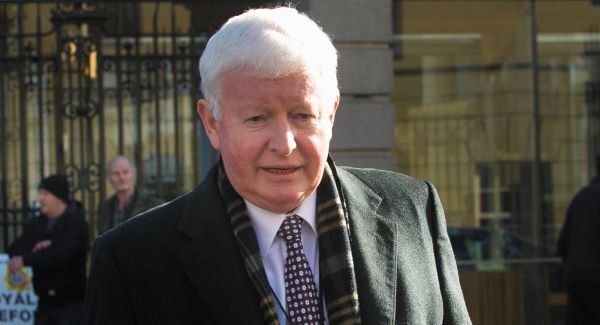
The statement by Ruairi Quinn, the education minister, that Mr Flannery would have spoken to him about concerns regarding State funding to the charity Rehab for its lottery scheme “but not in any kind of lobbying way” begs the question of what exactly is and is not lobbying.
Lobbyists, while perhaps not held in the highest regard by the public, nevertheless often provide invaluable and entirely legitimate services to public policymakers.
Across the democratic world, lobbying governments and policy- makers is considered integral to the process of policy formulation. The work carried out by interest groups and charities of all hues is a central and legitimate part of the policy process in liberal democracies.
They are an accepted element within society that provide input and feedback into the political system, thereby helping develop policy outputs which drive political and economic aspects of our daily lives. Lobbyists are in essence conduits between governments and groups within society.
Lobbyists range from the social partners to groups who advocate for specific causes. They might not like to call themselves lobbyists but the major sectional economic interests in Irish society, the Irish Farmers’ Association, the Irish Congress of Trade Unions, and the Irish Business and Employers Confederation clearly are. They have representatives on the boards of state companies, on various advisory and review bodies, and at European level.
They have adequate resources to carry out their own research and to analyse relevant decisions that might be taken at various levels. They have excellent access to the bureaucracy at both the national and international level and they lobby continuously. Self-regulating professional groups, such as accountants, doctors, and lawyers, are also lobbyists.
Cause-centred groups, who attempt to influence policy outcomes in specific areas are lobbyists and have been significant players in the Irish policy process since the early 1980s.
Some are ad hoc groups, formed to press for a single measure, as has become prevalent in the area of moral politics, for instance divorce and abortion legislation, and some are organisations or charities with a permanent mission.
Cause-centred groups have also become increasingly influential and vocal during referendum campaigns on European treaties and were active on the yes campaign and in particularly on the no campaign in the guise of Libertas in the two referendums on the Lisbon treaties in 2008 and 2009.
Beyond these two categories, a new form of group activity has emerged which has involved increasingly vigorous lobbying on behalf of business or private interests, in an attempt to influence specific government policy, as distinct from the sectional demands of the wider business community.
This was a feature of evidence heard between 1997 and 2010 at the Flood/Mahon and Moriarty tribunals of inquiry into rezoning in Co Dublin and payments to politicians, respectively. Moreover, questions of private influence, access and expectation have come to the fore of public policy debates given the catastrophic collapse of the economy since late 2008 and the role played by lobbyists in contemporary Irish politics.
Up to very recently, Ireland had literally only a handful of professional lobbyists; ie, specific companies which lobbied governments and legislators on behalf of paying clients. Preferring to be known as public affairs consultants, they catered mostly for foreign business interests wishing to operate in Ireland.
Lobbying politicians is now, however, emerging as a specialisation within public relations and legal firms. Firms employing people with direct experience of the political world is also a practice that is growing. The list of professional lobbyists now includes former government press secretaries, former officials of all the major parties, some ex-TDs and a host of former journalists.
In general these lobbyists are of the view that what they are doing is providing advice and access to the decision-making process for business people who are ignorant of the public policy process and need a specialist to introduce them to the myriad workings of government.
Ireland remains a small society, with a peculiar electoral system, which fosters a form of localism unsurpassed in Western Europe. Such localism benefits the small number of influential Irish lobbying firms, certainly no more than 10, who have copperfastened their position by employing former political actors to ensure access to the lobbying market.
Frank Flannery’s work for Rehab in lobbying the Government could be seen in this context. The crucial difference, however, is that while he was lobbying for Rehab, and getting paid for it, he was a key strategist for Fine Gael, the main government party. As director of elections for the upcoming local elections and direction of organisation and strat-egy of what is currently the State’s best supported political party, he was in a unique position to be list-ened to by those he was lobbying.
The two key aspects of lobbying activity in democratic societies are access to decision-makers, whether public representatives, civil servants, or political advisers, and the expectation those lobbyists have as a result of that access. Mr Flannery’s access seems unparalleled and serves as a reminder of why lobbying should be regulated.
The regulation of lobbyists in democratic societies allows citizens to openly see what lobby groups are doing and who in Government they are talking to, with the result that over time, citizens become less cynical about the work and nature of lobby organisations, and indeed politicians.
It also tempers the unreasonable expectations that some lobbyists might have, given that their lobbying activities are available for public scrutiny. In essence, lobbying regulation exists so that the public can know who is lobbying who about what.
Across the globe, lobbying regulations include a cooling off period whereby those who serve as politicians, advisors, or civil servants cannot immediately become lobbyists once they have left public office. It is an essential part of keeping citizens trust in public life and ensuring that parliaments are not seen as cosy cartels for political insiders.
The Frank Flannery lobbying episode sums up perfectly why this is necessary in Ireland. The current Government’s regulation of lobbying bill cannot come soon enough.
*

CONNECT WITH US TODAY



Be the first to know the latest news and updates