Great war ghosts haunt Crimea as Putin's plans unclear
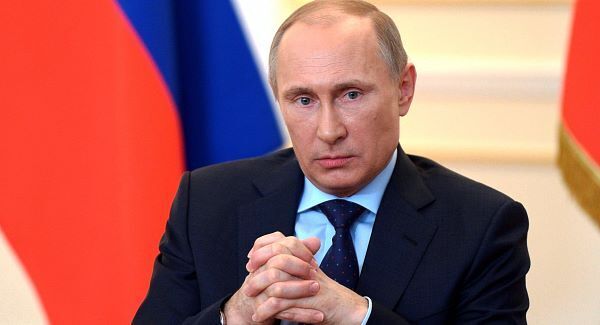
We don’t yet know what Putin’s real agenda is generally with Ukraine and specifically with Crimea. But it echoes the murky events that eventually led to the first global war, writes James G Neuger

Great war ghosts haunt Crimea as Putin's plans unclear

WAR was coming to Europe and the French president Raymond Poincare was literally at sea.

Poincare’s trip across the Baltic Sea to St Petersburg to shore up France’s alliance with Russia in July 1914 cut him off from outside contact for days, adding one more layer of uncertainty to the chaotic, ultimately failed diplomacy that ended in the First World War.

A century later, as Russian president Vladimir Putin menaces Ukraine, the world hasn’t banished the risks of the miscommunications, clumsy judgments and botched intelligence that blindsided Europe in 1914, said Max Hastings, a British military historian.

“There’s a huge risk of a miscalculation,” said Hastings, whose latest book, Catastrophe, covers the descent into the First World War. “We don’t yet know what Putin’s real agenda is. Is he trying to restore Russia’s grip on the whole Ukraine, does he want to re-annex the Crimea?”

To be sure, Hastings said, there is no appetite for war in the West and Putin has a rational sense of Russia’s limits. The major powers of 100 years ago shared a willingness to use force that has since been bred out of Europe’s DNA, one of the reasons the European Union was awarded the Nobel Peace Prize in 2012.

Historians are still puzzling out how a local act of terrorism (the assassination of the heir to the Austro-Hungarian throne in Sarajevo, Bosnia on June 28, 1914) could set in motion a chain of events that led to the German army marching into neutral Belgium six weeks later.

“I shall never be able to understand how it happened,” the novelist, Rebecca West, is quoted as saying in The Sleepwalkers: How Europe Went to War in 1914 by Christopher Clark, a history professor at Cambridge University.

Clark’s book blames murky, often undemocratic national decision-making in a European state system that was “opaque and unpredictable, feeding a pervasive mood of mutual distrust, even within the respective alliances”.

The wars of the 20th century gave birth to the academic field of conflict prevention and the arsenal of early-warning systems, fact-finding missions and confidence-building measures practised by the likes of the United Nations and the Organisation for Security and Co-operation in Europe. So when Russian troops seized key installations in Ukraine’s southern Crimea region on March 1, Western governments didn’t have to rely on far-flung emissaries to decipher reports in politically slanted local newspapers or eavesdrop on the drawing-room conversations of princes and generals. All they had to do was pick up the phone.

President Barack Obama did just that, speaking to Putin for 90 minutes. Whatever the two sides took away from that conversation, it provided better intelligence than Europe’s leaders got in 1914. France, for example, was blanked out of news from Belgrade for 11 days because its ambassador was ill.

But even in the era of Wikileaks, the US National Security Agency and the Washington-to-Moscow hotline made famous during the Cold War, there is wide latitude for garbled messaging and misunderstandings — with the added danger that they transpire in real time.

Putin surrounds himself with “a very closed and quite small decision-making circle,” said Neil Melvin, a senior researcher at the Stockholm International Peace Research Institute. “It seems as though they know how far they can push this, and actually how difficult it is for the western powers to make a substantial response.”

Russia has spent hundreds of years pushing its western neighbours, heeding the dictum attributed to Catherine the Great in the 18th century that the only way to protect the country’s borders was to expand them. Napoleon’s invasion in 1812 and Hitler’s in 1941 dramatised the weaknesses of Russia’s defences.

“Russia has had, throughout the centuries, both the advantage and vulnerability of a vast contiguous territorial empire,” Strobe Talbott, president of the Brookings Institution, an independent public-policy research organisation in Washington, said in a phone interview.

Russia’s security perimeter reached its widest extension after World War II when, under the Soviet Union’s ideological guise, Stalin’s empire stretched to the Elbe river, communist East Germany’s border with the West. Putin has mourned the Soviet Union’s implosion as the biggest geopolitical catastrophe of the 20th century.

“Putin is behaving like the Soviet Union,” Andrei Zubov, a historian and professor in the philosophy department at Moscow State Institute of International Relations, which is affiliated with the Russian Foreign Ministry, said by phone. “He’s practically continuing the Brezhnev Doctrine. The sense of the Brezhnev Doctrine was to say that there’s a certain space outside the Soviet borders which is ours. That’s what Putin is continuing.”

UKRAINE occupies a special place in the Russian psyche. Home to the first organised eastern Slavic state, it ceded power to Moscow in the 14th century and remains the stuff of Russian myth. With much of eastern Europe now in the EU and Nato, Ukraine is both Putin’s last line of defence and the nucleus of his planned Eurasian economic union.

“It’s very, very hard for a lot of Russians to get used to the idea that Ukraine, of all of the former Soviet Republics, would be an independent state,” said Talbott, a former US Deputy Secretary of State.

While the March 3 emergency session on Ukraine of the UN Security Council in New York or the hastily convened summit of EU leaders in Brussels grabs the headlines, part of the 21st-century diplomacy industry is the web of non-governmental organisations operating on the grassroots level.

Groups like the Global Partnership for the Prevention of Armed Conflict weren’t around in 1914. Based in The Hague, GPPAC is trying to bring together Ukrainians of all persuasions — from ethnic Russians to Crimean Tatars — and political stripes to keep people talking, not fighting. Success is hard to measure, said Zahid Movlazadeh, the group’s co-ordinator for eastern Europe.

“Peace-building in general is a long-term process,” he said. “We’re trying to decrease and de-escalate the tensions and there is some immediate evidence of that, but we have yet to assess to what degree they are effective.”

The future of Ukraine, Russia and East-West relations may hinge on those under-reported efforts. History is full of revolutions that careened out of control — most recently the uprising on Kiev’s Independence Square that toppled Ukraine’s pro-Russian president, Viktor Yanukovych.

Crimea is under Russian military occupation and citizens there, 59% Russian, will vote on March 30 on wider autonomy.

A breakaway would add Ukraine to the list of countries on Russia’s periphery — already including Georgia and Moldova — which have territories partly under the Kremlin’s domination.

Such a “lasting conflict” with an independent Crimea loyal to Russia is the central scenario of Pal Dunay, in charge of international security courses at the Geneva Centre for Security Policy.

However, a pro-Russian revolt in other parts of eastern Ukraine would raise “the question whether Russia has a plan B”.

Bloomberg

More in this section

Revoiced

Newsletter

Sign up to the best reads of the week from irishexaminer.com selected just for you.

Cookie Policy Privacy Policy Brand Safety FAQ Help Contact Us Terms and Conditions

© Examiner Echo Group Limited