Words that came back to haunt nation
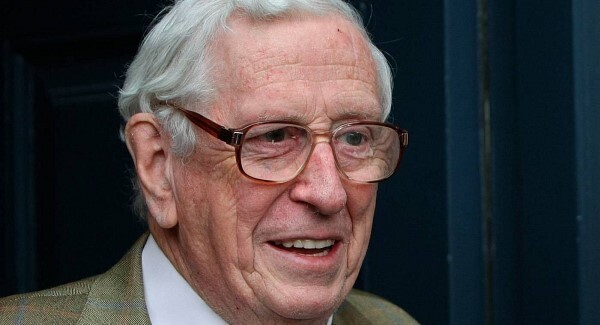
GARRET FITZGERALD agreed with the Pro-Life Amendment Committee in 1981 that a constitutional amendment was necessary to ensure that abortion could not effectively be legalised by a court ruling as had happened in the United States.
The Fianna Fáil government released the wording for this referendum on Nov 2, 1982: “The State acknowledges the right to life of the unborn and, with due regard to the equal right to life of the mother, guarantees in its law to respect, and as far as practicable, by its laws, to defend and vindicate that right.”
There was considerable political upheaval at the time. Fianna Fáil was seriously divided and the Workers’ Party had withdrawn its support for the minority government, with the result that Charles Haughey was facing defeat in a crucial Dáil vote the following day.
On Nov 1 the Labour Party had elected Dick Spring as party leader to replace Michael O’Leary, who had resigned in a huff. The timing of the publication of the wording of the amendment seemed particularly opportune as most of the Labour frontbench had been distinctly cool towards a proposed constitutional amendment.
Fine Gael would undoubtedly be divided on the issue, but Dr FitzGerald had no intention of allowing this issue to divide his party. He gave an RTÉ interview announcing that he was “relieved” at the wording of the amendment, because it was along the lines he had advocated. Members of Fine Gael would be able to give it their total support.
“We were concerned that it should be drafted in such a way as to protect life, rather than be negative and sectarian in nature,” he said. But there was no possible disagreement with the government on the published wording.
To a degree Fine Gael allowed itself to be stampeded into this acceptance in order to prevent the abortion controversy becoming a general election issue. The new Fine Gael- Labour coalition government, which came to power in mid-December, was then faced with handling the amendment.
The new attorney general Peter Sutherland was highly critical. “The wording is ambiguous and unsatisfactory,” he warned. “It will lead inevitably to confusion and uncertainty, not merely amongst the medical profession, to whom it has of course particular relevance, but also among lawyers and more specifically the judges who will have to interpret it.
“Far from providing the protection and certainty which is sough by many of those who have advocated its adoption it will have the contrary effect,” he said,
He feared the term, “the unborn,” was dangerously imprecise as it was not clear if this applied to the moment of conception, or sometime during later development of the foetus, there was also a problem about the reference to the equal right to life of the mother and the unborn.
“If a doctor were to be faced with the choice as to saving the life of one and thereby terminating the life of the other, then I believe that the only lawful conclusion to this dilemma would be that he could do nothing,” Mr Sutherland contended.
“It would, of course, have been politically easier, and some may think more expedient, for Fine Gael to have ignored this advice and to have gone along with the proposed Fianna Fáil amendment,” Dr FitzGerald said. But those defects identified by the attorney general rendered the proposed amendment both dangerous and possibly self-defeating.
“We could not allow it to go ahead without risking the defeat of the very purpose for which the original amendment was sought,” he argued. The ambiguity could make “it possible that abortion could be legalised by a decision of the courts.”
From February to April 1983 then justice minister Michael Noonan and the attorney general tried to come up with a wording that would safeguard against the perceived flaws of the format produced by Fianna Fáil.
Mr Noonan thought it should be possible to draw up a qualification that would ensure that “unlawful medical intervention” would be necessary to save the expectant mother’s life.
Fianna Fáil relished in the embarrassment of Fine Gael and was not about to facilitate the government on the issue, especially when the party had the full backing of the Catholic hierarchy for the initial wording.
“Nothing less than a genuine pro-life amendment along the lines of the wording produced by us and agreed by them will be accepted by Fianna Fáil,” party spokesman Michael Woods declared.
The minister for justice had hoped to amend the wording but had to abandon his plans. “There is not sufficient agreement to my proposal from the churches to indicate that the degree of support would be forthcoming which would be necessary to carry the proposal in a referendum,” he concluded.
Dr FitzGerald therefore took a personal position and called on the electorate to defeat the referendum that had essentially been introduced by his own government. The electorate passed the controversial amendment by a two to one majority in September, but time would prove that wording was seriously flawed when the Supreme Court essentially ruled that abortion was legal in the X-case.
CONNECT WITH US TODAY



Be the first to know the latest news and updates