Enda talked the talk but hasn’t delivered on political reform
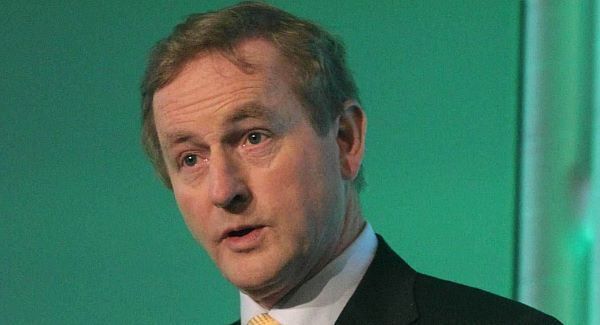
A “democratic revolution” was one of the key and most loudly heralded promises by Fine Gael and Labour when they entered government in early 2011.
Enda Kenny — in his first speech to the Dáil as Taoiseach — said he would “reinvent our country” and “create a new Ireland that works”, promising to enter “a covenant with the Irish people to tell them the truth”.
While the politicians and the parties may have changed, there has been no urgency in reforming the political system that facilitated bad government and led to a shattered economy and broken society.
Power is more centralised than ever, with democratically elected representatives having fewer opportunities to alter or question what their government masters lay down.
And the refusal by Kenny to have his personal proposal to abolish the Seanad scrutinised in a debate signals a lack of commitment to the promise of more accountability.
He made the announcement in a speech at the Fine Gael president’s dinner in Oct 2009 — despite his party coming up with another plan, to reform the Seanad, in a policy paper months earlier.
In what his party colleagues described as a “bolt from the blue” Mr Kenny said: “I believe the Seanad should be abolished, and the next Fine Gael government will put this to the people.”
Explaining his reasons, he said: “I have come to the conclusion that a second house of the Oireachtas can no longer be justified.”
Some TDs viewed it as an attempt to boost his popularity after he had been outflanked in opposition by the Labour leader Eamon Gilmore, who had forced the resignation of the then ceann comhairle, John O’Donoghue.
There was a second motive involved which was the need for Mr Kenny to show strong leadership amid doubts over his suitability as taoiseach.
Speaking on Morning Ireland the following Monday, he denied the move represented an edict to his party, insisting there was a requirement from all leaders to take leadership positions.
But that leadership is strongly lacking now that he has power. Despite the evidence showing that Seanad abolition was a proposition he personally pursued, Mr Kenny still won’t stand in a debate to defend its merits to the people.
Nor has he offered an explanation to voters as to why he won’t take part. When asked the reasons by Fianna Fáil leader Micheál Martin in leader’s questions last month, Mr Kenny responded “because I don’t want to embarrass you”.
WHEN asked again, he said the floor of the Dáil was the appropriate place for the issue to discussed. Mr Kenny made a Dáil speech on the abolition of the Seanad on Jun 13 where he said he wanted to “put people’s faith and hope back in Irish politics”.
There were no opportunities for TDs from the opposition or government benches to question him. He addressed the Seanad on the issue on Jun 26 but again it was a scripted speech, without questions.
To compensate for the loss of checks and balances if the Seanad is abolished, the Government is promising to create a more effective Dáil.
But based on its previous broken promises there is little reason to take them at their word.
The Programme for Government promised that the use of the guillotine on bills would only happen in “exceptional circumstances”. Since then, 99 bills have been enacted by the Government.
Sixty-three of these were guillotined, meaning they were voted through under a tight time limit without full scrutiny or debate by TDs who were put there by the people to legislate.
This included laws with far-reaching consequences for people across Ireland — including the property tax and welfare cuts announced in the budget.
The Programme for Government also promised a minimum of two weeks between each stage of bills, but this only happened in 22 of the 99 laws.
And despite its proposal to increase the time allocated to oral question time in the Dáil, the time available for questions to the Taoiseach has fallen by 40% since the last administration.
Shortly after coming into office, the Government promised to “end cronyism” with a new system of appointments to state boards which would be publicly advertised and require potential appointees to be questioned by Oireachtas committees.
But just a fifth of the 1,043 appointments made since Mar 2011 have come through the publicly advertised process. And a target of at least 40% female representation on such boards has not been reached.
In Oct 2011, the Taoiseach promised a “new departure” in budget transparency. Outlining how the coalition would publish a series of documents in the run-up to budget day, he told the opposition: “You’ll drown in debates and information about this budget.”
But in that December budget and subsequent ones, the Dáil was not given an opportunity to participate in discussions about the choices for cuts and spending.
Not only did this Government stick to the traditional and democratically flawed approach — mixing secrecy with spinning — it went a step further by concentrating spending discussions within the four-man Economic Management Council.
The wider cabinet has only discussed the budget at one meeting so far, according to the briefings on those meetings given to political correspondents.
A key to the Programme for Government’s political reform promise was a commitment to make the Dáil a “central player” instead of “an observer” so we would no longer have an “over-powerful executive”.
But power remains firmly within central government and is becoming more concentrated within a closer circle of decision makers.
That power will become more concentrated if the Seanad is abolished. And rather than democratic revolution, we will be left with democratic dissolution.
CONNECT WITH US TODAY



Be the first to know the latest news and updates