Getting out of hand
IS TIME about to be called on Arthur? Will he be escorted from the premises and told his behaviour under the influence has left management with no option but to ban him forthwith?
Has he had his day? Arthur’s Day comes around once more. It began four years ago as a wheeze to celebrate the accident that led brewer Arthur Guinness to happen upon a formula for stout over 250 years ago.
Now, however, its future looks to be in peril. For the real bugbear of marketing is coming back to haunt the big brains who came up with the idea. Irrespective of the innovative routes created to flog a product, there is always the little matter of the product itself. No matter how you dress it up, booze is booze, and right now, booze is getting a flogging in the public square. Not before time, according to those who are tasked with tackling the national lubricant.
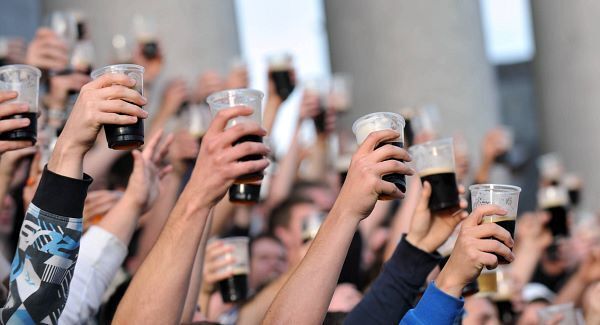
The first Arthur’s Day fell on Sept 23, 2009. This is allegedly the anniversary of the birth of Arthur Guinness, and the year was the 250 in 1759. In honour of the great man, revellers were urged to raise a glass to his memory at 17.59, or one minute to 6pm. As the Angelus tolled, great swathes of the population were skulling back pints to remember a man whose name is nearly as synonymous with the country as St Patrick.
The wheeze saw light at a time when sales were falling, largely due to the recession. Pubs in particular were suffering, and Guinness remains primarily a product to be taken in draft form.
The timing was perfect. If the punters begin drinking at six, there’s a good chance they’re out for the night, buying the product all the way into the small, wee hours. Timing also coincided with Freshers’ Week in most third-level institutions, when students celebrate the beginning of the college year. Teenagers and 20-somethings consist of the primary target for those pursuing “brand awareness” in alcohol. In the first instance, they collectively drink far more than their older kindred spirits. Also, fewer mature drinkers change brand. Get them while they’re young and you could well keep them for life.
Wrapping the whole affair up in the persona of a long dead figure habitually eulogised from barstools was a stroke of genius. Arthur Guinness founded a dynastic business on flogging a mood altering drug. He may well even have been half shot himself when he burnt the hobs and happened upon stout. Yet, here he was reborn as a hero, a cause for celebration, a symbol of Irishness, a figure who cast a soft glow over millions down through the generations. Raise a glass, and take care not to puke it up when it’s time to go home.
For Diageo, the drinks company that owns Guinness, celebrations were very much in order.
The success of the first Arthur’s Day ensured it would become an annual event. The day itself was a moveable feast, confined not to a particular date, but designed to fall annually on a Thursday, which is both a students’ night out, and a slow night for pubs in general.
Innovation was also required after the first Arthur’s Day. No longer is it an alleged birthday celebration, but a “music festival” designed to “showcase Irish talent”, while consuming the product. Around 1,000 music acts will perform on Arthur’s Day this year, at least half of which are Irish. Included among them are Kodaline and The Script, the former tipped for great things, the latter having already achieved some notable success.
Again, the marketing boys and girls have been on the ball. Live music, particularly in a pub setting, is attractive first and foremost to the young audience, the primary target of the purveyors of booze.
Beyond the doors of the nation’s pubs, however, Arthur has been eliciting a very different response. Initially, state bodies were on board, but following questions from elected members, local authorities have kept their distance.
Dublin City Council, for instance, allowed Diageo use its logo in promoting the day initially, but withdrew two years ago.
Last year, in the wake of the event, emergency consultant at Cork University Hospital Stephen Cusack described the streets of Cork as being like “the last days of Sodom and Gomorrah” on the night of Arthur’s Day. He said it was “ridiculous to incite more people to drink when Irish people are drinking more than enough already”.
In Dublin last year, there was a 30% increase in the number of ambulance call-outs for the night in question.
Annually, a procession of politicians have emerged to condemn what has been described as a cynical marketing ploy, but this is the first year that a government minister has weighed in. Junior health minister Alex White said this week the occasion was contrived by Diageo as a “pseudo-national holiday” to market its products, particularly to young people.
A number of artists, including Christy Moore, Mike Scott of the Waterboys, and Gabriel Byrne have hit out at the event. At least three songs have been penned satirising it as a cynical marketing ploy.
But leading from the front have been medical professionals citing public health concerns. At the heart of their argument is that the event is merely one more example of how the drinks industry inveigles itself into the heart of Irish culture, exacerbating all the social and economic problems inflicted by alcohol abuse.
The question for Diageo is whether all the negative publicity is worth enduring to continue with Arthur’s Day. Will it, for instance, affect the capacity to attract major acts? How long before some band decides that it is more advantageous to announce it will not play the event for conscientious reasons? How long before cynical marketing comes back to haunt the company? Old certainties in the booze business have begun to fracture. For many years, lonely voices like former GAA president and county coroner Dr Mick Loftus, banged on about the problem that dare not speak its name. Today, we are accustomed to medical professionals, senior gardaí and judges frequently reference the chaos and pain being inflicted nationally by rampant alcohol abuse.
A taskforce has spelled out the extent of the problem and recommended how it should best be tackled. At a political level, the Government is agonising over whether to prioritise public health or commercial consideration in deciding the future of alcohol sponsorship of sports events.
Minimum pricing is on the cards.
Up until a decade ago, publicans enjoyed a pre-eminent position in the political culture, but issues like a growing awareness of drink driving and the smoking ban pushed their influence beyond tipping point. They no longer call all the shots when it comes to booze-related issues.
The wider alcohol industry is, however, still a powerful force. But those big brains that came up with Arthur’s Day, must also be aware that society and the political culture is no longer enthralled to such a potentially dangerous product. At a time when the business is focusing so much energy on retaining their influence in sport, do they really need all this publicity around another, less lucrative marketing arm? Right now, the smart money says that Arthur’s Day will begin winding down after this year, possibly with a view to winding up before long. Unless the whole country is tanked up, you can only fool all the people for some of the time.