‘Coalition of willing’ could bypass diplomacy
The 15-nation council has been split on Syria since 2011. Russia, president Bashar al-Assad’s ally, and China have vetoed three resolutions condemning Assad and calling for punitive steps against his government.
However, the US has previously intervened in conflicts without Security Council backing, most notably in the Kosovo War in 1999. Any strike by the US, Britain, France, and others without a clear UN mandate would infuriate Russia, which could be expected to denounce any such attack as illegal.
Richard Haas, president of the US Council on Foreign Relations think tank, rejected Russia’s suggestion that a Western attack on Syria would need UN approval. “The UN Security Council is not the sole or unique custodian about what is legal and what is legitimate, and, as many have pointed out, it was bypassed at the time of Kosovo,” Haas told reporters in a conference call.
“To say only the UN Security Council can make something legitimate seems to me to be a position that cannot be supported, because it would allow, in this case, a country like Russia to be the arbiter of international law and, more broadly, international relations.”
Legitimacy for a strike on Syria, Haas said, could come from a “coalition of the willing” of individual countries that support retaliation against Assad to demonstrate that the use of weapons of mass destruction will not be tolerated. That coalition could include Arab countries and have formal backing from Nato or other institutions, he said.
US and European officials have cited Nato’s bombing campaign intended to pressure Yugoslav president Slobodan Milosevic to withdraw troops and militia from Kosovo. In that case, the US bypassed the Security Council to avoid a Russian veto and got backing instead from Nato.
The Arab League could also formally endorse military action against Syria as it did with Libya in 2011, said Richard Gowan, a foreign policy expert at New York University.
However, it might not be easy to secure a consensus in the Arab League and Nato. “Some members of both blocs would have qualms about doing so, and the diplomacy could get messy,” Gowan said.
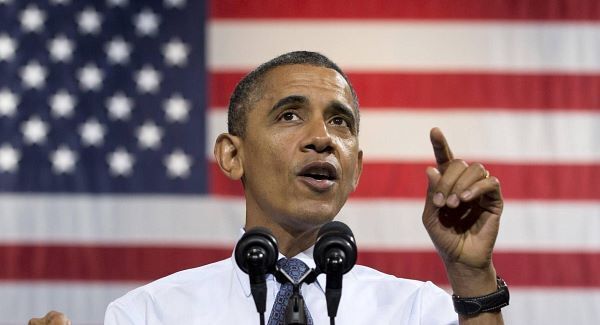
US President Barack Obama has tried to distinguish himself from his predecessor, George W Bush, on foreign policy by presenting himself as more multilateralist. He no doubt would like some kind of international legitimacy if the US attacked Syria. However, the tough tone of comments by Secretary of State John Kerry and strong suggestions that US naval forces are moving into position might mean Obama will go ahead with an attack no matter what.