Telling the truth still a dangerous pursuit as Manning trial shows
It was, as itself put it, “one of the stranger episodes in the history of digital-age journalism”.
It followed a series of events that were stranger still.
Snowden, 29, is an American computer specialist who worked for the CIA and the National Security Agency.
Based on information he leaked to The Guardian in May while employed by an NSA contractor, the newspaper published a series of exposés that revealed programmes such as the interception of US and European telephone data and the PRISM, XKeyscore, and Tempora internet surveillance programmes.
On Jun 14, US federal prosecutors charged Snowden with espionage and theft of government property. He had left the US prior to the publication of his disclosures, first to Hong Kong and then to Russia, where he received temporary asylum and is now in hiding.
Some US officials condemned his actions as having done “grave damage” to the US intelligence services while others, such as former president Jimmy Carter, have applauded him.
It has been the same story in Britain. Prime Minister David Cameron was furious with the revelations and, in a fit of pique worthy of Yes, Minister, ordered cabinet secretary Jeremy Heywood to contact about the material Snowden gave them.
Officers from the British spy agency GCHQ later went to the newspaper’s office and either simply watched or supervised the smashing of the computer hard drives. Copies of the Snowden data are already in the hands of its American operation yet the British authorities insisted on the files either being handed over or destroyed.
In a follow-up operation last Sunday, David Miranda, the partner of Guardian columnist Glenn Greenwald, was detained as he was passing through Heathrow airport on his way to Rio de Janeiro, where the couple live. Greenwald has broken most of the stories based on the Snowden material.
Miranda has been assisting Greenwald in his work, which over the past three months has focused on documents leaked by Snowden to Greenwald and the American filmmaker Laura Poitras.
According to , Miranda was acting as a courier between Greenwald and Poitras because electronic communications between them had become insecure in the wake of the revelations.
Miranda was detained for nine hours under schedule 7 of Britain’s anti-terror laws, which give discretion to stop, search and question anyone for any reason. The detained person does not have to be a terror suspect.
Yet the 2000 Terrorism Act was not passed with people like David Miranda in mind but to give legal weight to the North’s peace process. It was designed — as Charles Falconer, Britain’s former justice secretary revealed yesterday — “to make it difficult for Irish dissident terrorists to come to the mainland”.
Suspects have no right to legal representation and may have their property confiscated for up to seven days. Miranda’s possessions were taken and he was forced, under threat of imprisonment, to give the unlocking code to his laptop.
They confiscated all of his electronic equipment, including hard drive, smart phone, smart watch, memory sticks, DVDs and even a video game.
The order for operation as well as the airport detention came directly from Cameron. “The prime minister asked the cabinet secretary to deal with this matter, that’s true,” one source told Reuters news agency.
A Brazilian government spokesman said Miranda’s detention had “no justification”, while he has launched a legal action against the police and the British government, accusing them of abusing anti-terrorism powers to get hold of sensitive journalistic material.
Home Secretary Theresa May defended the government’s actions.
“I think issues of national security are rightly addressed at an appropriate level within government and I do not find it surprising that someone at a very senior level within government should be involved in this particular issue,” May told the BBC.
The New York-based Committee to Protect Journalists, has written a letter to Cameron, condemning the detention of Miranda, saying it was not in keeping with Britain’s historic commitment to press freedom.
“It is clear that the police officers who questioned Miranda did not suspect him of terrorism, as they focused their interrogation on Greenwald’s, Poitras’s, and ’s reporting on state surveillance programs.
“Rather, it appears they abused the law to circumvent routine safeguards of the confidentiality of sources and to obtain access to journalistic material. The US has confirmed that it was notified of Miranda’s detention, which suggests a coordinated effort,” the letter said.
Miranda’s detention is the latest example in a disturbing record of official harassment of over its coverage of the Snowden leaks. As editor-in-chief Alan Rusbridger wrote on Monday, the newsroom has been subjected to government pressure since June to surrender the Snowden materials in its possession or to destroy them.
The American official response to the happenings in Britain is odd, to say the least. A White House spokesman said yesterday that it was hard to imagine the US authorities taking such action against any media organisation, even to protect national security.
That cry for press freedom seems strangely at odds with US attempts to have Snowden extradited to face charges of espionage. It is no wonder he is hiding in Russia.
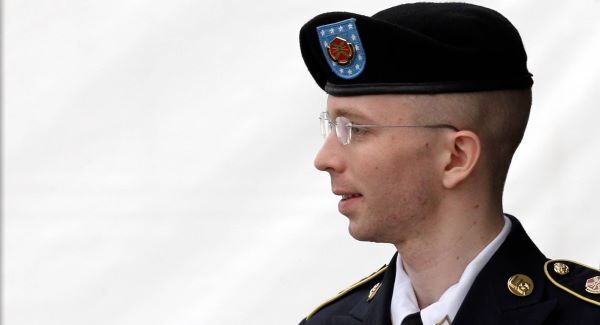
Bradley Manning, the US soldier convicted of the biggest breach of classified data in the nation’s history by providing files to Wikileaks, was sentenced on Wednesday to 35 years in prison. The administration of Barack Obama — formerly a hero of Edward Snowden — had sought a jail term of 60 years.
The classified material he revealed included a 2007 video of a US Apache helicopter firing at suspected insurgents in Baghdad. Among the dozen fatalities were two Reuters news staff.
Even in the internet age, journalism and telling the truth are still dangerous pursuits.