Is India seeing the light?
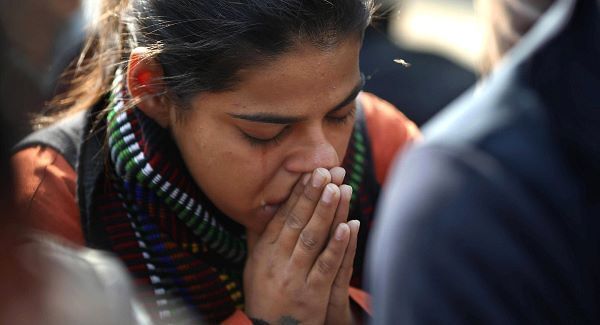
ONE horrible night, innocent victims, devastated families — and a country seething with rage and violence, stuck between feudal hierarchies and the modern economy.
Mahavir Enclave is a bustling working-class colony at the hard extremities of New Delhi. Houses snake up here in haphazard bursts whenever their inhabitants can afford to elbow a little more space for themselves in the world. For an outsider, these seem less homes, more just slivers of precarious brick slapped together. But for those who live there, it’s psychological solidity: A toehold, finally, on life.
Here in Mahavir Enclave, in a tiny mole hole of a room a few metres below ground, in a warren of other similar rooms, two brothers, 20 and 16, struggle to hold on to a dream. The elder is studying to be an engineer; the younger wanted to be an astronaut. But their frontrunner, the lively, quick-brained sister who birthed these ambitions — who made them seem so tantalisingly possible in this nether layer — is no longer there. She has morphed into a symbol: Globally known now as Nirbhaya, which means “the fearless one”.
On Mar 8, Michelle Obama and US secretary of state John Kerry posthumously honoured Nirbhaya with an International Woman of Courage Award. A week earlier, in his annual budget speech, Indian Finance Minister P Chidambaram announced a 10bn rupee (€140.2m) Nirbhaya Fund to empower and promote safety for women. Briefly, the Indian Parliament considered dedicating a new criminal-law bill to her name.
Over the last three months, the story of Nirbhaya — a 23-year-old paramedic who was gang raped with unspeakable brutality on a bus on Dec 16, 2012, and died 13 days later of her injuries — has triggered shock and outrage across the world and galvanised spontaneous and unprecedented protests in India. She has become an icon of resistance, a watershed moment.
India can be a cruel place for women. Each day, the papers teem with stories of anonymous women raped, killed, and dumped in different parts of the country. In the past week a 5-year-old girl was abducted and kept locked in a room for two days, left for dead after being raped and mutilated. The case brought fresh protests to the streets and renewed criticism if alleged police corruption. However, the spectrum of chronic gender violence stretches even further: Acid attacks, marital rapes, honour killings, female foeticide, acute malnutrition, discriminative access to schools and jobs, the cultural misogyny rolls on.
None of this has abated since Dec 16, but something has shifted in India. The response to sexual assault in this country will never be the same again. The silence has been broken. Women everywhere are speaking up more; men feel freed (or enjoined) to be more supportive. Some of the stigma has been yanked off. Laws are being revised; judicial and administrative machinery is being revamped. Clumsy and inadequate as it may be, the government is being forced to respond.
At one level, therefore, the story of Nirbhaya could be read as a tragic yet celebratory one, but at another level, it is a window into a much more complex, perhaps even darker and sadder, narrative about contemporary India and the terrible collision of aspiration and frustration that has been unleashed within it.
Until Dec 16, Nirbhaya was just one among millions of faceless young people in India trying to break through the stifling fixity of their lives. Her father, Badrinath Singh, had left rural Uttar Pradesh decades earlier in search of a larger life, but failed to find it. Having run through a series of petty jobs in small industrial towns, he had come to Delhi in 1983, his wife pregnant with their first child. Singh carried a schism in his heart. His own impoverished father had had money to educate only two of his four sons. One son now had a job in the paramilitary; the other had risen to be a judge. The younger two had to remain casual farm labourers or scrabble a life out of some urban fringe.
Understandably, education was the driving hunger in the Singh household. Working gruelling double shifts, first as a watchman, then as a cargo loader with an airline, earning a mere 200 rupees (€2.80) a day, Singh put all three of his children — by turns — into a private school that used English as the language of instruction.
“My father was determined to give all three of us a strong foundation,” says Gaurav, Nirbhaya’s brother.
“My daughter was different from the beginning,” says Singh. “She was hungry for school even as a toddler. And she was so lucky; she always got what she wanted. We only managed to buy this piece of land when she was born.”
From that tenuous perch — the mole-hole home in the ground — the family had begun to build a life.
Nirbhaya — obsessive, industrious, optimistic, face always set inexorably to the sky — was the centrepiece of that life. She had an innate taste for fine things; she was determined to carve a slice of it for her family and herself. After fifth class, she had to switch to a cheaper government school, because her father couldn’t afford private school for all three. Five years later, she had started tutoring 25 to 30 local children, in two shifts every day, to pay for her own fees and help her parents put her brothers through school.
“She hardly had any friends. She never had any time,” says her mother. “She was always busy, always rushing. She’d wake at 6am for yoga, rush to school at 7am, return at 1pm, give tuitions till 6pm, then study herself.”
Despite her ascetic schedule, Nirbhaya loved gadgets, streaking her hair, and trendy clothes — netted tops and high heels were her favourite — and she always strove to speak in English. She hated going back to the village her parents were from. There was nothing there for her. “She was always dressed like you,” says her mother, pointing to my jeans. “She didn’t like traditional clothes.”
In 2008, Nirbhaya left for Dehradun — a town five hours from Delhi — to pursue a bachelor’s degree in physical therapy. (Neurosurgery fascinated her, but she failed to clear the national entrance test; she kept her interest in it going, however, with additional reading.) In Dehradun, the hard routines of her childhood took over again. To pay her way, she joined a Canadian call centre and worked nights, sleeping only two hours every day before rushing to class.
In the end, she came home barely a few weeks before she died, after four years of being away. She had landed an internship with a prestigious hospital, bought watches for her family and a laptop for herself, and put highlights in her hair — fire red, golden, and snow white. Her taste in music had moved from Bollywood to Bryan Adams. In all her textbooks, she had proudly prefixed “doctor” to her name in neat handwriting. “She was finally going to enjoy the fruit of all these years of striving,” says her mother. “But that joy was taken from her.”
His father lies back dispiritedly on the bed. He’s developed a bad infection in the knee. His youngest son, Saurabh, no longer wants to be an astronaut. His ambition now is to be a doctor and live an unfulfilled dream.
The harsh ironies pile up. The family sitting disconsolately on two beds crammed against each other will soon be gone from here. The government has promised them a middle-income house of their own; they’ve also been paid a compensation of 3.5m rupees (€50,000), partly by the Delhi government, partly by Uttar Pradesh. Nirbhaya’s kept her promises even in death. She’s pulled her family out of the nether region. She’s made good.
“Except it all tastes like sawdust,” says her father.
On Dec 16, 2012, Awindra Pandey, 28, a broad-chested, soft-spoken engineering professional, picked up Nirbhaya from her home in the afternoon to take her to a movie in a South Delhi mall. It should have been an ordinary, happy day. The pair watched Life of Pi, loitered in the mall a while, window-shopped, then headed home. It was early in the evening, but none of Delhi’s infamously testy auto rickshaws were willing to go the distance. The couple coaxed one to take them halfway to a bus stop. No public bus came around. A white chartered bus was parked close by. A young boy beckoned them to enter. Anxious to get home, they did.
ACCORDING to media reports and the police, in a slum cluster not far away from the bus stop, six young men had gathered earlier that day to drink. They played marbles and cursed. One of them was a bus driver. He drove schoolchildren by day; the vehicle lay with him by night. According to the police, he urged his raucous friends out for a joyride. “Let’s have some fun,” he said.
First the gang found a carpenter returning from work. They lured him onto the bus, stole his phone and the 8,000 rupees (€112) in his pocket, then dumped him on the road.
Awindra and Nirbhaya knew something was wrong within minutes of boarding the bus. Their skin prickled. There were only six men inside; the windows were tinted black. The door was slammed shut. As the bus set off, one of the men began to taunt the girl for being out late. Awindra tried to shut him up. The others surrounded him. Nirbhaya rushed to defend him and her defiance enraged them. The altercation spun out of control. They began to beat Awindra with an iron rod. As he lay pinned at the front of the bus, floating through bouts of unconsciousness, Nirbhaya was dragged, fighting and kicking, to the back and raped and bitten and sodomized in turn by the six men. When she resisted, biting three of them, they pushed the rusted iron rod inside her all the way to her diaphragm and ripped her intestines out.
“An intestine is 23ft long, ma’am,” her brother Gaurav had said stoically in his room. “Barely 5% of it was left intact.” The doctors who treated her said they’d never seen a rape victim so brutalised.
The men drove the bus in circles for almost an hour as they raped her. When they were done, they stripped the couple of their belongings, tossed them naked on the highway, and then tried to run the bus over the girl. Failing in that, the rapists calmly took the bus back, washed it clean, divvied up the spoils, and returned to their homes. Nirbhaya and Awindra lay mangled and naked in the December cold for two hours before the police finally turned up. Cars kept whizzing by. Nobody stopped.
Awindra paces about uncomfortably on a cane in a small hotel room, perching awkwardly every now and then at the edge of the bed. He’s still recovering from his injuries. He finds it hard to sit or stand too long. No politicians are willing to meet him now; nobody’s asking after him. Away from global attention, a harrowing trial is under way. He is the sole witness.
“I don’t like being alone,” he says. “I am afraid to live with my thoughts.”
He had gone to meet the dying Nirbhaya in intensive care on Dec 20, four days after. He wore a jacket she’d bought him. Dates mattered to her: Dec 20 was the day they had first texted each other. But she was sleeping, and he had to go again the next day. He says she was touched he’d remembered. She tried to hug him through the maze of tubes attached to her petite frame. In the end, she could only make a gesture of a hug.
It was the last time they would see each other. She died eight days later in Singapore, her genitals destroyed; her stomach hollowed out; wracked by septicemia, brain injuries, and multiple infections.
The story of the gang rape hit the papers the next morning and began to spool out relentlessly over the next few weeks, horrific detail upon horrific detail. There are many reasons why this story caught fire in the public imagination more than any other rape in recent Indian history. There was, most of all, the unfathomably brutal violence involved. But many other things coalesced: The location of the crime, in upper-class South Delhi; the impunity of the attack; the fact that it was early evening; that she was accompanied by a male friend; that there were no complex caste or feudal hierarchies at play; that this was just random urban crime. That she was an average “wholesome” girl making her way in the world. Women across the country felt, “but for the grace of God, that could have been me”. She was Everywoman.
Nirbhaya’s own composure also alchemised the air. In the 13 days that she lived after the assault, she testified twice before a magistrate, giving a detailed account of the attack. Startlingly, her doctors said she showed no psychological distress, no self-pity. She broke the mould: She wanted her name to be known; she wanted her rapists brought to account; she wanted them “burnt alive”.
Under intense pressure, the Delhi police made arrests in record time. Within a week, six men were in custody. Ram Singh, 33, the bus driver; Mukesh, 23, his brother; Vinay Sharma, 25, a gym assistant; Pawan Gupta, 24, a fruit seller; Anurag Thakur, 24, a cleaner of the bus; and a 17-year-old juvenile — known as Raju — who worked odd jobs at roadside eateries.
In a dramatic development, on Mar 11, 2013, three months after the gang rape, Ram Singh, the key accused in Nirbhaya’s rape, hanged himself in his high-security cell in Delhi’s Tihar Jail. He and the juvenile had reportedly been the most savage of the assaulters.
With the arrests, the protests reached a crescendo. These protests encapsulate profound sociological changes under way in India. On the upside, they demonstrate that the vocabulary of feminism has percolated down to the street. For weeks young people who’ve never been part of any formal political movement braved water cannons and baton charges, demanding not only better policing and a swifter judiciary, but also complete autonomy for women over their bodies and lives. India has a galling history of blaming women for the violence against them. But now, when an older generation tried to mouth venal idiocies about how women should be chaste and cautious, the young turned on them with fierce scorn.
As the new economy is forcing millions of Indians from their land and traditional livelihoods into hostile megalopolises, a storm of colliding worlds is being created. The glittering city with its bold new ways and siren images now sits in intimate proximity with rural backgrounds. The membrane that separated them is gone, but the divide remains.
*Shoma Chaudhury is executive editor of Tehelka, a public interest news magazine in India.
CONNECT WITH US TODAY



Be the first to know the latest news and updates