Pomp and pride
When Fifth Avenue stretched out gloriously ahead of him and the crowded footpaths hummed with anticipation for the 1991 New York St Patrick’s Day Parade, a moment of belonging seemed to offer nothing but hope.
He was naïve, he says now. They all were — it was to be the first and only time Irish lesbian and gay people marched as a group in the parade.
“People talk about the horrors of that day,” he says. “In fact, I recall it as an incredibly liberating day. For the first time I’m on Fifth Avenue, it’s daylight, I’m out on the street as someone who is Irish, Catholic, and gay. I’m so happy.”
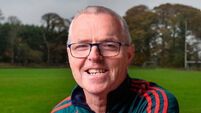
There is a direct line from that false dawn over two decades ago, through the rough years of arrest and agitation, that led onto the Athy-born activist’s prominent role in what could prove to be a historic victory for civil rights in the US.
At the end of March, a New Yorker named Edie Windsor took a case against her nation. The charismatic 84-year-old’s struggle for equality was being heard at the Supreme Court in an effort to get the government in Washington DC to overturn the 1996 Defense of Marriage Act which then president Bill Clinton now admits to regretting having signed into law.
Its Orwellian wording concealed the harsh reality: When Windsor’s spouse, Thea Spyer, died in early 2009, a tax bill of around €500,000 landed at the door of the grieving woman. Had Thea been Theo, it has been observed many times since, this would never have happened.
Fay helped the couple marry in Toronto as part of the movement Civil Marriage Trail he founded with former boyfriend and fellow activist Jesus Lebron. Spyer had been a long-time multiple sclerosis sufferer but when Windsor called on Fay for help in 2007, the illness had begun to take its final grip.
“I remember I put down the phone and I cried,” Fay says. “How could you not be moved by a story of two women who had been together over 40 years and one of them being told she only had months to live? Who is going to knock that? That beauty of that love, their determination in their mid-70s — the more I got to know them, the more I realised how amazing they were. They had done well, they were quite well-off, but these fundamental rights were beyond them. Edie was having huge problems simply getting access to see Thea at the hospital at times.”
Fay himself will be married 10 years in July. When he first learned Canada had approved same-sex marriage and there was no residency requirement, he called his now husband, Tom Moulton, immediately. “You’re not going to believe it, we’re going to Canada. Pack your bags.”
Fay gets a kick out of the fact that he initially acquired their marriage licence in Toronto on the fourth of July. The sadder irony of that date is compounded by where they — and so many couples like them travelling north of the border — would be married just over three weeks later: St Lawrence Hall was the symbolic end of the line for the Underground Railroad back in the days of slavery, the last stop for African-Americans for whom inequality was an accident of birth.
The Canadian judge, Harvey Brownstone, with the help of whom Fay has built this far-reaching project, will, he says, go down in history as a pioneer of the movement.
“He is one of the leading judges in family court in Ontario and he said yes to every couple I sent to him. He was used to presiding over breakdowns of couples and now finally here was this thing he could do which would benefit couples from all over the world. He has never charged a cent.”
Fay spent his adolescence in Drogheda, Co Louth, after his family moved from Kildare. He was old enough to understand the grimness of the job his father was leaving behind in an asbestos factory in Athy. It was the Augustinians in Drogheda that nurtured his world view at the end of the 1970s and on into the early 1980s.
“It was a time when there was great activism in the Church in Ireland,” he says. “You had missionaries coming back from elsewhere. There was a strong anti- apartheid movement. It was all about young people getting involved, workers’ issues, homeless issues but global issues too.”
When he arrived in New York in 1984 to take up postgraduate theology studies at St John’s University, he was still “completely closeted”, having left a country where it was still a criminal offence. “I had gone to a couple of the gay bars in Dublin but I remember being terrified,” Fay says.
That he arrived in the middle of the Aids crisis is a cruel counterpoint to what should have been simply a story of discovery and liberation.
“It was an exciting place to move to, and yet it was so frightening. That was the era when I began attending funerals. It wasn’t just about discos and pride parades. People were holding their life partners until they were skeletal and dying.
“ Then you had these surviving partners evicted from their apartments because their was no tenancy protection. There were no rights. That was a key factor in the movement for marriage equality all those years later. There are thousands of legal rights. Hospital visitation rights and treatment decisions. As an immigrant, I’m also conscious of immigration rights.”
IT WAS inevitable, therefore, that the spirit of activism which was nurtured in Ireland would be applied energetically to gay and lesbian issues. Fay joined Dignity NY, a Catholic LGBT organisation, and he began to discover others like him for whom religion did not preclude sexual freedom.
“There would be over 300 people meeting for Saturday Mass in Greenwich Village, proud of who they were and openly embracing their sexuality. That was all new to me. It was incredible. I was no longer gay by night. Justice was no longer about what was going on in Northern Ireland or in South Africa. It actually finally applied to my life and the question was whether or not I was going to step up.
“We’re no different than anybody else. I fell in love when I came here. I met Tom at Dignity in 1996. It was a dull auld homily, I can’t remember what it was,” Fay adds, smiling.
“I don’t share the view of many of my gay and lesbian friends who talk about the intolerance of homo-sexuality as being a generational thing. They tend to look down their nose at the people who run the Fifth Avenue parade. I don’t share that perspective at all. I was embraced by people from that generation.”
Fay was teaching religion at a school when he became one of the central focuses of that 1991 parade. He was fired within weeks and the ban on an official gay and lesbian presence on Fifth Avenue parade remains to this day. He was arrested seven St Patrick’s days in a row from 1993 onwards, building a relationship with the police officers who took him into custody, making it less and less terrifying than the first time.
“I always believe that that came out of nothing but a desire to belong to the Irish community, but it was also a wave of closeted gay people who had emigrated in the 1980s and were arriving at this new, more tolerant place. It was magical. There was an impulse to belong to the community, we loved our Irish music.
“I’ve been arrested enough to know there are better ways.”
The St Pat’s for All parade was born out of the basic futility of those protests and arrests, a constructive alternative, an all-inclusive celebration in the Queens neighbourhood of Sunnyside, not far from where Fay now lives in Astoria.
He has never forgotten community even while his work, be it as a film maker or an activist, went global. While he awaits the results of the court challenge in Washington, which should arrive in June, he has been encouraged by news from home and the majority support for gay marriage in the Constitutional Convention.
“It’s huge news and historic. Ireland has a reputation for human rights to live up to. I’m hoping political leaders follow the cue of the people.
“I’ll never forget the people in the chippers and the pubs and the housing estates of Drogheda, reassuring us that it was OK and they were happy for us. Irish people are ready. Eamon Gilmore is supportive. I spoke to Gerry Adams at an event here. They’re all coming around.
“Irish people shouldn’t have to cross borders for simple civil rights.”
If Edie Windsor wins her case at the Supreme Court, she will become an icon of civil rights in the US and it will be through Fay that history will trace her heroism, all the way back to that sunny day in Toronto when Thea Spyer’s frail finger was lifted for a wedding ring which would become the symbol of a larger fight.

CONNECT WITH US TODAY



Be the first to know the latest news and updates