A turning point in British-Irish relations
A THAWING in Irish-British relations in recent times has seen celebration, further pacts to benefit both economies and a realisation that the war is over. Old wounds can heal. Amid a maelstrom of financial events in Europe though, Ireland is also tied to an economic umbilical chord with its neighbour.
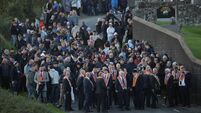
Who can forget Queen Elizabeth’s visit to Ireland last year? There was that minute’s silence after the British monarch laid a wreath in Dublin’s Garden of Remembrance at the memorial for those who died fighting for Irish freedom. A year later and it is clear Britain is Ireland’s new best friend.
More so than ever as events unfold in Greece and the eurozone, we are reliant on more than just goodwill from David Cameron’s government.
The British prime minister and the Taoiseach set out several goals for both nations during a special meeting at Downing St in March, when Enda Kenny also visited the House of Lords.
Mr Kenny last week told a summit of the British Irish Parliamentary Assembly in Leinster House that the events of that four-day visit by the queen were “groundbreaking”.
“But it is inarguable that the past year has marked a turning point in British-Irish relations,” he said.
Undoubtedly this is true. But more remains to be done in terms of sealing the peace process and addressing concerns of republicans.
Meanwhile, Mr Kenny hopes to increase the mutual bonds between Ireland and Britain on the economy, especially as the financial crisis increasingly isolates both nations.
About €1bn of trade in goods and services flows across the Irish Sea each week. In fact, Ireland’s exports to Britain increased by over €600m in 2011, which is far greater than the growth in exports to emerging economies such as Brazil or China for example.
Mr Kenny made clear in his speech to politicians from both north and south this week that this trade and co-operation will grow.
“What is more valuable longer term for Ireland is not simple import and export trade, but strategic collaborations in areas such as food supply and security, energy supply and security, renewable and clean energy technologies, construction, financial services, research in the life sciences, the pervasive software sector and the opportunities in the creative industries,” he said.
But those links extend further. There has been the recent partnering of British and Irish firms in the construction of the Olympic Park in East London, which has created employment on both sides of the water.
The newly created British Irish Chamber of Commerce is also expected to boost co-operation.
Huge amounts of money and skill are invested in ventures in those nations: Irish people working in professional services or on the boards of British companies; the flow of capital in Irish investment in British business activities, construction, in British shares and property; the presence of British high street names and shops in Irish towns and cities.
“Britain is our nearest neighbour and remains our closest friend on the world stage,” Mr Kenny told the assembly.
And amid calls for European “growth” funds this week to help ailing economies on the ground, progress is already being made towards developing health and education sectors with Britain.
There is the joint funding of the radiotherapy unit in Altnagelvin Hospital, which provides services to Derry as well as Donegal, and arrangements on schools access and transport.
Mr Kenny maintains that the queen’s visit helped “laid to rest the ghosts of past conflicts”. But there are outstanding issues.
Calls for an independent inquiry into the murder of Belfast solicitor Pat Finucane have fallen on deaf ears in London so far. Mr Cameron questions what this may achieve. Mr Finucane’s family would argue otherwise.
The 34th anniversary of the Dublin and Monaghan bombings yesterday is also a timely reminder that questions remain about the role of loyalist paramilitaries and the fact that nobody has ever been charged in relation to the attacks.
Soundings from the North suggest there may be agreement soon on a possible visit by Queen Elizabeth to the North. But security is an issue there for such an occasion.
While the days of the troubles are long gone for the ordinary public, police continue to be targeted by dissident republicans.
There was also the discovery of a bomb outside Newry last month with 250kg of explosives that could have caused devastation on a scale similar to Omagh.
But these recent threats should not detract from the recent pact that Mr Kenny and Mr Cameron made in March to work together over the coming years.
With events and anniversaries planned around the 100-year mark for the First World War as well as the 1916 Rising, we can also expect more platforms shared by the nation’s leaders.
CONNECT WITH US TODAY



Be the first to know the latest news and updates