The world’s biggest ... fracker
AUBREY McClendon, America’s second-largest producer of natural gas, has never been afraid of a fight. He has become a billionaire by directing his company, Chesapeake Energy, to blast apart gas-soaked rocks a mile underground and pump the fuel to the surface.
“We’re the biggest frackers in the world,” he declares proudly over a $400 bottle of French Bordeaux at a restaurant he co-owns in his hometown of Oklahoma City. “We frack all the time. What’s the big deal?”
McClendon dominates America’s supply of natural gas the same way the Tea Party-financing Koch brothers control the US’s pipelines and refineries. Like them, McClendon is an influential right-wing power broker — he helped fund the Swift Boat attacks against John Kerry in 2004, donated $250,000 to the presidential campaign of Rick Perry, and more than $500,000 to stop gay marriage.
But unlike his fellow energy czars, McClendon knows how to tone down his politics and present a friendlier, less ideological face to the public. He secretly gave $26m to the Sierra Club to fight Big Coal, and built a Google-like campus for Chesapeake’s 4,600 employees in Oklahoma City, complete with a 63,000-square-foot day care centre, a luxurious gym and four cafes manned by cook-to-order chefs. He even voted for Barack Obama because he thought the country needed “an inspirational figure.”
At 52, McClendon still looks like the whip-smart accountant he once aspired to be — crisp white shirt, polished shoes, a toss of white hair. To hear him tell it, the cleaner-than-coal fuel he produces will revive the US’s faltering economy, free us from the tyranny of foreign oil and save the planet from global warming.
“I have a fossil fuel that makes other fossil fuels obsolete,” he boasts. By McClendon’s estimate, the industry has drilled more than 1.2m wells across America, yet so far there have been only a few confirmed cases where things have gone wrong — despite dire warnings from scientists and environmentalists that fracking pollutes rivers and streams, contaminates drinking water and turns large swathes of farmland into industrial moonscapes.
“Where is the mushroom cloud?” McClendon asks. “Where are the dogs with one leg? Where are the people that have been maimed or hurt?”
He sips his Bordeaux; his own private wine cellar once boasted more than 10,000 bottles. But what McClendon leaves out is the real nature of the business he’s in. Fracking is about producing cheap energy the same way the mortgage crisis was about helping realise the dreams of middle-class homeowners.
For Chesapeake, the primary profit in fracking comes not from selling the gas, but from buying and flipping the land that contains the gas. The company is now the largest leaseholder in the US, owning the drilling rights to 15m acres.
McClendon has financed this land grab with junk bonds and complex partnerships and future production deals, creating a highly leveraged, deeply indebted company that has more in common with Enron than ExxonMobil. As McClendon put it in a conference call with Wall Street analysts a few years ago, “I can assure you that buying leases for x and selling them for 5x or 10x is a lot more profitable than trying to produce gas at $5 or $6 per million cubic feet.”
According to Arthur Berman, a respected energy consultant in Texas who has spent years studying the industry, Chesapeake and its lesser competitors resemble a Ponzi scheme, overhyping the promise of shale gas in an effort to recoup their huge investments in leases and drilling. When the wells don’t pay off, the firms wind up scrambling to mask their financial troubles with convoluted off-book accounting methods.
“This is an industry that is caught in the grip of magical thinking,” Berman says.
Like generations of energy kingpins before him, it would seem, McClendon’s primary goal is not to solve America’s energy problems, but to build a pipeline directly from your wallet into his.
DEEP RESERVES
Geologists had long known there was a lot more energy buried deep underground — they called these subterranean rock layers “the kitchen,” because it was where the gas and oil were made, before they bubbled up and gathered in reservoirs. But nobody knew how to extract these deep reserves — at least, not in a way that made economic sense.
Then, in the 1980s, a Texas wildcatter named George Mitchell began working on a way to drill a mile down into the earth, turn the drill sideways, and keep drilling horizontally into a thin layer of shale. Next, he pumped in a few million gallons of water and sand under enough pressure to shatter the rock. When he pumped the water out, gas and oil flowed out of the rock’s fractured pores.
The new technique ignited a boom in drilling for “unconventional” sources of gas and oil: Shale gas now provides 25% of America’s gas supply, enabling the US to pass Russia as the world’s largest producer of natural gas.
Initially, even environmentalists were enthusiastic. Fred Krupp, who heads the Environmental Defence Fund, called the gas boom a “potential game changer” — a cleaner energy source that could replace coal and oil for a few decades, until the cost of wind and solar power dropped enough to put fossil fuels out of business.
T Boone Pickens, the energy billionaire who has a major stake in Chesapeake Energy, offers an even more sweeping assessment. “Natural gas,” he says, “is the solution to America’s energy problems.”
The trouble started in 2007 when drilling operators made a run on the Marcellus Shale, a broad region of gas reserves that stretches through Pennsylvania and up into Ohio and New York. Almost overnight, fracking’s technological miracle was recast as the next great environmental menace.
The Oscar-nominated film Gasland exposed the dark underbelly of fracking, interviewing residents who could literally light their faucets on fire, thanks to the gas that had contaminated their drinking water. Last year, The New York Times documented how gas drillers were dumping millions of gallons of irradiated wastewater loaded with toxic chemicals into Pennsylvania’s rivers and streams, largely without regulatory oversight.
Even worse, new studies suggest that because of fugitive emissions of methane from wellheads and pipelines, natural gas may be no better than coal when it comes to global warming. “I was an early optimist about natural gas,” says Robert Kennedy Jr, who sits on a panel that’s advising Gov Andrew Cuomo on whether to allow drillers like McClendon to expand into New York. “But after looking into it, I now believe that, without tighter regulations and stricter oversight, the shale-gas boom could turn out to be an economic and environmental disaster.”
McClendon grew up awash in oil money: He’s the great-nephew of Robert S Kerr, the influential Oklahoma governor and senator who co-founded the Kerr-McGee Corp in 1929.
In 1982, McClendon struck out on his own as a landman. He was 23, living in a modest house, making $24,000 a year. “I bought a typewriter, rented an office, bought some maps and basically just started to follow around other companies, trying to see what crumbs they would leave,” he says. He called his tiny outfit Chesapeake Investments and soon forged a partnership with another landman, Tom Ward. “We worked together for six years,” Ward recalls, “doing deals for scraps of land in Oklahoma, faxing each other in the middle of the night. Eventually, we got the hang of it.”
When the fracking revolution began, McClendon says, he and Ward quickly realised that the new technique offered them an opening. In the natural gas industry, the advantage had long gone to operators with the geological and engineering expertise to pinpoint gas reservoirs.
Now it didn’t matter where you drilled. The edge suddenly belonged to operators who could lock up as much land as quickly and as cheaply as possible — precisely the skill that Ward and McClendon had developed scraping around Oklahoma land deeds.
In 1989, the two men chipped in $50,000 to form a new company, Chesapeake Energy, to focus primarily on shale gas. It grew like a Silicon Valley startup: By 1993, when Chesapeake went public, the firm was valued at $25m.
From the outset, financial risk-taking was as much a part of the firm’s success as technological innovation. Chesapeake was the first gas exploration company to issue high-yield junk bonds, which gave it a steady cash flow to pay for leasing and drilling.
By 2003, Chesapeake had expanded deeper into Oklahoma and Texas, as well as Louisiana and Arkansas. “They became a land-acquisition machine,” says Phil Weiss, an analyst at Argus Research who has followed the firm for more than a decade. The key to success was discovering new gas plays before other companies, then leasing vast tracts of land as quickly and quietly as possible.
LOCKING UP RESERVES
Chesapeake’s land operation became almost as technologically sophisticated as its drilling operation, with a huge databank of property records and mineral-ownership rights across the country. “The goal is not just to pump gas,” explains Pickens. “It’s also to lock up future reserves.”
The company’s financial statements estimate that it currently holds drilling rights to as much as 100trn cubic feet of gas — enough to supply the country for five years.
At Chesapeake, McClendon operated more like a land speculator than an oilman. “Our approach is to go in early, quietly and big,” says Henry Hood, who directs Chesapeake’s land purchases.
“We like to get our deals signed before anybody knows what we’re up to and tries to run up prices.”
In 2010, it pocketed $2.2bn by selling land it bought in Texas for $2,000 an acre to one of China’s largest oil companies for $11,000 an acre. “That’s a five-to-one return on investment,” says Jeff Mobley, Chesapeake’s senior vice president for investor relations.
In recent years, the company has also sold off the future proceeds it expects to receive from thousands of wells — a complex financing deal that enables it to borrow cash now without counting the debt it will owe when it has to drill the wells later. The very first deal, made with Deutsche Bank and a Swiss investment firm, brought Chesapeake more than $1bn in return for 15 years of future production from 4,000 wells.
This sort of gambling suits McClendon, who is known for placing big bets — and sometimes losing big. During the financial meltdown in 2008, he was forced to sell off 94% of his stock in Chesapeake for $550m to meet a margin call on his personal investments. Despite the setback, Chesapeake’s board boosted McClendon’s annual salary to $112m, making him the highest paid CEO at any S&P 500 company.
The pay hike, which sparked a shareholder lawsuit, was scorned by Wall Street analysts. In February, Chesapeake announced that, because of low gas prices, its revenues will fall $3.5bn short of its expenses this year.
Until a few years ago, Bradford County was a forgotten landscape of struggling dairy farms and strip-mall nail salons dotting the Susquehanna River in northeastern Pennsylvania. Then, in 2007, gas speculators zeroed in on the geologic formation called the Marcellus Shale, a 300-foot-thick layer of gas-soaked rock that underlies much of Pennsylvania, as well as parts of Ohio and New York.
Chesapeake bought up nearly two million acres. Since then it has drilled more than 600 wells there, and hopes to drill thousands more.
“In 10 years,” McClendon says, “the Marcellus is likely to become the most productive natural gas field in the world.”
The county, population 62,000, has been transformed from sleepy farmland to industrial boomtown: the roads crowded with trucks hauling water, the rail lines rumbling with trains hauling sand, the roadside bars overflowing with drill hands from Oklahoma and Texas, the hotels and motels booked for months in advance.
Chesapeake’s operations in the region are run out of an old department store in the county seat of Towanda. It feels more like a military outpost than a corporate office.
Inside, offices are separated by thin walls thrown up in a hurry, many of them decorated with arty shots of drilling rigs in pristine landscapes.
Brian Grove, Chesapeake’s director of corporate development in the Marcellus region, explains that the layer of shale being drilled is 7,000 feet beneath the surface, whereas drinking water rarely runs deeper than 1,000 feet. “That leaves 6,000 feet of rock in between,” he says. “There is no way that any fluids are going to migrate from the shale rock up to the drinking-water aquifers.”
Grove, an affable guy in a Chesapeake shirt, also points out that the entire length of the well bore is encased in heavy steel, to prevent gas from leaking into the drinking water. What’s more, he adds, the top 750 feet of the well, where it’s most likely to pass through aquifers, gets a triple layer of steel — a precaution the company took after it had some problems with methane near the surface getting into drinking water.
In short, he suggests, the fluids and gas travelling up the well bore are completely isolated from the surrounding earth by up to three layers of heavy steel. This, in essence, is the mantra at Chesapeake: Everything we do is safe and environmentally responsible. Trust us.
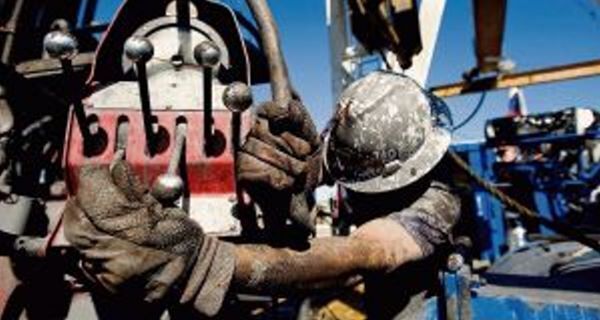
One afternoon, Grove drives me out to the Nomac 7 rig, which is drilling about 15 miles east of Towanda. I climb up into the operations box on the rig and watch as the driller guides a bit a mile down into the earth through an eight-inch hole. Once the drilling is finished, millions of gallons of fracking fluid — water and sand, mixed with a host of chemicals that make the water “slippery” — will be injected deep into the well to fracture the underground shale. The wastewater, known as flowback, will then be pumped out, and gas production will begin.
BIG BLOWOUT
The problem with all sophisticated technology is that things inevitably go wrong. Last April, a Chesapeake well in Bradford County suffered a massive blowout. It was the onshore, natural gas version of what happened to BP in the Gulf two years ago: A wellhead flange failed, and toxic water gushed uncontrollably from the well for several days before workers were able to bring it under control. Seven families were evacuated from their homes as 10,000 gallons of fracking fluid spilled into surrounding pastures and streams. Pennsylvania fined the company $250,000.
Well failures are fairly common at drilling sites. I ask Anthony Ingraffea, an engineering professor at Cornell University and a former consultant for oil-service firms, to look at the 141 violations levied against Chesapeake in Pennsylvania last year. According to Ingraffea, 24 of them involved failures of well integrity. “When a well loses integrity, it means the seal is broken and something — usually methane, but it could also be flowback water — is leaking out underground,” he says. “And it’s impossible to know where it is going, or in what amounts.”
It’s also impossible to know what chemicals are flowing out of the wells, or how toxic they are, because companies like Chesapeake are not required to disclose the compounds they use in fracking operations. Providers of fracking fluids, such as Halliburton, claim that the composition of such fluids can’t be revealed without disclosing trade secrets.
In 2005, the industry lobbied hard for what’s known as “the Halliburton loophole,” which exempts it from federal disclosure requirements. In recent months, Colorado, Texas and Pennsylvania have moved to tighten state regulations and require mandatory disclosure of what’s in the fracking fluids, but loopholes still remain.
Random data I sampled from five wells that Chesapeake drilled in Pennsylvania and Ohio last year reveals that the company injected between 24,000 pounds and 230,000 pounds of chemicals into each well. Some chemicals are relatively harmless, but others — such as 2-butoxyethanol — are known to cause cancer in animals.
An even larger threat is the flowback waste that is pumped out after a well is fracked. It’s a salty brine, mildly radioactive, and laced not just with toxic chemicals but with natural hydrocarbons and heavy metals like barium and benzene, which are known carcinogens even in minute quantities. In fracking operations out west, the flowback is generally injected into underground sites that meet EPA standards. But in the Marcellus, there are virtually no injection sites. In the early days, gas producers did pretty much whatever they wanted with the billions of gallons of toxic water their operations produce.
“Since there were no laws covering the disposal of this stuff at first, they just dumped it into rivers or hauled it off to sewage plants to be ‘treated,’ which they knew didn’t work,” says Deborah Goldberg, a lawyer at Earthjustice. “At one fracking operation, a subcontractor was caught opening the valves on the back of his truck and dumping the wastewater on roads.
New laws in Pennsylvania now prohibit companies from discharging flowback into rivers and streams. Instead, operators like Chesapeake either “recycle” their water by running it through a filtration system, or haul it off to Ohio and inject it underground — a process which, some seismologists now suspect, is the reason Ohio was hit by an uncharacteristically large number of earthquakes last year. (The injected water lubricates fault lines, the theory goes, causing them to slip.)
McClendon dismisses the dangers of flowback, insisting that other industries cause far more pollution. “Why are you not focused on the amount of oil runoff from parking lots when it rains?” he recently asked a top environmentalist. “What about the billions of tons of agricultural chemicals that run off every day into streams and rivers? That’s real pollution that kills real fish, and degrades a real environment. What’s worse for Chesapeake Bay? Fertiliser runoff from poultry farms? Or fracking 200 miles away for which there is no evidence that one drop has ever gotten more than 100 yards away from a well site?”
According to McClendon, environmentalists hate fracking for a self-serving reason: because it upends their dreams of green power. “If you believe in a world where the wind and the sun are going to produce all our power in the future, then we’ve disrupted that vision of the world,” he says.
“On the other hand, if you dream of a world where air is cleaner, where energy is half the price it was before and we’re not exporting a million dollars a minute to OPEC or having to go fight wars in Afghanistan and Iraq, then you should embrace natural gas. That’s what’s so troubling to me — that people are willing to turn a blind eye to the enormous, well-known consequences of what we do today and not realise that this new path is the only affordable, scalable way to something else.”
METHANE LINK
Last year, scientists at Duke University, McClendon’s alma mater, published the first rigorous, peer-reviewed study of pollution at drilling and fracking operations. Examining 60 sites in New York and Pennsylvania, they found “systematic evidence for methane contamination” in household drinking water: Water wells half a mile from drilling operations were contaminated by methane at 17 times the rate of those farther from gas developments. Although methane in water has not been studied closely as a health hazard, it can seep into houses and build up to explosive levels.
The study caused a big stir, in part because it was the first clear evidence that fracking was contaminating drinking water, contrary to the industry’s denials. Just weeks after the study was released, the Pennsylvania Department of Environmental Protection fined Chesapeake $1.1m — the largest fine against an oil and gas operator in the agency’s history — for contaminating 17 wells in Bradford County, including some that had been part of the Duke study.
McClendon, a major benefactor to Duke, fired off a blistering letter to the university, which was printed in the alumni magazine and widely circulated online. He didn’t point out any errors by the scientists or question their methodology. Instead, he went after their character, dismissing the study as “more political science than physical science” and accusing them of having a bias against fossil fuels.
When I ask Avner Vengosh, a geochemistry professor who served as a lead author of the study, about McClendon’s letter, he laughs lightly. “I have no agenda,” he says. “I am a scientist. I report what the evidence I find tells me to report.”
He and his colleagues visited Chesapeake’s headquarters in Oklahoma a few weeks before the study was finished and shared their results with the company. They also offered to consider any data that Chesapeake might have that would challenge their results.
“They offered us nothing,” says one scientist who attended the meeting.
One of the wells in the study belongs to Sherry Vargson, a dairy farmer who lives in a white house on nearly 200 acres in Granville Summit, a rural area 20 miles from Chesapeake’s regional headquarters in Towanda. Unlike many residents, who have been forced by gas companies to sign nondisclosure agreements, Vargson is happy to discuss her experiences with Chesapeake. In 2007, shortly after her two children left for college, a landman from the company showed up at her door and asked to lease the mineral rights beneath her farm.
“He told us there was natural gas in the shale rock a mile down, and they had a new way to drill for it that was minimally invasive and would cause very little damage to our land,” she recalls. “He said it was a patriotic thing to do, that natural gas would help America gain energy independence.”
The landman offered Vargson $100 per acre, plus 12% in royalties. He told her there was no way to predict how big the royalties would be, but emphasised that she stood to make “a lot of money” over the 30-year life expectancy of the well. Vargson accepted the deal. “We thought we were taken care of,” she says.
Drilling was an immediate nightmare. One morning, Vargson woke up at 6 am to find 18 trucks idling in her driveway. The hillside behind her house was levelled for a drill pad, and the rig went up 500 feet from her back door.
Once the fracking began, water trucks made hundreds of trips up and down her driveway, while air compressors roared all day and night. When the gas was flared off before production began, the flame was so bright in the night sky that she could see it glowing red on the horizon 12 miles away.
Vargson noticed not long after production began in 2009 that water in the trough out back stopped freezing on cold nights. Inside the house, the faucet began to sputter and spit.
Her husband seemed to have a lot of headaches, and Vargson felt nauseous if she stayed in the shower for more than a few minutes. Acting on a tip from a friend, she had her water tested. It was loaded with methane. “I discovered I could light my water on fire,” she says. “And I still can.”
To demonstrate, she walks over to the faucet in her kitchen, lights a match and turns on the faucet. Whoosh! A flame shoots out like a blowtorch. Vargson stopped drinking the water after she discovered the methane — but tests showed that her water also contained elevated levels of toxic chemicals like radium, manganese and strontium.
Chesapeake agreed to supply Vargson with fresh drinking water, delivered to her door in five-gallon jugs once a month, but it denies any responsibility for the elevated methane levels.
In all likelihood, Vargson’s well will end up being a money-loser for Chesapeake. Either way, the royalty checks that Vargson and her husband were counting on for retirement will hardly pay for dinner and a movie.
“We made about $1,400 the first month, and it’s been all downhill from there,” she says. Her cheque for last November: $70.
I ask her how she feels about the promise of fracking now. “I think the industry is destroying our water resource to extract a gas resource,” she says. “And in the long run, I don’t think that’s a very smart trade.”
Chesapeake spent only $2m on federal lobbying last year — about average for a company its size — but it has contributed almost as much to political candidates and PACs in the current election cycle as the Koch brothers (McClendon makes it clear that he won’t be voting for Obama this time around).
In Pennsylvania, Chesapeake has contributed more than half a million dollars to state and local politicians since 2008 — the highest total in the industry.
But McClendon’s worst enemy may not be environmentalists or coal companies, but his own recklessness. He played a leading role in creating the fracking bubble by hyping the promise of endless natural gas and sweet-talking Wall Street into funding a massive land grab.
If the bubble bursts, Chesapeake’s stockholders won’t be the only ones who pay the price — the shock waves will be felt throughout the economy, from homeowners who rely on natural gas for heat to manufacturers who were betting on it to power their new factories.
Thanks to McClendon’s gambles, Chesapeake is struggling to cover $10bn in long-term debt. In recent weeks, the company has announced it will sell off more land and shut down some production. McClendon also hopes to increase demand and boost gas prices by promoting cars and power plants that run on natural gas, and by cutting deals to export gas to Europe and Asia.
TOUGHER LAWS NEEDED
Turning vast stretches of Pennsylvania into a pincushion in order to ship gas to China doesn’t mesh with McClendon’s emphasis on making America energy independent. But unless something changes that’s where things are headed on a grand scale.
Tougher laws and stricter enforcement could mitigate the damage to people and the environment, but widespread drilling — especially at the boomtown pace that McClendon is pushing — will inevitably result in mishaps.
“It’s time to stop thinking of natural gas as a ‘kinder, gentler’ energy source,” Mike Brune, executive director of the Sierra Club, recently blogged. “Instead of rushing to see how quickly we can extract natural gas, we should be focusing on how to be sure we are using less.”
That kind of talk enrages McClendon. “What does that mean, Mike?” he asks angrily when I ask him about Brune’s comment over dinner at his restaurant.
“Does that mean we maximise the use of coal? That we fill the countryside with windmills and kill all the migratory birds and double electricity prices while we do it? What’s the human cost to doubling electricity prices? What’s the human benefit to halving them? I think those are enormously important questions that are never imposed at the same time people say, ‘Fracking is bad.’”
Much of what McClendon says is misleading — wind power is as cheap as gas in some places and falling fast, and cutting back on gas doesn’t have to mean burning more coal. But he’s not going to back off until every last square foot of shale rock is drilled and fracked and sucked clean of gas.
He may rely on sophisticated new drilling technologies, but at heart, he’s driven by the same dream of endless extraction that has gripped oil barons and coal companies since the dawn of the Industrial Revolution.
In the end, all his talk of energy independence and a cleaner, brighter future boils down to a single demand, as simple as it is disastrous: Drill, baby, drill.
(C) 2012, Rolling Stone. First published in Rolling Stone magazine. Distributed by Tribune Media Services
CONNECT WITH US TODAY



Be the first to know the latest news and updates