The Strength of people power
The real lesson from all this may be for the Government on how it reaches decisions
THE anger that the latest round of education cutback proposals generated in communities around Ireland has shown the strength of people power.
Education Minister Ruairi Quinn still faces public protests over cuts to small schools’ staffing and cuts to teacher numbers in second-level schools.
However, one group is celebrating for now after his rowback on the planned withdrawal of hundreds of teachers from primary schools with the highest numbers of disadvantaged pupils.
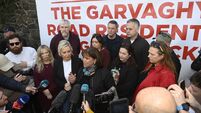
Instead of the usual suspects of teachers and politicians, the campaign has been very much fronted by parents and community activists. Although unions and political parties have been supporting their campaigns, it is the families of children in some of the country’s least well-off neighbourhoods whose voices have been loudest since the budget announcements in early December.
Tracey Ring was one of a number of parents who attended an emergency meeting at her son Alex’s school in Farranree on the hilly northside of Cork City after the budget.
As a qualified special needs assistant, she is aware of the importance of the support of the extra teachers and how vital they are to the school’s ability to put extra focus on literacy and numeracy.
“Any parent’s first reaction is to protect their children in any circumstances. The only thing I can try and get my child is a good education, it’s a stepping stone for the future. I felt like my children were being picked on,” said Tracey.
Her son’s school, Scoil Iosagáin, was due to lose eight of its 24 classroom teachers if the pre-Deis posts were withdrawn and the likely impact was not lost on the 27-year-old.
“We formed a parents’ action group, we had constant meetings on a weekly basis and we set up our own webpage. We had a very strong committee, most of use were stay-at-home mums.
“At the start, it was just parents from Scoil Iosagáin, and then people from other schools started to come along to our open meetings.”
However, the small group of local parents concerned about the impact of cuts on their children brought out hundreds on a march through the city centre on a wet Saturday afternoon at the end of January. The Department of Education report published on Tuesday shows that 18 of the 20 Cork City schools in the Deis programme were due to have lost 32 teachers from September.
Another protest had been scheduled in Cork today but this and others around the country were called off after the Deis cuts rowback by Mr Quinn. The move was being celebrated as children were dropped off at Scoil Iosagáin and dozens of others around the country yesterday.
“We’re all delighted, the buzz around the school is unbelievable,” said Tracey.
“It was fantastic, it’s a massive relief that the Government listened to parents and people who put in all the work ringing politicians, writing letters and everything.
“Even the few people who didn’t come out on protests were watching it on the news, reading the paper or watching Dáil reports. It’s after opening people’s eyes.”
Government party backbenchers, including TDs who voted down a Sinn Féin motion to reverse the Deis school just six weeks ago, flew out of the traps to clap Mr Quinn on the back after the rowback emerged on Tuesday evening.
While the parents’ action group and others acknowledged that the minister came out and admitted his mistake, the matter also raises questions about the decision-making process.
Fianna Fáil complained this week that a Freedom of Information request for access to Department of Education files on the issue was turned down.
More worryingly, perhaps, the budget in which the Deis cuts featured in December was not supposed to have been composed on the hoof. The Government boasted last summer how a proper consultative process between various ministers, their departments, the Department of Finance would mean a fairer budget that took prior consideration to possible consequences.
It appears that either the backbenchers who claim to have influenced the latest budget U-turn were not listened to before the budget or were not consulted as widely as the Coalition would have had us believe in the first place.
The real lesson from all this may be for the Government on how it reaches decisions, particularly given the awakening of political activism by ordinary citizens.
“I think it’s after encouraging people to get more involved in politics and they have more understanding now of how these things work. Before this, people were more willing to sit on the fence and let things run their course,” said Tracey Ring.
However, while one group expressed relief, others were likely to continue their campaigns, none more so than the groups that have sprung up in rural Ireland since the budget.
A number of Save our Small Schools (SOSS) groups staged protests in their own regions and at the Dáil since the announcement of phased changes to how schools with four teachers or less are staffed.
Mr Quinn announced on Wednesday that any of the 73 schools due to lose a teacher as a result next September could appeal if they believed their pupil numbers would rise enough to justify keeping the teacher. Anger remains about the long-term impact, seen by many communities as a back-door attempt by the Government to force small rural schools to close or amalgamate.
At an SOSS meeting in Tralee, Co Kerry, on Monday, hundreds of people were told that a survey of 55 schools suggested that nine would definitely lose a teacher, 12 were likely to lose one, and eight were in danger of a staff reduction. The outcome may hinge on the loss or gain of just two or three pupils in any school each year, but the issue is complicated by the fact that every school’s teacher allocation is determined by the number of children in the roll book the previous September.
Paul McCarthy, principal of Lauragh National School, said there was huge resentment in rural communities at the way Government policy seemed to target schools in isolated communities for cuts, while cuts to urban schools were being largely overturned.
Arts Minister Jimmy Deenihan, a Fine Gael TD for Kerry North/West Limerick, is to give a letter written by three Lauragh children to Education Minister Ruairi Quinn.
Suzanne Smyth said her children, Jessica, 9, and Harry, 7, and her nephew, Richard, 9, wrote the letter as they felt small country schools were being “picked on” because they were smaller than town schools.
“We are being bullied by the Government because we are not big and strong,” they said.


CONNECT WITH US TODAY



Be the first to know the latest news and updates