A key re-election platform
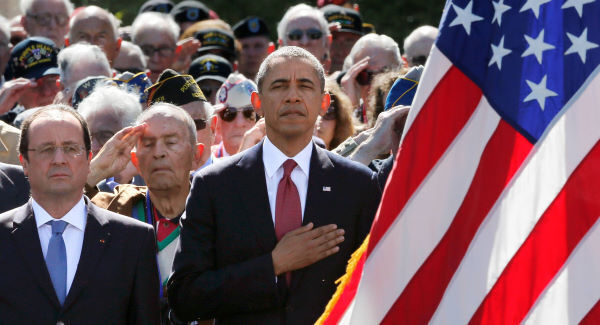
US PRESIDENT Barack Obama pitched new initiatives on jobs, taxes and housing in a state of the union address last night as he seized his biggest moment yet on the national stage to make a sweeping case for a second term.
However, most of Mr Obama’s proposals will face stiff Republican resistance, limiting any chance of headway in a divided Congress before the Nov 6 general election.
The White House hopes Mr Obama can gain enough traction with voters through his speech to help restore faith in his economic leadership as the Democratic president defends himself against escalating attacks by Republican candidates vying to face him on the November ballot.
Mr Obama’s approval ratings have slumped in recent weeks and his state of the union address was key to trying to reverse that trend.
But do presidents actually get a “bounce” in the polls after delivering a strong address?
Shortly after being elected in a three-way race with just 43% of the popular vote, Bill Clinton gave his state of the union address on Feb 17, 1993. His Gallup Poll numbers transformed his post-inauguration number, a 51% approval rating, to an amazing 59% approval rating, giving him enough political capital for a tough budget fight.
Clinton’s dramatic performance gave rise to the myth of that providing a state of the union address leads to a boost in approval ratings. After all, it’s a prime time speech. The president doesn’t field questions from journalists or members of the opposition party. There’s a lot of clapping and presidents often say things designed to appeal to the public.
However, after riding in a crest of historical approval ratings, it’s been tough for Mr Obama to live up to the hype. If anything, his state of the union address speeches ahead of last night resulted in almost no bounce whatsoever.
But Mr Obama was delivering his third state of the union address in a capital and country shot through with politics, with his re-election campaign well under way and his potential Republican opponents lobbing attacks against him daily as they scrap for the right to take him on.
Cheers and standing ovations by legislators may have rung out last night but the ritual theatrics will do little to disguise the toxicity of Washington politics, the clouds around Mr Obama’s re-election bid or the agony of millions of American voters struggling to make ends meet or find a job.
Mr Obama’s speechwriters, of course, were thinking of nothing less than of a tough re-election battle, sagging poll numbers, and proliferating attack ads.
“He needs to try to set up the issue agenda that he’ll be talking about throughout the reelection campaign,” said Les Francis, who was deputy White House chief of staff for Jimmy Carter, who failed to do that in his 1976 address.
Chriss Winston, who was chief speechwriter for George W Bush at the beginning of his administration, said Mr Obama would make a mistake if he aimed his remarks at Congress.
“Congress is only one audience, and I would argue that the American people is the biggest and most important audience.
“What the speech ought to reflect is what your agenda as president will be for the coming year that addresses their concerns.”
State of the union addresses, especially those early in administrations, are often laundry lists of policies and programs, many of which quickly expire.
This time, Mr Obama’s speech had to be a little different from previous efforts, to sketch a blueprint for his re-election run and ask voters to choose between his economic vision and that of his Republican rivals.
Aides acknowledged that Mr Obama had to look long-term, in what was his best chance for months to leverage the symbolic power of the presidency for personal political gain.
Though they hope the recovery will gather momentum, senior Obama aides know that economic factors beyond their control — perhaps European debt contagion spilling across the Atlantic — could further erode Mr Obama’s prospects.
So the president is conjuring up an alternative reality — posing as a populist warrior for the middle class dedicated to a new economy where all Americans get a “fair shake”.
This long-term vision, and Mr Obama’s speech last night, are of vast importance.
Republicans will argue that Mr Obama has hiked taxes, stifled job creating entrepreneurs with over regulation, piled on government debt and lost America’s cherished AAA credit rating.
So given the pressure he’s under, the state of the union address has not become obsolete.
In the past, it was a monumental moment. However, in today’s world everybody knows all the time what Mr Obama thinks about everything, from the White House website and countless other political sites, twitter, TV shows and press reports.
Former speechwriter for George W Bush, Kasey S Pipes, said Mr Obama would “have the chance to offer new ideas on creating jobs, balancing the budget and paying down the national debt”.
Former speechwriter David Kusnet, who has firsthand experience with the ritual, says that the speech “is a great tradition that keeps evolving but shouldn’t be eliminated”.
Mr Kusnet, senior wordsmith at the Podesta Group public relations firm, served as Bill Clinton’s chief speechwriter. Mr Kusnet worked on Mr Clinton’s 1993 economic address — a de facto state of the union address since it was delivered in February 1993, to a joint session of Congress — and his state of the union speech in 1994.
The annual moment, Mr Kusnet says, is an example of “American democracy as a work in progress”.