Clodagh Finn: Meet Millie Robinson, the Mayo cyclist who won the first women's Tour de France in 1955
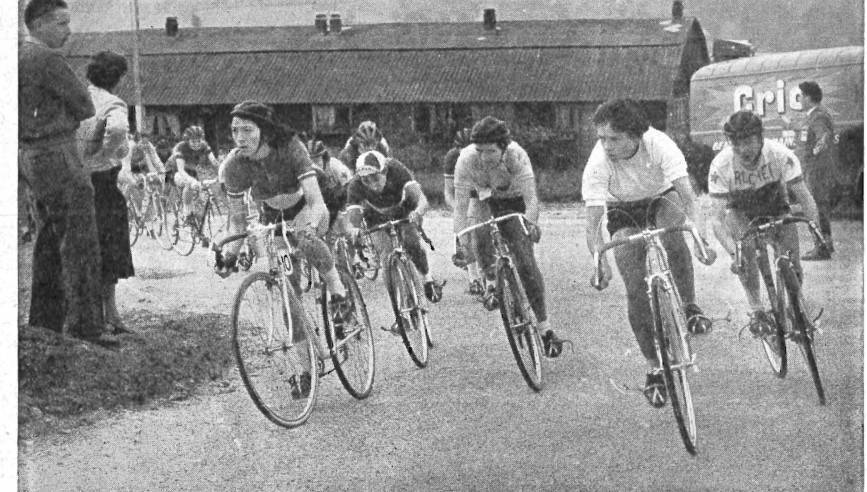
The 1955 Tour de France Féminin. From left: Lydia Haritonides, Marie-Jeanne Donabedian, Mayo-born Millie Robinson, Lyli Herse (in race leader's white jersey) and Jacqueline Hoyau. Pictures courtesy of the 1955 winter edition of JB Wadley's Coureur magazine

As the Tour de France Femmes gets under way today, I wonder how many people can name the Irish woman who won the tour’s first stage race for women in 1955?
She was from Mayo, a county still basking in the long-awaited (and so well-deserved) after-glow of All-Ireland victory. The memory of the last time the Sam Maguire went west, 75 years ago, is etched in local consciousness, yet a remarkable international win by a Ballina cyclist just a few years later remains little-known.
In October 1955, Millie Robinson, van driver, wheel-builder and singular cyclist, became the first woman to win the all-female Tour de France, finishing five stages over five days (372 km) in a time of 10 hours, 37 minutes and 58 seconds.
The race was a one-off and many decades would elapse before the women’s Tour de France became an annual event, but there were other cycling events for women, and Millie Robinson won most, if not all, of them.
“The Greatest Woman Cyclist of Them All,” the joyfully proclaimed in April 1959, claiming the world-record breaker, as she was by then, as one of their own; “a girl from Ballina”.
It went on to outline her achievements. Here’s a flavour: In 1958, Millie Robinson won the British Best All-Rounder time-trials. She also broke the British women’s hour record in Manchester and, a few months later, she set a new world record in Milan, cycling 39.718 km (1.149 km more than the previous record) in an hour in the Velodromo Vigorelli.
But we are doing exactly what she did, racing ahead. Let’s backpedal a little to outline the path from Mayo farm to international cycling acclaim.
Jessie Mildred Kathleen, or Millie, was born on December 3, 1924, to farmers Thomas and Sarah Robinson in Co Mayo. There were nine in the family and during a speech given to a rotary club, many years later, she described her childhood experience of riding a bike that didn’t have any tyres.
At least it never had a puncture, she quipped.
There were farmyard bicycle races with her brothers — one of whom, the better-known George, became an Irish national champion — but she opted out. “I always seemed to be the one to land in the midden [the rubbish heap] so I soon got tired of this and used to have races in the pony and trap instead.”
The family moved to the Isle of Man in 1935 and when the war broke out, Millie joined the land army and criss-crossed the island, on bicycle, doing her bit to keep a country at war fed.
That certainly developed her stamina, but she didn’t start cycling seriously until 1949, when she and a friend, Ann King, joined the Manx Viking Wheelers. They moved to Leeds — Millie worked as a van driver in her brother’s haulage business — and later Nottingham where, aptly enough, the future Tour de France champion worked as a wheel builder for bicycle manufacturer, Raleigh.
Meanwhile, she was taking on the best cyclists in the UK and beating them.
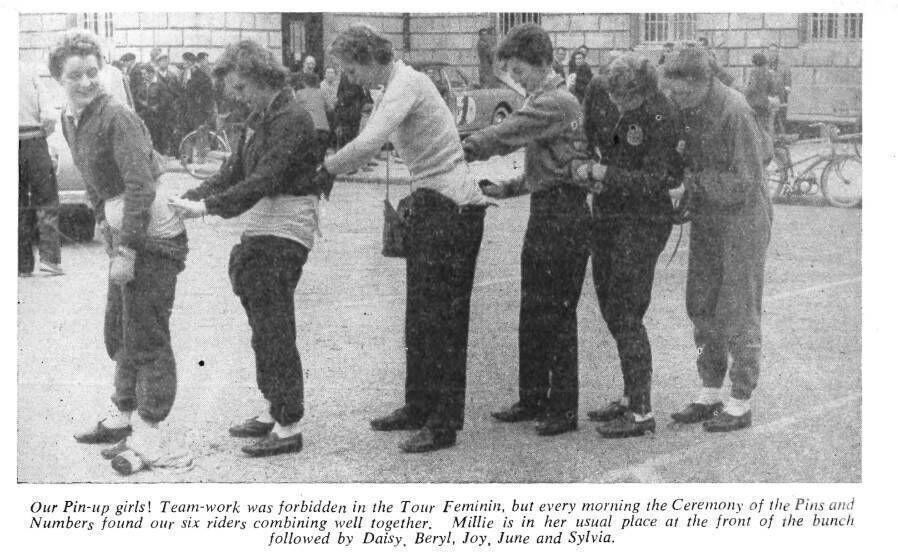
By the time 48 women gathered in late September 1955 in Printemps in Paris to sign up for the Tour de France Féminin, as it was called then, she was ready for real action, joining a strong team of British cyclists.
It’s fascinating to see the fanfare that surrounded the launch, which took place in the high-end department store to boost publicity for the shop itself, of course, but also the event, which was only the second all-female cycling race held in France.
Indeed, Millie had won the first race the previous July, taking the overall title at the three-stage Circuit Féminin Lyonnais-Auvergne.
In 1950s France, women in sport was big news, even if there were some detractors.
British cycling journalist Jock Wadley was reporting from the thick of it: “The promotion of this ambitious race was a triumph for the French racing girls and their considerable number of male supporters, but all the same there was quite a strong public feeling against it, largely promoted by a small section of the press. Yet there had been no attempts to ‘sabotage’ the race,” he wrote.
We can almost ride alongside the peloton of that year thanks to his evocative coverage. Or rather, he puts us in front of the pack as he saw the race from the pillion seat of French journalist René de Latour’s motor-scooter, which rattled along ahead of the cyclists.
Wadley’s highly entertaining account runs over several pages in the cycling magazine he set up, (a digital version was kindly given to me by Feargal McKay of cycologies.com).
From this remove, some of his reporting sounds dated and sexist. Take this line, for example: “Behind us the riders, so ladylike off the bike, were descending like dainty devils, and only by racing madly ahead and clattering round cobbled corners did we avoid getting mixed up in the bunch.”
And yet, Jock Wadley calls himself out on some of those remarks and, taken in the round, his report is imbued with respect for the women’s sport and the cyclists themselves.
There are several mentions of Millie, including one that shows she had her sights clearly set on a win. On the evening before the fourth stage, she asked Wadley to find out as much as he could about the route ahead — the terrain, the distance, the hills and the presence or not of a finishing circuit.
“Then,” he wrote, “it was my turn to ask a question as Millie pocketed a few lumps of sugar left in the coffee cups of the restaurant where she was sitting. ‘So you’re going to have a go, then?’ And Millie said she was.”
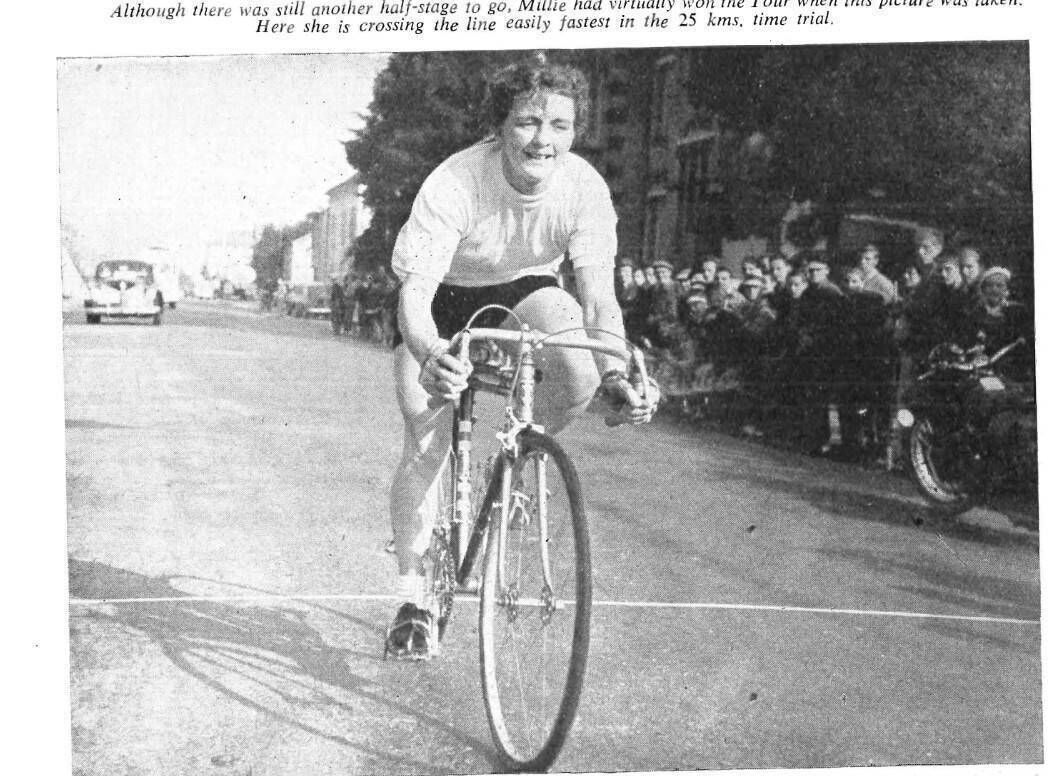
And she did just that, taking the white jersey of the leader (it was white then) as she finished stage four 13 seconds ahead of her nearest rival. The next day, in the 25km individual time-trial, she was half a minute ahead of June Thackeray, winning with an average speed of 38km/h.
Her win made headlines, in France, here and in the UK. The press followed her career with interest until she stopped cycling in 1960, returning to the Isle of Man where she became a partner in a sign-writing business in Douglas. When that business closed, she worked as a prison warden.
She was diagnosed with cancer in the 1990s and her nephew Kevin Christian gave cycling writer Giles Belbin this poignant description in 2022: “She had been taken in by Ann [King] and her husband, a consultant doctor, to see out her final days. I went in to see her in the bedroom. It is etched in my memory. Without being asked, she said, ‘Kevin, do you know what I wish?’
"I said, ‘No, Millie, what is it?’
‘I wish I had more time.’”
She died, aged 69, on January 23, 1994.
Millie Robinson, “Irish born, Isle of Man developed”, as she was once described in the , was one of the greatest cyclists of her time, yet the memory of her achievements faded, though not completely.
Last year, in a beautifully written piece in the , Aonghus Ó Maicín wrote: “There are no statues to Millie Robinson. No murals. No roads named in her honour. And there’s no doubt that there should be.”
I’d like to say the Tour de France Femmes now gets the attention it deserves. And true, there was much last year after Lara Gillespie’s superb stage-four ride earned her a third-place finish.
She’s opted to skip this year’s race, but two Irish cyclists Mia Griffin (Team Picnic PostNL) and Fiona Mangan (Mayenne Monbana My Pie) will be among the 145 riders who start the nine-stage race in Lausanne today.
At the time of writing, I hadn’t seen much coverage of it. Here’s hoping that improves as the race goes on.

CONNECT WITH US TODAY



Be the first to know the latest news and updates