Mick Clifford: Fuel protests at GPO symbolic of how our democracy conceived in 1916 has evolved
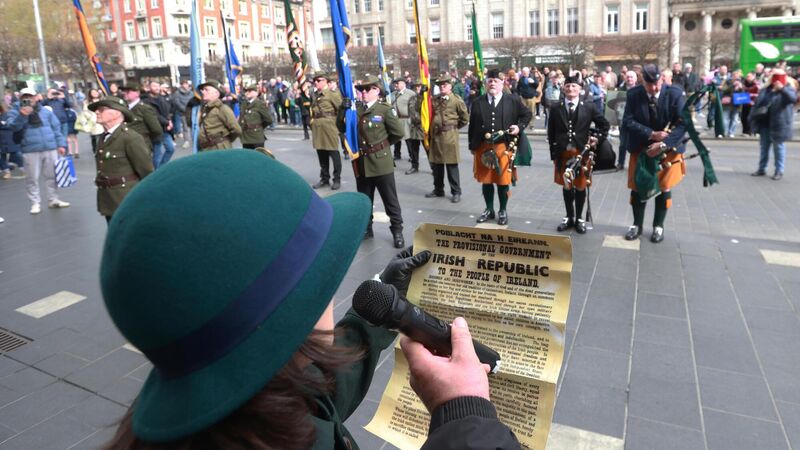
Captain Eva Houlihan reading the Proclamation outside the GPO on Easter Sunday. Picture: RollingNews.ie/Sasko Lazarov

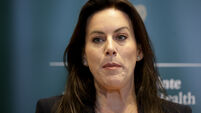
A light rain began to fall as Captain Eva Houlihan stepped forward with the Proclamation. She unfurled the parchment there in front of the GPO and read it in full, just as Pádraig Pearse had 110 years ago. “Irishmen and Irishwomen, in the name of God and of the dead generations from which she receives her old tradition of nationhood, Ireland, through us, summons her children to her flag and strikes for her freedom.”
The ceremony last Sunday on the hallowed site of the 1916 Rising was tastefully conducted with due solemnity. There was the usual sense of poignancy about it concerning the leaders. Their sacrifice was the defining feature of the Rising, awakening among the public the sense of outrage and patriotism that propelled the country towards independence, or at least the degree of it that was achievable.
They had acted without any popular support and instead drew their legitimacy from the dead generations. Such a premise for starting a conflict may be dodgy, all things being equal, but it occurred during an imperial age against an occupier which derived its own legitimacy through the barrel of a gun. So it was back then.
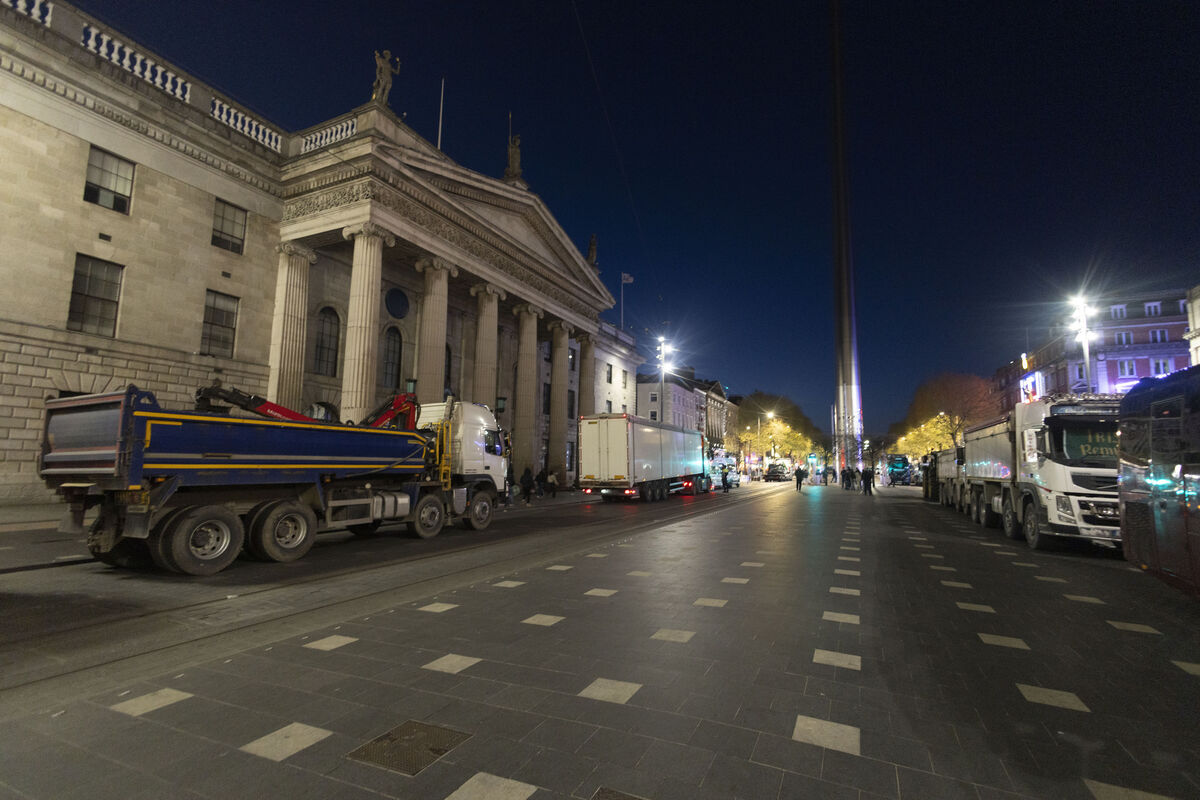
Just over 48 hours after the Easter ceremony last weekend there was another gathering at the GPO. This was, in some ways, symbolic of where the century-old democracy that was conceived in 1916 is now at.
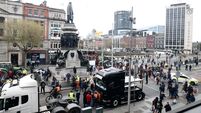
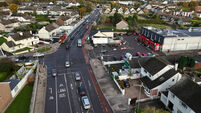
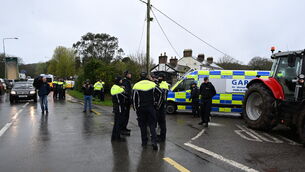
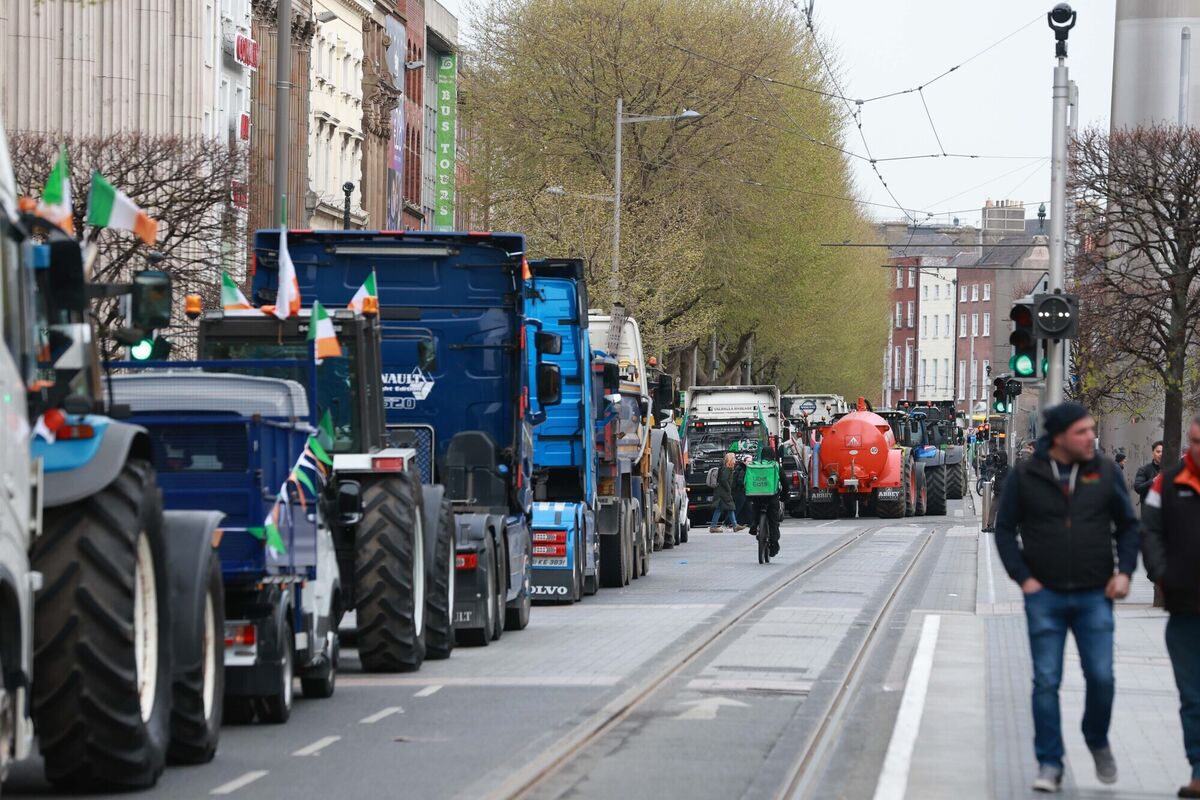
O’Connell Street was blockaded with tractors and trucks as part of a countrywide protest against ballooning fuel prices. Main arteries and points at centres in Cork, Limerick, Galway and large towns were all brought to a standstill. For the greater part, the protestors were agricultural contractors, farmers and hauliers.
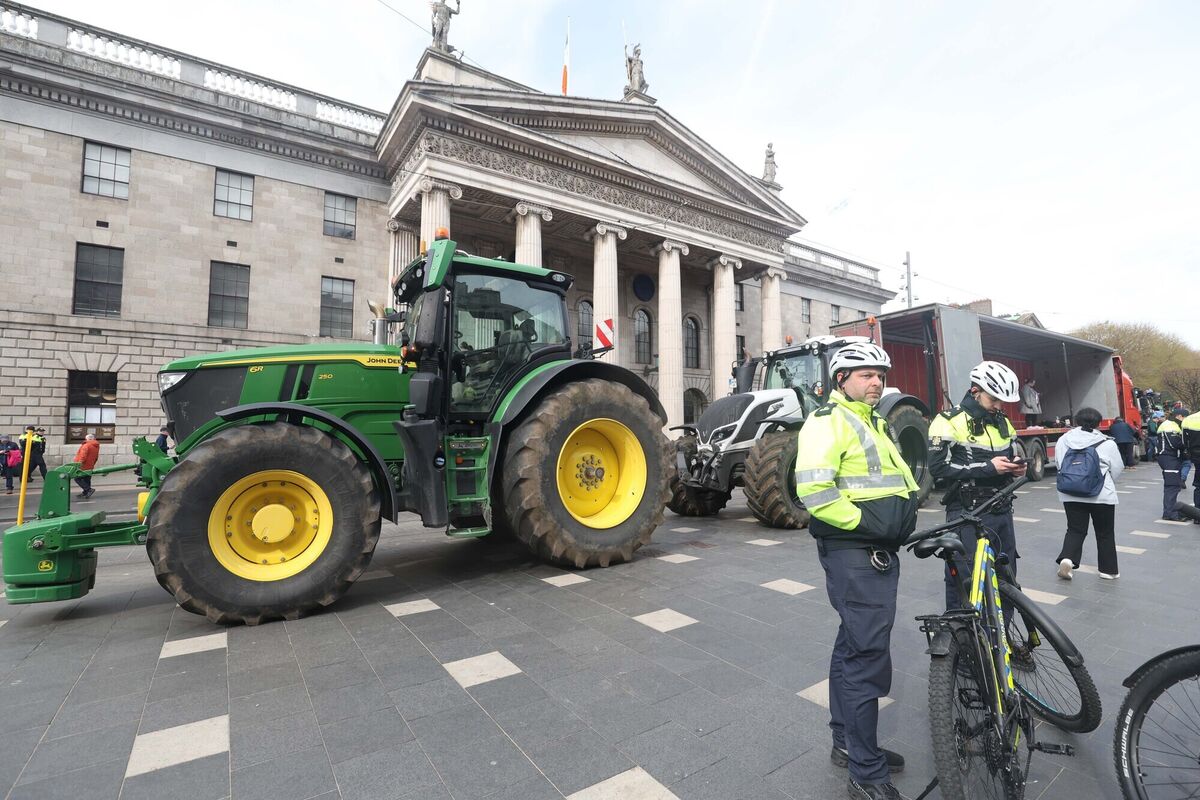
Those attending were obviously highly frustrated and of the opinion that long-standing democratic mechanisms have not served their cause. As a result, they invoked their power, through their vehicles, to bring cities and main arteries to a standstill.
One of their apparent leaders, John Dallon, repeatedly stated on media they were representing the Irish people. “We are speaking for the people of the island of Ireland,” he told RTÉ's . “We have a voice”. This veers close to being ridiculous. The protestors are speaking for themselves, self-employed businesspeople who are, like many other sectors, under enormous pressure, most acutely due to the war in Iran.
At the GPO on Tuesday, a truck was fashioned into a makeshift stage. Various politicians from Sinn Féin, Independent Ireland and Aontú spoke. Two independent councillors were also given a platform. Gavin Pepper represents Finglas in Dublin City, not known as a farming stronghold. He has been described as a far-right activist. His appearance was, to say the least, incongruous.
The other was Tom McDonnell, an independent councillor from Kildare. He mentioned the fuel crisis but then he revved up in a different direction. “All those Ipas centres want to be emptied straight out.” That got one of the more enthusiastic responses from the crowd of 300 or so.
He went on: “This was the most beautiful city in the world. Up in that square [he was pointing towards Parnell Square], three children were stabbed. We have to get these people out of the country. this city belongs to us. It doesn’t’ belong to them up in the Dáil. They are just passing through. It’s time to get them out.” That equally got a response. The incident he referenced is before the courts.
Protests of this nature are now a magnet for far-right and even populist right activists. Online, the usual accounts were all over the protests, amplifying division, casting themselves as allies of the people of Ireland, summoning her children to the flag, or at least the hijacked interpretation of the flag that has been at large of late.
That is not to suggest the bulk of protestors subscribe to far-right philosophy, but equally, such a gathering not so long ago would have been a magnet for politicians of the left. That has changed.
In the media, spokespeople for the protestors suggested the State should “take care of their own” and not send money to places like Ukraine, a fellow democratic European country that would be delighted if the most pressing issue faced was an increase in the price of fuel, rather than surviving being bombed.
Had the protest ended with a day’s disruption of the capital, and even the country at large, it would have been an entirely legitimate expression of extreme frustration. Instead, it morphed into a blockade.
The self-styled representative of the people of Ireland decided to restrict the movements of the rest of the people of Ireland, irrespective of how urgent the latter’s journey may be. They went further through restricting access to fuel by blockading the refinery at Whitegate and other facilities.
The message was clear. The demands of the protestors supercede the needs of everybody else, as if they and they alone are enduring the most harrowing struggles right now.
On the airwaves, the leaders absolved themselves of any responsibility for missed appointments for cancer patients or other emergency journeys. “It’s not my responsibility, it’s the Government’s responsibility,” spokesperson James Geoghegan said of the protest in which he was a leader.
On Thursday, John Dallon even said he had no responsibility for the blockade at Whitegate. This from a man who claimed to speak for not just the protestors but the people of Ireland.
On RTÉ radio, communications minister Patrick O’Donovan repeatedly referenced those at the apex of the protest as “ringleaders”. Again, the tough guy rhetoric was misplaced.
At least the Taoiseach had the cop-on to abandon plans for a trade mission to Canada, which had it happened would have invited political peril.
This is where things are at this point in the evolution of the democracy first conceived on the steps of the GPO. Some of the deep-rooted problems that dogged the State for the first 70 years of its existence have been tackled. Now, different issues are coming to the fore in the midst of global upheaval.
The fuel protestors have used their physical power, as expressed through their vehicles, to disrupt, and in some cases even endanger, the public in an attempt to hold the Government to ransom. That is a new departure. A proportionate response to their legitimate grievance is forgone in an environment where the big, populist gesture is the be all and end all.
Social media is used to inflame emotion and spread misinformation to the point where they claim with a straight face that they are representing the people of Ireland.
Ultimately, the only winners from these actions are those who desperately want to sow the kind of division and resentment that is now a mainstay of politics in many other countries.


CONNECT WITH US TODAY



Be the first to know the latest news and updates