Paul Hosford: The blame game and outlandish demands will not resolve our fuel issues
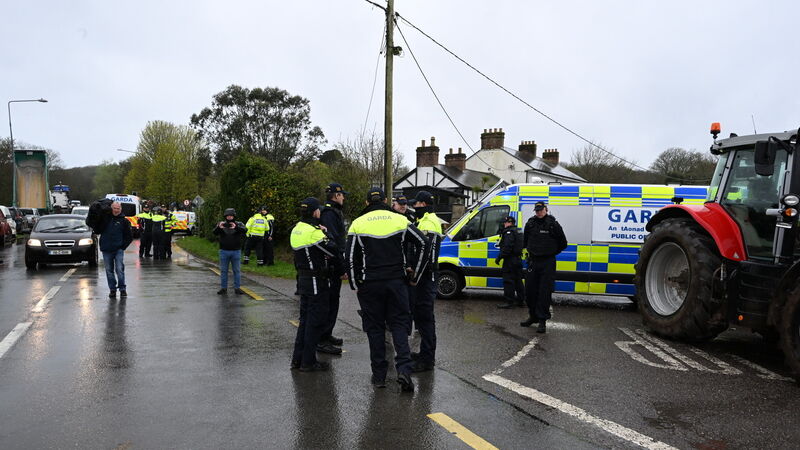
We have spent years talking about the risk to critical infrastructure from a Russian shadow fleet, when the entire thing was brought down by a few trucks with their handbrakes on. Picture: Larry Cummins

I'm not entirely sure that I'd have been a good astronaut.
For starters, my maths isn't up to snuff and I recently felt ill on a child's ride at Tayto Park. But I like the idea, you know?
This week, it was hard not to envy Reid Wiseman, Victor Glover, Christina Koch and Jeremy Hansen, the crew of NASA's Artemis II mission, simply because they were not on the planet and had some time on the dark side of the moon blissfully out of contact, not aware for a few moments of the latest Donald Trump screed or engaged in the discourse around the protests which crippled Irish roads and fuel deliveries this week.
Mr Trump's war, alongside Israel, has of course led to the closure of the strait of Hormuz, constrained supply of oil and rising prices, but protests didn't focus on him or his country's embassy. Besides, he was too busy threatening to kill 93 million people in Iran.
"A whole civilization will die tonight, never to be brought back again. I don't want that to happen, but it probably will,” the most powerful man on the planet posted on the social network which he owns, a combination of words which always makes me fear I've suffered a brain injury.
This week has laid bare a few things. Firstly, that we have spent years talking about the risk to critical infrastructure from a Russian shadow fleet, when the entire thing was brought down by a few trucks with their handbrakes on.
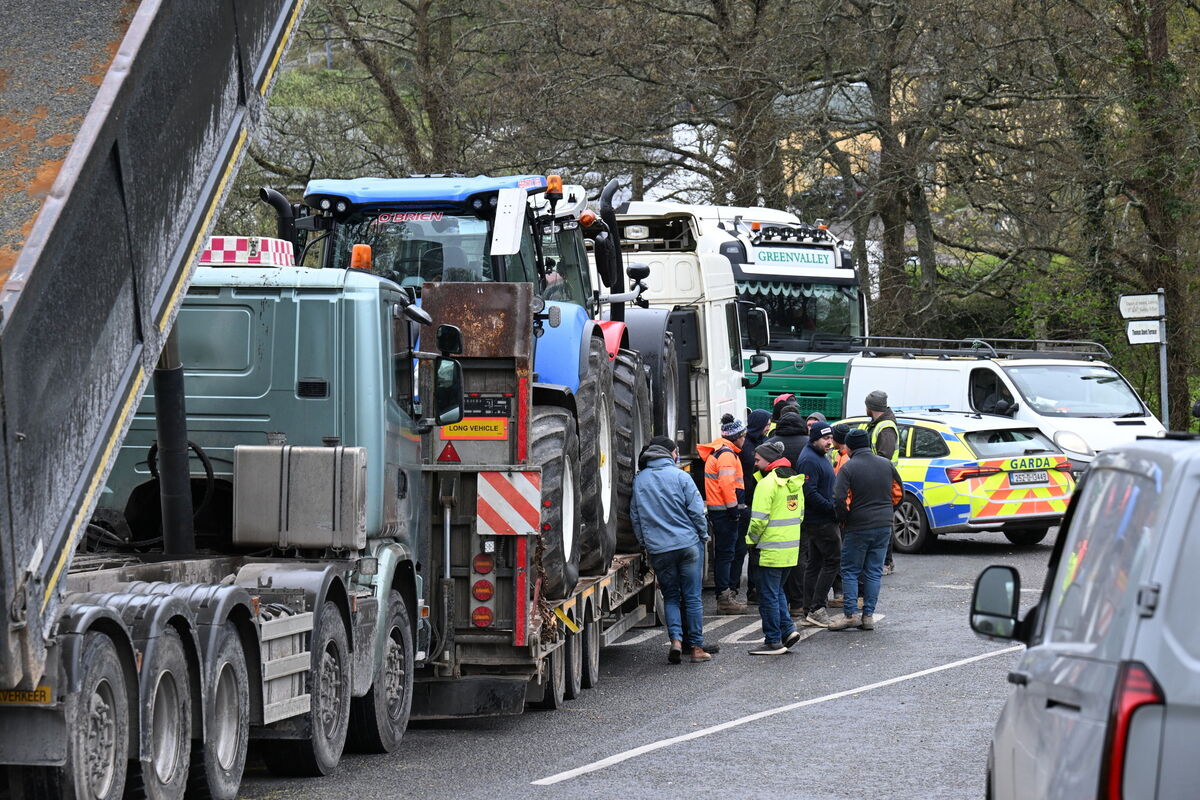
But, more importantly, the week's events showed how polarised and, frankly, angry Irish discourse is increasingly becoming. Within hours of the slow-moving convoys setting out, lines were drawn in the sand. You had to be with or against and it wasn't enough to just be with.
As the week wore on, you couldn't just support people who have seen a price shock affecting their businesses due to factors entirely out of their control.
You couldn't just support the nominal aim of cheaper agricultural diesel, by week's end you had to want all taxes on petrol gone — a measure that would take billions a year from the public purse, more than the yearly budget of the Department of Transport.
It wasn't enough to think that the Government had misread the situation. You had to want the Government to fall. And it wasn't enough to want the Government to fall, you had to be ok with protesters who had nooses in their vehicles.
Much of the language on the fringes of the actual protest was right-wing online American speak and showed that for some this was about diesel, but for others this was about unquantifiable anger without a place to go finding a home.
A video of Paul Murphy, an opposition TD who showed up to Dublin's O'Connell Street to support protesters, being mobbed by people shouting about immigration and trans issues showed that as the week wore on, this had become a kind of 'whatever you're having yourself protest', a buffet of grievances with diesel prices as the tip of the spear.
That anger, coupled with the loose nature of the protest's organisers and seemingly ill-defined demands, put the Government in a bind for a number of reasons.
Chief among them was that the Government is used to negotiating with lobby and representative groups who work through a graduated framework. It's all pretty predictable.
When a group of agricultural contractors, farmers and hauliers who feel unrepresented by those groups decided to tear up that rulebook, they did so without a clear leadership or, for at least the start of the week, no clear goal other than "cheaper diesel".
By week's end, that had become fuel price caps, but with oil exploration and a number of other things tacked on by the disparate and disaffected group.
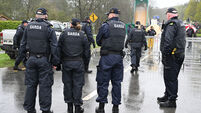
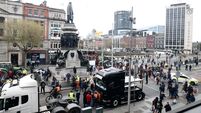
Convoys turned into blockades and much of Dublin has been a glorified car park for the week. When asked about it earlier in the week, junior minister Michael Healy-Rae tried to play both sides, saying that those responsible were "the workers of Ireland", as if the people of Dublin just exist in a bubble and don't work.
But that distinction, and the protests overall, highlighted a deeper issue than rising prices alone: the growing risk that ordinary people become divided when facing shared economic pressures and how easily exploited that division can be.
The cost of living has surged in recent years and social cohesion isn't just desirable, it is essential for achieving meaningful and fair solutions.
At the heart of the Irish fuel protests is a frustration felt across society. Rising fuel costs impact commuters, small business owners, farmers, and delivery drivers alike. But it is worth recognising that while we are all in the same storm, we are not in the same boat.
I don't drive much if it's not for work, so diesel prices and a massive spike in green diesel is less of a concern for me than those who are on the streets this week.
But that doesn't mean that I cannot see the knock-on effects of higher input costs for the people who make and deliver food products, even if I disagree with their methods, tactics and organisation.
That fractured nature of protests has meant that policy responses have been massive — billions in one-off supports — but not structural.
Cost-of-living issues are inherently systemic; fuel prices, for example, are tied to global energy markets, tax policies, and environmental commitments like the carbon tax. But while a delivery driver in Dublin, a farmer in rural Cork, and a nurse commuting to work in Limerick all experience the burden differently, the root causes overlap.
As we have seen across the globe, however, the bigger issue is that this kind of division can be exploited.
Speaking to the media on Thursday afternoon, justice minister Jim O’Callaghan said: “When you look online at present, you can see that many outside actors are seeking to manipulate these people for their own purposes.”
He added that British right-wing activist Tommy Robinson, real name Stephen Yaxley-Lennon, was “referring to and relying upon these protests to advance his own political measures”.
To be clear, Mr Robinson is not a root cause of a large part of the Irish public's anger. He did not foment or start these protests. He wouldn't know how.
But he is happy to jump on a bandwagon for his own purposes and should be given short shrift when it comes to Irish fuel policy.
Not only because fuel prices have nothing to do with immigrants or trans people or Ireland's overseas aid, but because when demonstrations become associated with extreme viewpoints, public support can and will quickly erode.
As is the case the more outlandish the demands become — a VAT cut that would knock out billions in planned spending is never happening, neither is the Government calling an election on the issue.
In times of economic strain, it is easy to look for someone to blame. But lasting solutions rarely come from division, and leaving the planet isn't really an option for now, much as we might like to.
CONNECT WITH US TODAY



Be the first to know the latest news and updates