Sarah Harte: Leaving a place means losing an entire version of your life
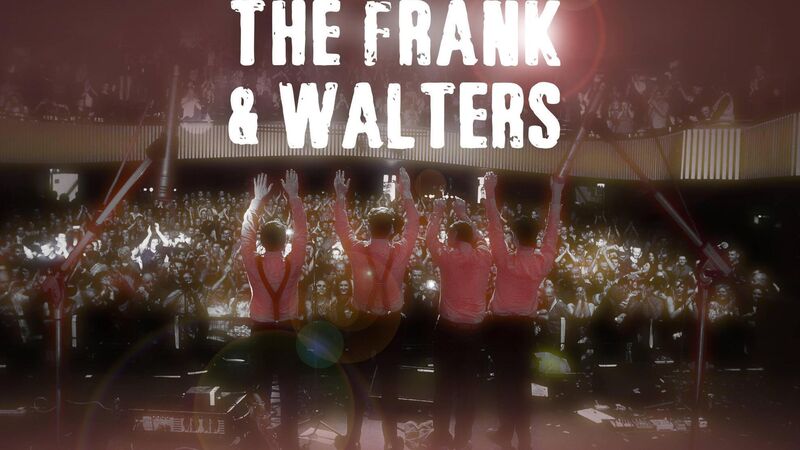
The Frank and Walters, a Cork phenomenon who had international success in the early 1990s and are still thrilling audiences today.

The novelist, filmmaker and wit Nora Ephron suggested that you don’t just leave places; you lose entire versions of your life. Returning to a city you lived in for decades brings a discombobulating sense of familiarity, but also a distinct melancholy.
Last weekend, sitting outside the Metro Café on South William St with a pal, having a cup of tea, I bumped into Mary Costello, the writer and her lovely partner. I interviewed her last year. Her new book, , was launched in Cork yesterday.
Costello has been described as one of Ireland’s greatest writers, and rightly so. She brilliantly explores what it means to be human, and this novel explores female agency in relationships.
In the prologue, ‘Anna’ tells us that she is trying to "account for certain events in my life… I mean also that I am trying to understand what went on in my mind over two decades."
Anna wants to "understand why we do what we do, or tolerate what we tolerate, or love who we love". These are big, often painful questions that many of us ask ourselves as self-knowledge is hard won.
Later, when I went to Easons on Nassau St to buy a copy of her book, two in fact, one for me and a copy for my host, I saw another west of Ireland person, Pat Rabbitte, former leader of the Labour Party, the sharp-tongued purveyor of memorable witticisms. Like me, he clearly enjoys cruising bookshops. These were my ‘celebrity’ sightings.
I exited Easons and walked the post-work streets, where people had been released into the Friday evening hubbub. I realised that I had become an observer rather than a participant. I moved through the streets like a ghost. There was that emotional residue linked to geography.
Displacement means you can’t get back to a place where you built a career, a city where you raised children and formed lasting friendships. A place you were not from, but where you gradually became interwoven into the social fabric of the city. You loved it, and then it was gone. You were exiled in a way.
There’s a quiet, almost grief in realising that your former life is inaccessible to you. There are ghosts you must lay to rest. You inevitably navigate the archaeological layers of memory, reviewing past decisions and asking some of the questions that Costello’s ‘Anna’ grapples with.
I took the Dart from Pearse St with my suitcase. Through the window, I saw two figures, holding hands on Sandymount beach, their hoods up. A couple enjoying the beginning of the weekend. Silhouetted against the sheltering Dublin sky, on the sand, taking another step forward.
On the Dart, I listened to the chattering schoolboys next to me from the International School Dublin in Portobello (the insignia on their t-shirts told me this) who were discussing chess moves. They told me when to get out. I couldn’t make out how many stops there were from Pearse St to Sandycove Glasthule because the print on the map was too small.
Again, that feeling of who am I on the Dart, with my suitcase, where am I going, and where do I belong? I cannot go back to Dublin, it seems, without having these existential thoughts. Apologies if that sounds pretentious. It’s true.
I went to see the Frank and Walters in Walter's pub in Dun Laoghaire. The Frank and Walters are an indie band, a Cork phenomenon who had international success in the early 1990s.
They memorably performed on Top of the Pops in 1993, which was fun to watch at the time, in an "I know them, boy" kind of way.
Before the gig, I sat next to a couple as a silent observer. They had such great chemistry that I assumed they were having an affair. Eventually, I realised that because they were talking about their sons, they were married.
We got chatting. They laughed when I said I thought they were having an affair and why.
I met an old friend who got a striking tattoo and a motorbike (he inhabits corporate life for his day job), and there were jokes about midlife crises. It was lovely to bump into people I hadn’t met in decades and to catch up, filling in the blanks.
I saw a member of the judiciary burst in with his wife, busting a gut to get to the gig. It brought me back. He may be handing down most learned judgments as a short-back-and-sides member of the establishment, but, for a flash, I saw him as he was at 20, in his Doc Martens and black leather jacket, frequenting the same night spot as I. Sir Henry’s was a place where Frank and Walters played. It struck me that there was an odd circularity to it.
Paul Lenihan, the lead singer of the Franks, and I had a word after the gig, remembering past days, mentioning old friends, conjuring up, in a way, other lives we might have lived, roads not taken.
It was nostalgic. Although ‘nostalgia’ is a portmanteau of the Greek words ‘nostos’ (home) and ‘algia’ (pain), implying that past reflections are marbled with pain, nostalgia is not always a bad thing.
There is good nostalgia and bad nostalgia. Bad nostalgia, or what Harvard professor Svetlana Boym identified as ‘restorative nostalgia’ in her foundational book , is when you want to rebuild the past because you feel your best days are behind you.
It’s a longing for a ‘home’ that no longer exists, or perhaps never did. A personal Ithaca we fantasise about. Uncertainty, for whatever reason, can cause us to romanticise the past.
Good nostalgia, or what Boym described as ‘reflective nostalgia’, is lingering briefly in longing itself. You understand that you can’t retrieve your autobiographical past because the past is, well, the past.
But you enjoy a friendly memory. In a way, the distinction is how we deal with change. Sadly, Boym died of cancer at only 56.
The Franks are on tour this year to celebrate 30 years of their iconic album . Paul Lenihan’s voice is still impressive. The audience ate him up.
I sensed the line "after all that we’ve been through" resonated with the crowd, given our age profile, with cultural memories intertwining with personal memories.
We got to our feet, singing the readily identifiable refrain, Ba-la-la-ba-da-ba-ba-ba Ba-la-la-ba-da, its magic working.
We were largely seated listening to acoustic versions of the Frank and Walters songs. But you know those things that bonded us, that excitement of rushing onto a dance floor, hurling ourselves bodily around with no suspicion of the bad backs or diminishing eyesight to come and losing ourselves in the music hasn’t died or gone away.
That younger self is battered, the corners knocked off, but that self still lives on just in a different incarnation. There is no way to restore what is lost, but we lived, and we continue to live just as the Franks continue to make new music.
"How bad", as we like to say in Cork.


CONNECT WITH US TODAY



Be the first to know the latest news and updates