Fergus Finlay: People with disabilities are citizens with rights, not charity cases
Every policymaker and politician in Ireland will deny this vehemently but in policy terms, to this day, people with a disability — especially an intellectual disability — are seen as a burden, a drag, a problem, and often an intractable problem
Fergus Finlay: People with disabilities are citizens with rights, not charity cases

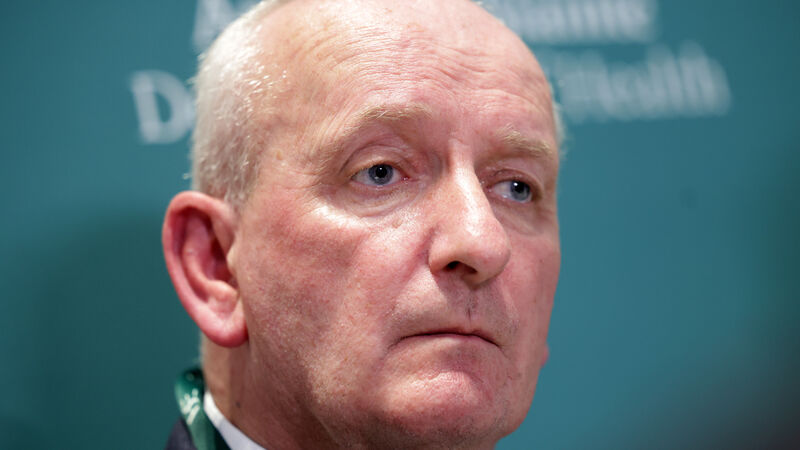
HSE CEO Bernard Gloster apologised to children and their families over the findings in the Camhs report published last week. File Picture: Leah Farrell

The Irish Examiner really started something last week. The question is: Can we keep it going? Can we finally begin to make a difference?

On Monday, this paper broke the story about proposed cuts in the special needs assistant (SNA) system. The cuts seemed to me to be based on an utterly spurious analysis, and the changes we highlighted caused enormous alarm.

But the story had an impact. By the end of the week, the so-called “review” had been paused. However, this was not before huge anxiety had been caused to hundreds of families.

In too many cases, education is simply impossible without the support of an SNA. The system was introduced in the late 1970s, and it has developed on a pretty haphazard basis ever since. However, SNAs are known and recognised for their commitment to the children they work with.

They don’t do it for the money. Typically an SNA with (say) five years’ experience will have an annual salary of around €35,000 per annum. The teacher they’re working with, with the same experience, will be drawing around €50,000, and can be paid more for additional qualifications.

I don’t want to make superficial comparisons, and I do actually believe there is room for change in the structure and management of the SNA system (in their interests and the interests of children).

There is no need for the constant messing and undermining carried out by successive iterations of the Department of Education.

Every couple of years, the department produces another awful 'review'. It then buries it when a newspaper like this catches it in the act

We did that on Monday. On Tuesday, I wrote a column here after the Before We Die organisation had sent me a copy of a disgraceful letter sent by the HSE to the parent of a daughter (a young woman) with intellectual disabilities.

It was a deeply threatening missive in tone, based on essentially a spurious misuse of 50-year legislation.

I don't believe you could read the letter as being anything other than an implied threat to the mother of the young woman, along with it being a way of wiping the HSE’s hands of responsibility in the process. As the mum subsequently told Andrea Gilligan on Newstalk, she saw the HSE as weaponising her daughter.
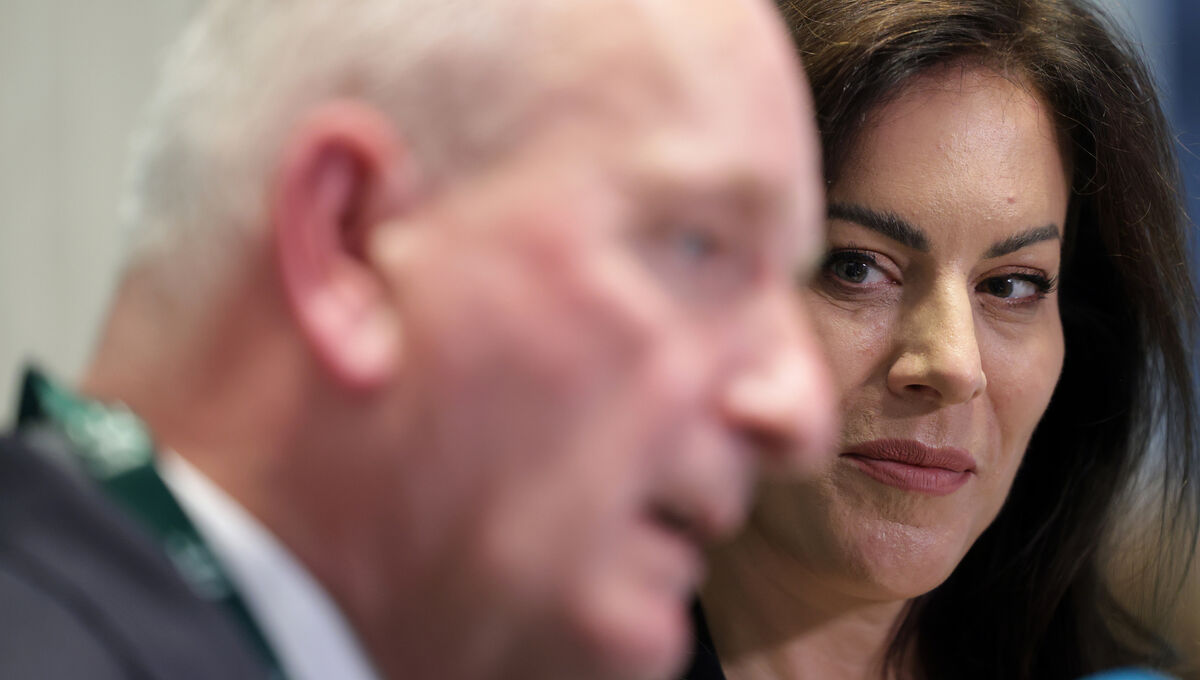
The following day, a senior official of the HSE was quizzed by an Oireachtas committee about the letter. The official was completely unable to defend it. The Taoiseach himself recognised the complete inappropriateness of the letter. Ultimately, the HSE apologised for it.

Earlier, February 11, the Irish Examiner predicted that the independent report into the practices of the Child and Adolescent Mental Health Services (Camhs) would be published soon — having been promised for years. When it appeared on Wednesday, it set out a horrendous litany of actual and potential harm to hundreds of young people. Every one of them was a young person who needed and deserved professional intervention. They didn’t get it.

Once again, the State — our State — has been found to be between utterly tone deaf in some instances and utterly incompetent in others. File Picture: Leah Farrell/© RollingNews.ie

Very often in cases like this, there’s an apology because best practice was missed. Perhaps the most devastating line in the independent report was the finding that the level of practice among the professionals involved was “inconsistent with standard practice”.

In any profession, standard practice is often a million miles away from best practice. However, it’s absolutely the least patients are entitled to expect.

It’s clear that the system as a whole was woefully under-resourced. You can’t read the report without concluding that a lot of well-paid people should be examining their consciences. But that job fell to their boss Bernard Gloster, who issued an “unequivocal” apology to families. I’m not sure, in the end, how many apologies different organs of the State have had to issue this week alone. Once again, the State — our State — has been found to be between utterly tone deaf in some instances and utterly incompetent in others. In all cases, there is one common denominator: People with disabilities.

That's a story you could write again and again and again. There’s a cruel truth at the heart of it all, and that truth has always been there.

Ireland, holy Catholic Ireland, has simply never seen people with disabilities as citizens who carry rights

For most of our history, we saw and treated people with disabilities as charity cases. In the 1970s, as a trade union official, I frequently visited a hospital in Dublin that described itself as a place of incarceration. The people incarcerated all had severe intellectual disabilities.

Until 10 years ago, in Ireland, the basic law underpinning the “rights” of people with intellectual disabilities was called the Lunacy (Ireland) Act, passed by the British parliament in 1821.

Every policymaker and politician in Ireland will deny this vehemently, but it’s the truth. In policy terms, to this day, people with a disability — especially an intellectual disability — are seen as a burden, a drag, a problem, and often an intractable problem. They really don’t deserve the effort.

Phoney and utterly dishonest

Every child in Ireland is supposed to have the unfettered right to a primary education. Children with disabilities were told by our Supreme Court that, in their case, that right ends on the day of their 18th birthday.

As for the law, never mind the Constitution. The Oireachtas passed a yoke in 2005 that was heralded by the then government as transformative in terms of rights.

Life-changing, world-beating, the first piece of legislation in history to confer real rights on people with disabilities. I wrote then — and was roundly abused for my pains — that it was a completely phoney and utterly dishonest piece of legislation.

That act is 52 pages long. The word “rights” doesn’t appear in it anywhere. Not once. The act’s short title – a sort of summary at the start — says that it’s “an act to enable provision to be made for the assessment of … needs occasioned to persons with disabilities by their disabilities, to enable ministers of the government to make provision, consistent with the resources available to them …”.

There’s more gobbledegook after that, but let me translate what it means and what it has meant from the beginning: If you have a disability, we’ll eventually assess your needs. We’ll meet the assessed needs, but only if we have spare cash and capacity.

It’s not a law. It’s a slap in the face. It’s not a right. It’s an insult. It’s not a pathway to progress. It’s a recipe for chaos and stagnation for people with disabilities.

The Government won’t change it, because we’ve decided we can’t afford to offer greater equality to people with disabilities.

I read in the weekend papers that the Government is going to introduce a funky new tax break for people who have enough disposable income to invest in stocks and shares. It has been looking at an obscene Disability Act for 20 years, and it has done nothing. But people with money in their wallets need an incentive — no problem. I don’t know whether to laugh or cry.

More in this section

Revoiced

Newsletter

Sign up to the best reads of the week from irishexaminer.com selected just for you.

Cookie Policy Privacy Policy Brand Safety FAQ Help Contact Us Terms and Conditions

© Examiner Echo Group Limited