Mick Clifford: Despite a botched SNA review, adjustment still needs to happen
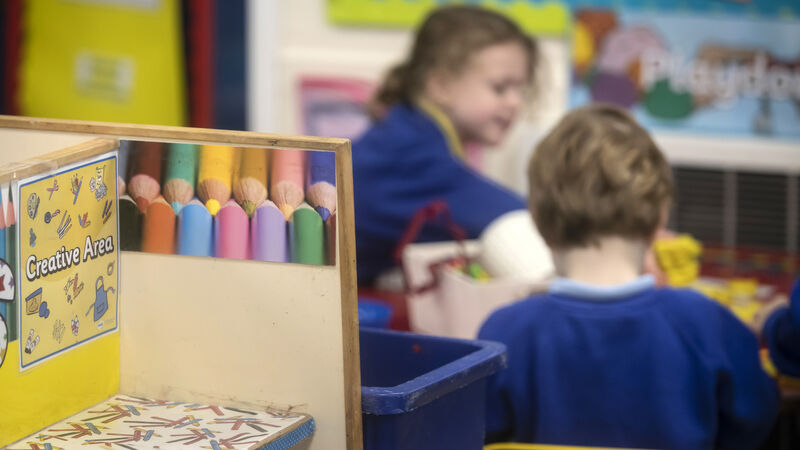
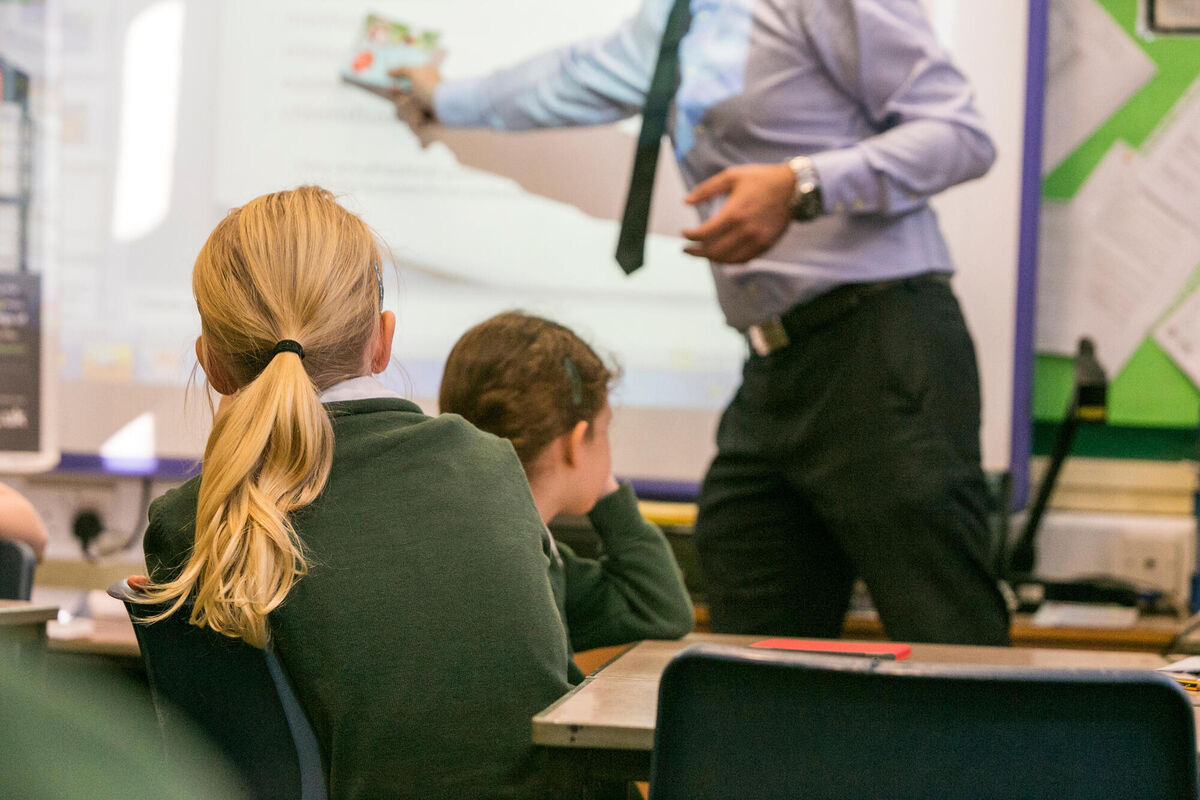
Setting up special needs classes is a task which many schools refuse to take up, which can lead vulnerable children struggling to access the education they deserve. File picture

This week saw a major controversy about education for children with special needs.
There was a cack-handed attempt to review allocation of special needs assistants (SNAs).
There was an outcry from all quarters at what was pitched as a cruel move against vulnerable children.
There was the sound of politicians scrambling, on the Government side, to abandon ship, and among the opposition, to surf the outrage.
A question that was not addressed is: Are those most in need of special education provision actually receiving what is their right?
The review concerned the provision of SNAs for a total of 584 schools.
Two thirds of those were earmarked to retain, or increase, their SNA provision.
However, 194 schools would see their allocation cut.
Some of these cuts were deep, such as removing four, five, or even six SNAs from a school with an existing compliment of nine or 10.
The review was based on reallocation to where need was perceived as greatest.
However, proper communication on the specific criteria, consultation, or a stepped approach, were completely missing.
The broke the story on Monday.
The following evening, the Government bowed to the ensuing storm and announced a “pause”.
A few hours later, the Fianna Fáil parliamentary party meeting was dominated by the topic.
Louise Burne reported in this paper that “it is understood that several TDs told the meeting that no school should lose any SNA”.
So, irrespective of need — which by the nature of schooling can be transient — every school assigned whatever number of SNAs today should hold onto that number forever more?
That sentiment is likely to be widespread in education, and reinforced politically as a result of this week’s mess.
But does it serve the best interests of children most in need? On a wider basis, are those needs being properly targeted?
SNAs do vital work and have been a transformative addition to the education system, but their role has changed over time.
Where once they were assigned on the basis of the needs of individual pupils, now their role can be much wider and varied.
Teacher Ciara Reilly referenced this in a piece in the on Wednesday: “The SNA role has quietly narrowed to a model defined around personal care, blind to educational need. This happened incrementally, largely out of public view, until its cumulative impact finally landed in classrooms and homes across Ireland.
“As a result, SNA allocations are now tied almost exclusively to primary care: Toileting dependency, catheter or stoma care, PEG [percutaneous endoscopic gastrostomy] feeding, seizure management, or other serious medical and safety risks requiring continuous supervision.”
A basic question arises is why the role of SNAs has been diverted away from any assistance with education for the children who require it. Surely that was integral to the design of an SNA when the concept was brought in.
Then we have children whose needs are such that they require to be part of a separate class, such as an autism spectrum disorder (ASD) class.
While every school will want to hang onto all the SNAs they can, some are not too keen on providing special education if it involves some hassle.
The provision of ASD classes has been controversial for the best part of a decade.
Some schools willingly, and even enthusiastically, welcome the chance to do their duty by local children in need.
Equally, a patron like Educate Together goes out of its way to ensure that its schools have something for everybody.
That is by no means a universal approach. There are many schools that simply don’t want the hassle. That can depend on a patron, a principal, and even the parents of other children.
At secondary level, the 50 or so fee-paying schools have no ASD classes. Anybody, for instance, in that region lucky enough to find a place for a child with needs has to travel out of, and often very far out of, their locality.
There have been half-hearted attempts in government to force schools to open classes for those in their catchment areas, but it has involved plenty of carrot and precious little stick.
Niall Muldoon, the ombudsman for children, says this problem has not gone away: “We still have children not getting the school places they need.
“They are not getting into the local school which is where they should be and even when some children get a place, there is no guarantee that they get the quality they deserve at this point in time.”
Certainly, some schools require a lot of assistance in setting up classes, and very often that has not been forthcoming. A question arises as to whether the approach of successive governments to special education is to simply throw money at it during a time of relative plenty.
Members of the Government are constantly throwing out figures to show how much has been invested in the sector, and how many more teachers, SNAs, special classes there are.
Last year’s budget for special education topped €3bn. That sounds like a lot, but education in this area is expensive.
Equally though, there is plenty to suggest this money may not be targeted in the most efficient way in terms of catering for those most in need.
Value for money is important, but in this area, value for children with the greatest needs should be the top priority.
Also, take a look at the Dare scheme, which is designed to cater for Leaving Certificate pupils who have a psychological condition of one sort or another. The scheme provides a route for qualifying pupils to access third-level courses on a reduced point threshold.
There is plenty of anecdotal evidence that some pupils, particularly in more affluent areas, are gaming the system, acquiring psychological reports on a less than robust premise.
Instead of promoting education equality, this kind of stuff increases inequality. Yet the system has been functioning since 2009 and no investigation into this has ever been conducted.
A spokesperson for the Irish Universities Association, which runs the scheme, told the that a review is currently underway to examine the scheme “under various topics such as application numbers, disability categories, Leaving Cert performance, scheme criteria etc”.
The results of that will be interesting.
Belatedly in this country, the rights of children with disabilities to education has been recognised.
Investment in the sector was badly required and started from a low base. Now, it should be priority to ensure that those most in need of assistance are the main beneficiaries.
In all the furore about what was a cack-handed attempt at a review, there was precious little about where exactly the greatest needs are, and if those needs are being met.

CONNECT WITH US TODAY



Be the first to know the latest news and updates