Sarah Harte: If the personal is political, every movie and story is political too
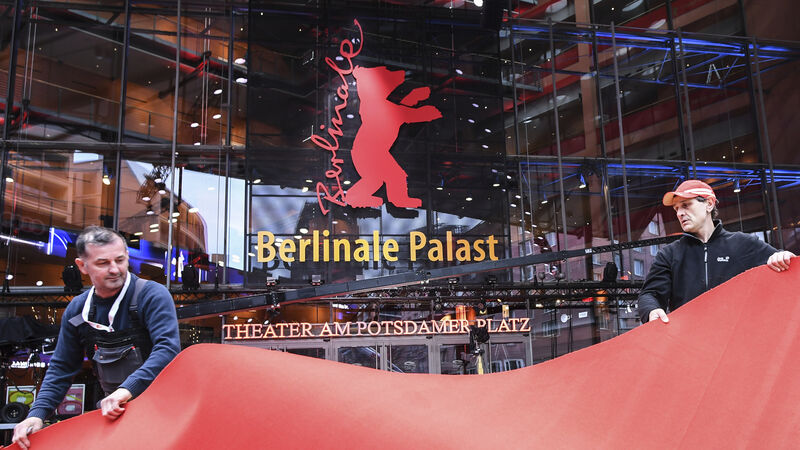
The Berlin Film Festival is known as the most political of the big three film festivals, along with Venice and Cannes. File picture: Britta Pedersen/dpa via AP

Last week, the Booker prize-winning Indian author Arundhati Roy withdrew from the Berlin Film Festival over comments made by the celebrated German filmmaker Wim Wenders. You are reminded of the Woody Allen quote, "Intellectuals are like the mafia; they only kill their own."
Picture the scene in Berlin. Gongs and glamour, red carpets, gorgeous frocks, men in suits, high octane tension with prestigious prizes on the slate, booze, egos, and the rest. A bunfight with the patina of artistic credibility is somehow more interesting.
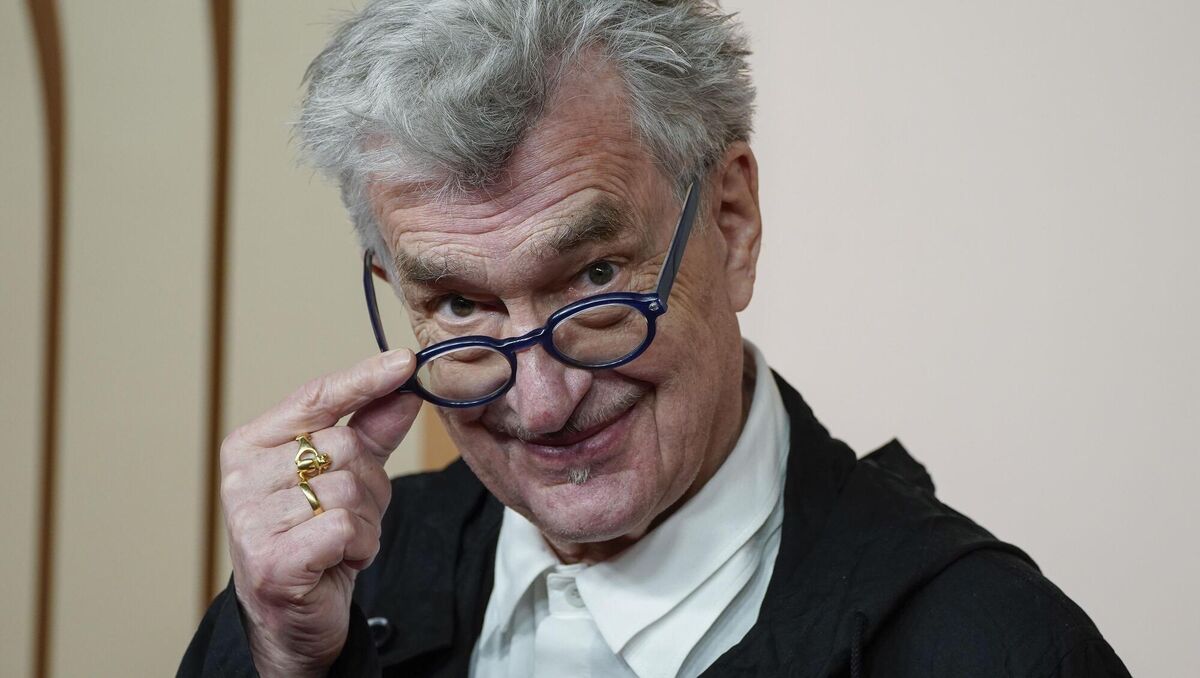
So how did Wenders offend Roy? Wenders, the head of the jury, responding to a question about the conflict in Gaza at a press conference to open the 76th edition of the festival, said filmmakers should stay out of politics: “Yes, movies can change the world. Not in a political way. No movie has really changed any politician’s idea, but … we can change the idea that people have of how they should live.”
Roy called his stance "unconscionable". While Gaza is at the heart of this contretemps, there are likely other issues at play within an insular intellectual community, including people’s personal politics, because what Wenders said doesn’t necessarily stack up.
The Berlin Film Festival is known as the most political of the big three film festivals, along with Venice and Cannes.
Among others, Wenders made the melancholy cinematic movie , and the documentary . Remember when we were all listening to its soundtrack on repeat and dancing badly to Afro-Cuban beats?
I have only read one of Arundhati Roy’s books, the brilliant . Roy, who has just been longlisted for the Women’s Prize for non-fiction, has also written screenplays.
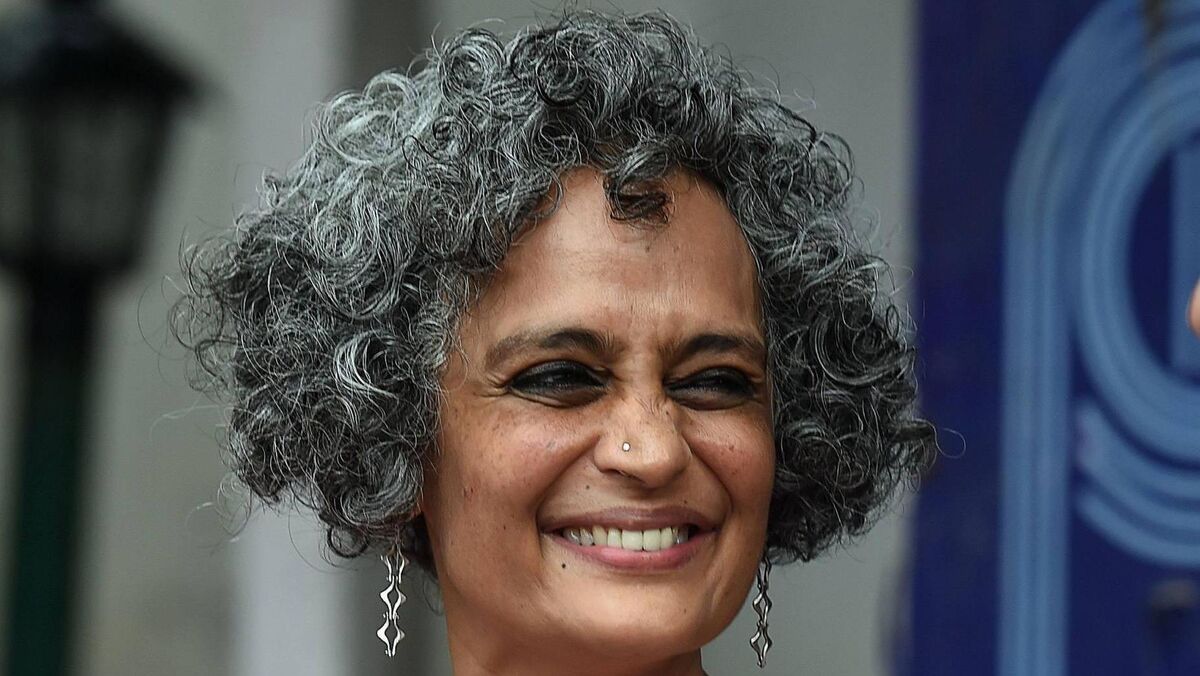
She is a formidable woman who has a reputation for taking no prisoners. I heard her ably interviewed by Brendan O’Connor. (Full disclosure: O’Connor, a standout interviewer, is a lifelong close friend).
Is Wenders correct when he says that filmmakers shouldn’t engage with politics? Obviously, many great movies engage with politics. , one of my favourite movies of all time, engages with American capitalism and systemic corruption.
speaks to colonialism and state-legitimised violence. You may recall the opening scene, with The Doors' playing, or the line of emerald-green palm trees in a Vietnamese jungle beneath a cloud of billowing smoke. It’s basically an anti-war movie.
You could write an entire column listing films that refute Wenders's claim. And surely, his dichotomy between people and politicians is false, because politicians are us.
One well-known example of a film influencing a politician is Ronald Reagan watching , a 1983 movie about a nuclear strike on America. I haven’t seen it, as I would have been watching at the time, which, incidentally, was also political, in that it promulgated an anti-New Deal philosophy of self-reliance.
Watching this movie led Reagan, at the height of the Cold War, to engage with the Russians in a treaty that physically dismantled nuclear weapons.
He wrote in his diaries: "In the morning at Camp D. I ran the tape of the movie ABC is running on the air Nov. 20. It’s called ‘The Day After'. It has Lawrence Kansas wiped out in a nuclear war with Russia. It is powerfully done-all $7 mil. Worth. It’s very effective & left me greatly depressed…..Whether it will be of help to the “anti-nukes” or not, I can’t say. My own reaction was one of our having to do all we can to have a deterrent & to see there is never a nuclear war.”
The director Nicholas Meyer later said: “The movie may have indeed helped prevent a nuclear war. It certainly changed one person’s mind on the subject, and that person just happened to be the President of the United States.”
The larger question Wenders raises, for me, though, is the actual purpose of the stories we tell, whether through film, documentary, books, plays, or even columns.
The influential educational psychologist Jerome Seymour Bruner wrote several seminal books, including one on storytelling. He concluded that ‘narrative’, rather than logic, shapes our culture, including legal argumentation. His research suggested that facts are 20 times more likely to be remembered if they’re part of a story.
By the way, Bruner and his wife had a summer house in Glandore, down my neck of the woods. He wrote in a letter: “This is a delicious corner of the world, perched on a cliff looking out to sea and islands, fungi in the fields, whimbrels and oyster catchers in the cove, an odd assortment of amusing people.”
On the subject of stories shaping legal argumentation and, by extension, politics (because the law is inherently political in how it’s created and what it seeks to do in regulating social behaviour), friends recently went to see in The Gaiety.
is a profoundly powerful, award-winning play by Suzie Miller. They said it was the best play they had ever seen. Through gritted teeth, I said, “Great”. Because I had a ticket, but life got in the way, and I missed it.
You can watch it online for free courtesy of The National Theatre. Jodie Comer is incredible in it. She plays an ambitious defence barrister who defends rapists, then is raped by a colleague and finds herself on the stand.
This story helps us understand the deep flaws of the legal system and how rape victims are treated. It’s far more powerful than any article about the grim statistics and facts showing how the adversarial, inherently patriarchal legal system re-traumatises victims.
What’s extraordinary is that the script is now being used in training for judges in the UK, proving that stories shape law, influence thinking, and change lives.
If you look at storytellers, regardless of the medium, they say, “This happened today,” “this happened to them,” or “this happened to me”. “What do we think about that?” “What do we feel about that?” “And should we celebrate the moment, mourn, or collaborate to change our community or our political system?”
It is presumably hard for filmmakers to be asked to deliver complicated thoughts in soundbites on the red carpet, but I think Wenders is wrong in saying "films are the opposite of politics".
I’m not sure that a filmmaker, writer, artist, columnist, storyteller or what we might loosely call a creator ever stays out of politics, whether they want to or not. You even make political decisions in deciding what you’re not going to tackle as a subject.
Ultimately, it depends on how you define politics, because the personal is inextricably linked to the political, and the stories we tell are connected to broader society.
By the way, big congratulations to the Irish film , which received its World Premiere in the official competition at the Berlin festival. It stars Irish actors Barry Ward and Katie McGrath. The screenplay was written by Mark O’Halloran, and the film’s "piercing intimacy" is attracting great reviews.

CONNECT WITH US TODAY



Be the first to know the latest news and updates