Clodagh Finn: The Irishwoman who married the national hero of the Philippines
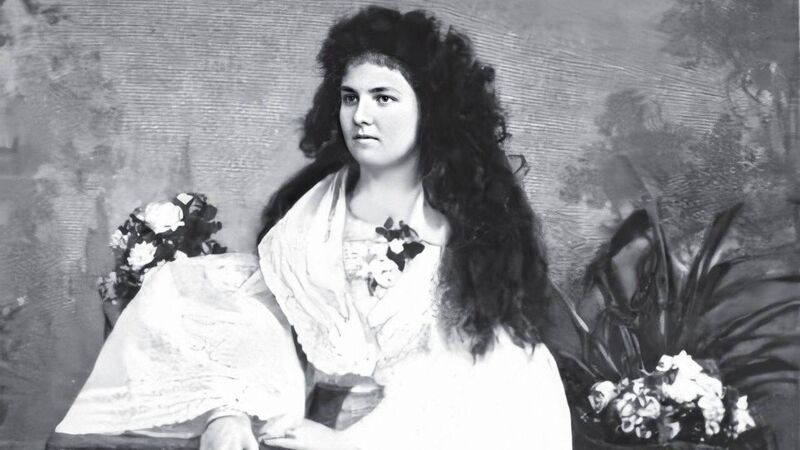
Josephine Bracken, the Irish common-law wife of Filipino national hero Jose Rizal.

A few hours before he was executed, Filipino national hero José Rizal said a final goodbye to Irishwoman Josephine Bracken and gave her a parting gift; a copy of Thomas à Kempis’ with the inscription, “To my dear unhappy wife, Josephine.”
Some accounts, including one attributed to her, suggest the couple married at 5am in a prison cell in Manila just hours before Rizal was executed by the colonial authorities on December 30, 1896.
That poignant, if unverified, detail resonates deeply in Ireland because of the better-known love story that played out so tragically in Kilmainham Jail, Dublin, when Irish revolutionary leader Joseph Plunkett married Grace Gifford on the eve of his death in 1916.
While there is no documentary evidence of the Filipino death-row marriage — indeed any marriage — between the country’s hero and his Irish beloved, it is beyond doubt that they shared the deepest bond.
In his last letter to his family, Rizal pleaded with them to “have pity on poor Josephine”, and he said his last farewell to her in his poem, : “Farewell sweet tender foreigner, my friend, my delight”.
HISTORY HUB
If you are interested in this article then no doubt you will enjoy exploring the various history collections and content in our history hub. Check it out HERE and happy reading
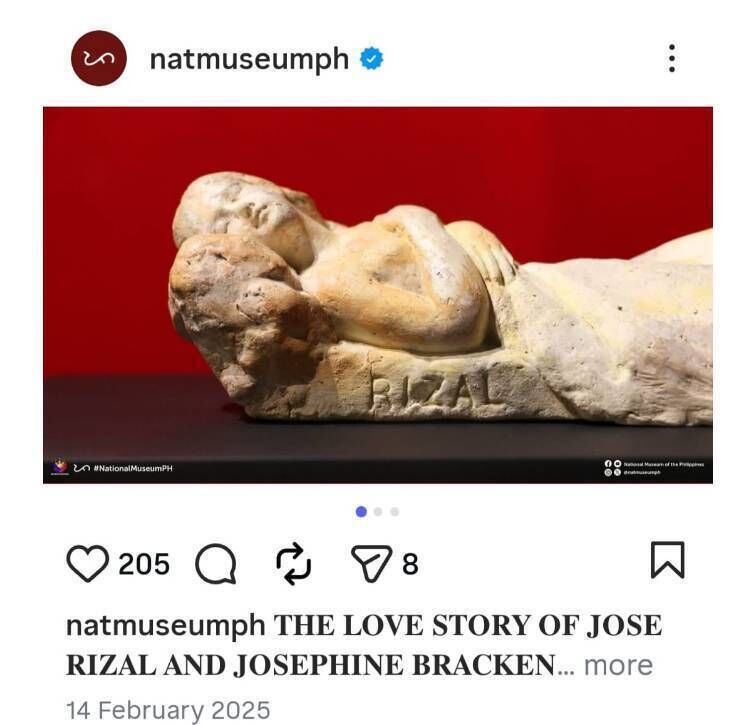
Evidence of that tenderness is captured in Rizal’s ‘Josephine Sleeping’, a pencil-case-sized clay sculpture sold to the National Museum of the Philippines for a record-breaking P31m (some €450,000) at auction in late 2024.
It was, the museum said at the time, a Christmas gift to the Filipino nation.
Described as Rizal’s , the artwork is now prominently displayed at the National Museum of Fine Arts in Manila, “a timeless testament to his love and devotion to his wife Josephine Bracken”.
“She was the one woman with whom he shared that most jealously prized of all his possessions, his name, and also his heart’s intimacies,” runs the inscription under the exhibit’s glass case, a quote from Rizal’s biographer Leon Ma. Guerrero.
Dr José Rizal, an internationally renowned polymath and ophthalmologist, is revered in the Philippines as the man who inspired a successful revolution against Spanish colonisers in the late 19th century.
Every Filipino schoolchild knows his name and he is celebrated in the fabric of the Philippines, inscribed in its street names, represented in several monuments and commemorated often, and widely.
His Irish partner is remembered too and increasingly celebrated, not only in the Philippines but in Hong Kong where she was born 150 years ago on August 9, 1876, to Irish parents James Bracken, of Ferbane, Co Offaly, and Elizabeth McBride of Islandmagee, Co Antrim.
In Ireland, she is little known although her links to this country have been firmly established thanks to the detective work of two Columban priests whose interest in the Irish connection was piqued during their time in the Philippines.
On a visit home in the late 1990s, Fr Martin Murphy and Fr Kevin McHugh scoured the telephone directory in search of James Brackens who might be relatives. They phoned some likely candidates and sent a number of letters to others. Then, they hit the jackpot.

Francis Bracken got in touch from Dublin to say he thought Josephine was his grand-aunt.
His widow Elaine Bracken takes up the story. She might be “just an in-law”, as she puts it, but she is also the family memory-keeper. Fr McHugh gathered James Bracken’s military records which are now kept safely in the attic.
And she points this column in the direction of the most complete and best-researched account of Josephine Bracken’s life written by independent researcher Mick Bourke.
He refers to a short autobiography supposedly written by Josephine in 1897. Its authenticity has been questioned, but many of the details are true.
As Josephine herself attested, she was born in Victoria Barracks in Hong Kong in 1876, the youngest of five children born to James Bracken, schoolmaster with the 28th Infantry Regiment of the British Army, and his wife Elizabeth Jane McBride.
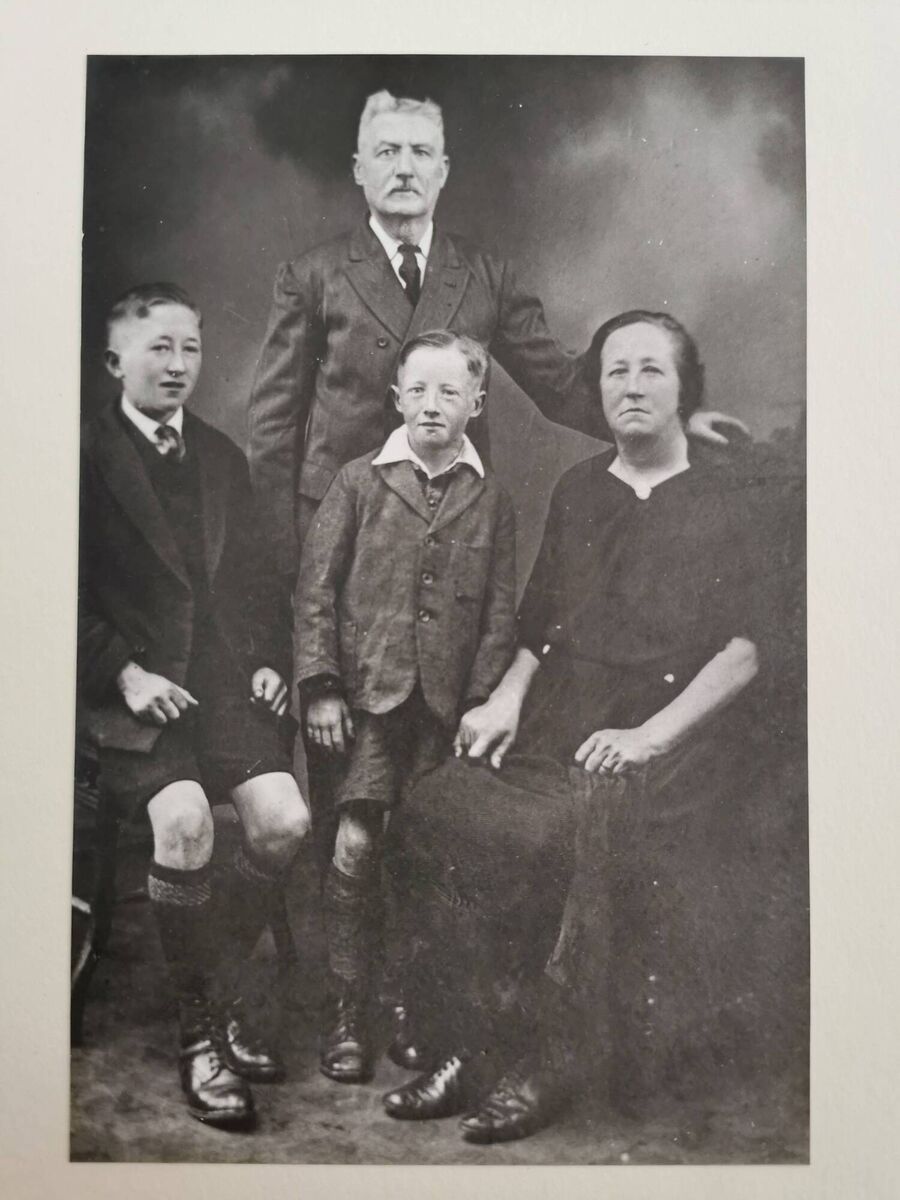
The couple married in Belfast in 1868 and their first child Charles, Francis Bracken’s grandfather, was born in Antrim. There were postings to Malta and Gibraltar and three more children, Agnes, Francis and Nelly, before Josephine was born in Hong Kong.
Then the worst happened. Josephine’s mother died when she was barely a month old. Her father, unable to cope, was forced to entrust her to the care of foster parents, George and Leopoldine Taufer. He told them, though, to make sure that she knew of her Irish heritage.
A number of years later, when her foster father’s sight was failing, Josephine travelled with him to Dapitan where Rizal, the famous eye surgeon, was in exile.
Rizal was unable to help Taufer, but he fell in love with Josephine and asked for her hand in marriage. Taufer did not approve and there’s a confused story about how he tried to kill himself but Rizal intervened saving him.
Josephine and her foster father went back to Hong Kong but some time later Josephine returned to Dapitan where, according to one particularly rose-tinted account, she and Rizal “lived blissfully in their octagon bamboo house as husband and wife”.
Mick Bourke provides a more realistic description: Her life, he writes, “involved domestic work and assisting Rizal, whom she referred to as ‘Joe’, in his medical work and with the school he had established.”
For his part, Rizal wrote: [She] is “a person whom I esteem and greatly appreciate and would not wish to see exposed and abandoned”.
The couple had their only child, a boy named Francisco, in March 1896 but he died soon after birth. A few short months later, Josephine was a widow.
As she put it herself: “My happiness lasted only 20 months when my sorrows started again.”
She didn’t give up though, or so the accounts tell us. In early 1897, Josephine joined the Filipino insurgents. There are reports of her riding out into battle and killing a Spanish soldier, but also ones of her setting up field hospitals.
She settled down again in 1898 and married Vicente Abad. The couple had a daughter, Dolores, but like Josephine herself, her own daughter would have to grow up motherless. Josephine Bracken died of tuberculosis, aged just 25, in 1902, and was buried in Happy Valley Cemetery in Hong Kong.
While the exact spot is unknown, Hong Kong-based goldsmith and gemologist Pieter Nootenboom believes she was most likely buried with her mother.
Nootenboom, who has served as Asia Regional Commander for the Knights of Rizal, the order of chivalry established in 1911 to honour José Rizal, is a strong advocate of the Filipino hero. But he is equally determined to recognise Josephine Bracken.
“Women are underrated,” he says. “There should be more recognition of the women behind the men in the world.”
He has made several 3D-printed busts of the couple, including one which was unveiled on Valentine’s Day in Cavite in the Philippines last year.
He is also quick to refute any controversies — and there have been a few — about Josephine Bracken’s origins and her life. Indeed, he also offers a new avenue of inquiry. A senior Filipino government member recently told him that Josephine saved his great-grandfather’s life, breaking his fall as he fell backwards on the stairs.
That is a story to explore for another day but, thanks to the scrupulous research of Mick Bourke, there are two things that we can say without any doubt about Josephine Bracken. She was both legitimate and "fully Irish".
Here’s hoping that we’ll make more of her at home when the 150th anniversary of her birth comes around on August 9.
CONNECT WITH US TODAY



Be the first to know the latest news and updates