Jennifer Horgan: The media must stop cheerleading Trump's bravado by framing actions as a game
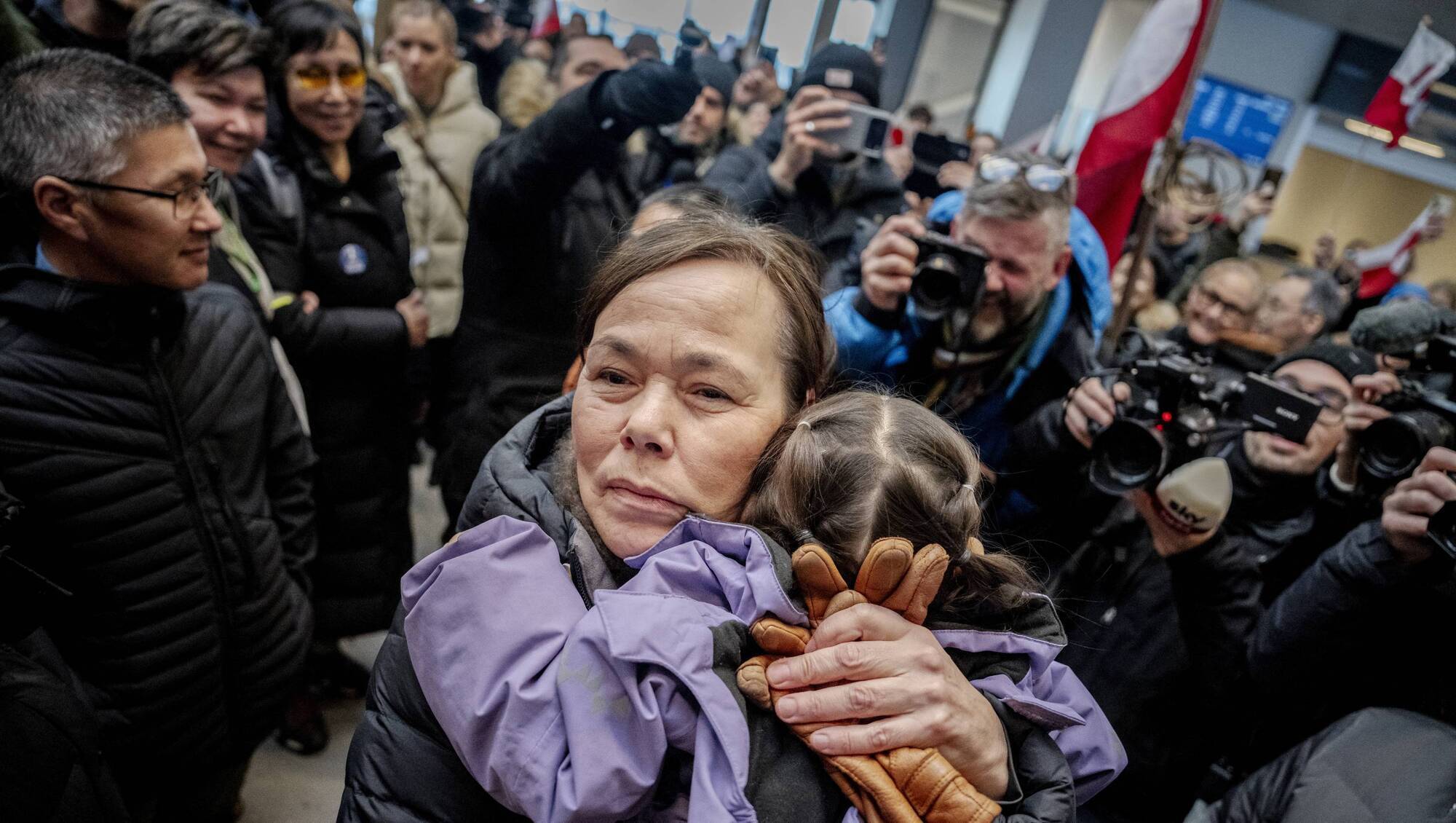
Greenland's foreign minister Vivian Motzfeldt hugs her grandchild after she lands at the airport in Greenland's capital Nuuk on Tuesday. Greenland is not a game. It is a country made up of people. Photo: Mads Claus Rasmussen / Ritzau Scanpix / AFP via Getty Images

I was unhappy listening to on Monday morning.
To give some context, it’s a radio show I admire. I feel safe listening every morning; it does a great deal of preparation — not always guaranteed on Irish radio. So, my expectations were high, and it took me a while to figure out where my discomfort was coming from.
It was the language being used by presenter Audrey Carville, I eventually realised, as she pushed for answers on Greenland from Foreign Affairs and Trade minister, Helen McEntee.
It was the language of a game, a contest: “One side has to back down – will it be the EU?” The hyped-up tone and fast pace were sustained throughout the interview. When McEntee called for the conversation to be measured, Carville interrupted her to say: “But you also need to be united. Is the EU united?”
“Disunity leaves the EU vulnerable,” Carville continued, eager to highlight the block’s strategic weaknesses. “There has to be a response surely, so what is Ireland’s preference?” she said, pressuring the minister to reveal plans for next steps, next moves in the game.
In his post-war essay, , George Orwell writes that flawed language doesn’t just reflect flawed thinking, it creates it. The limits of our language, according to Wittgenstein, stand for the limits of our world.
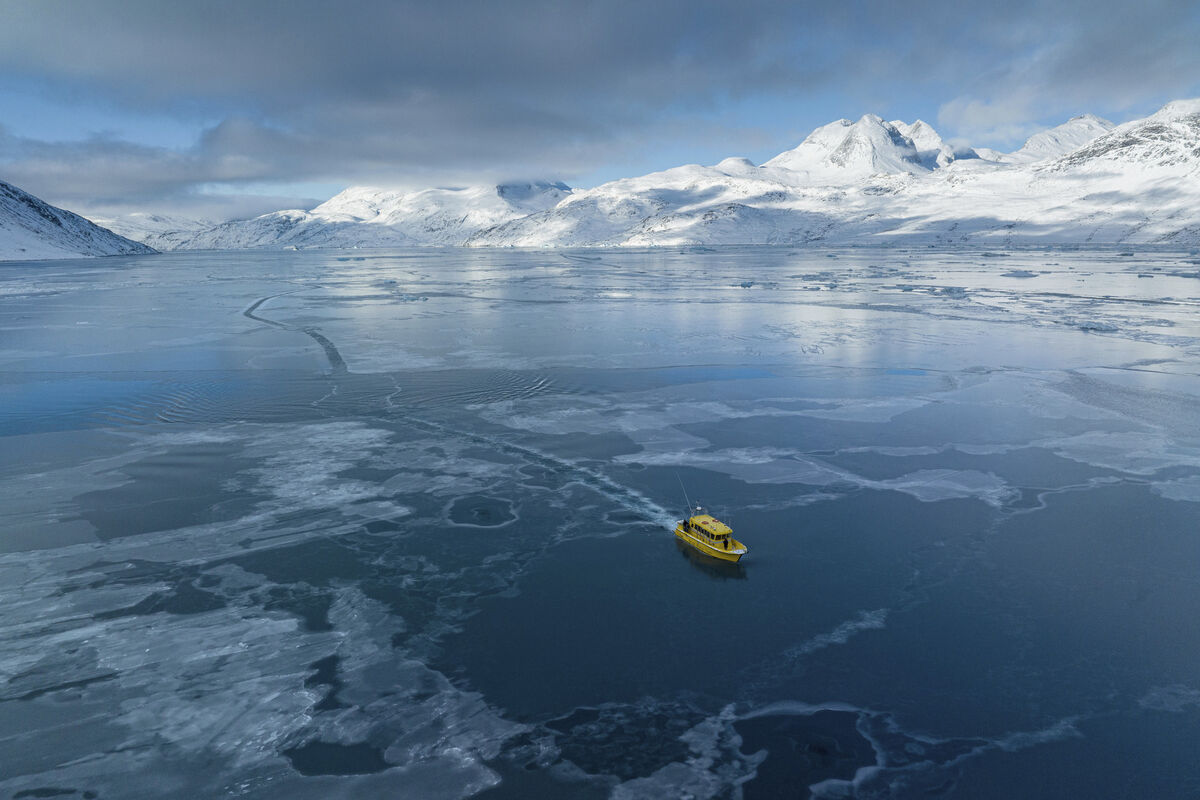
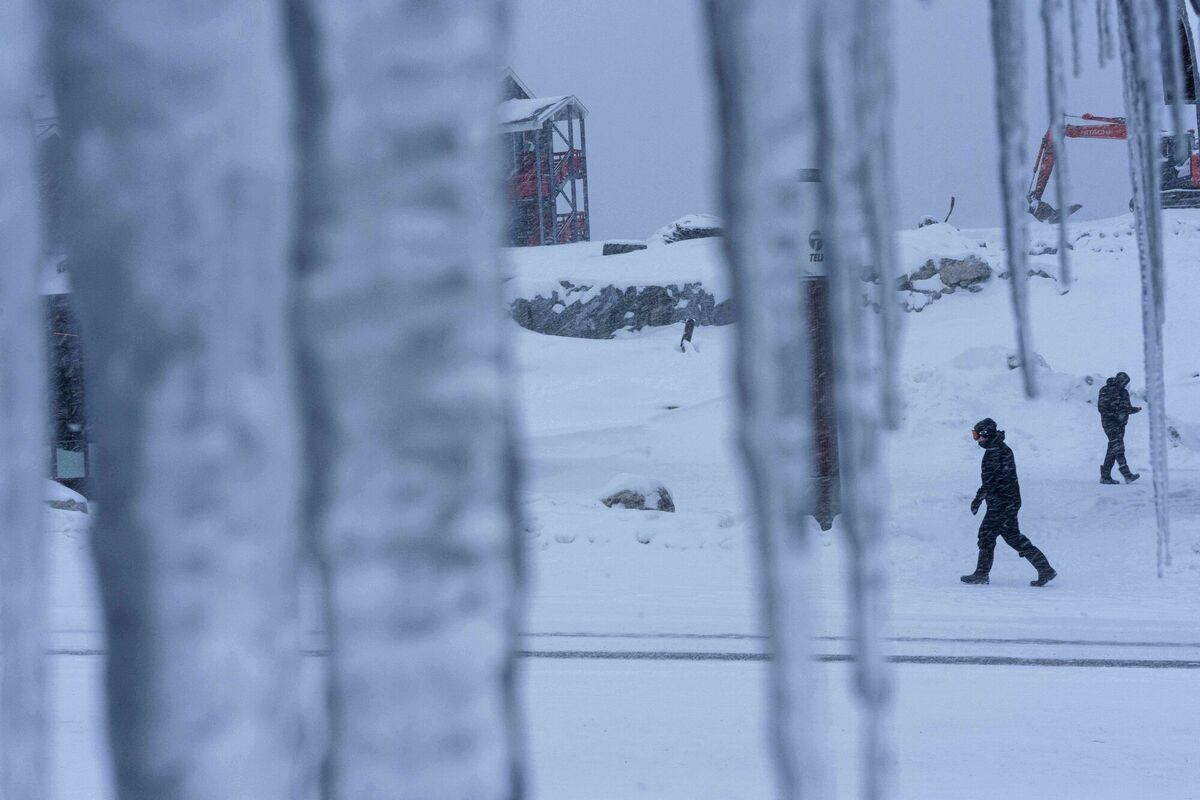
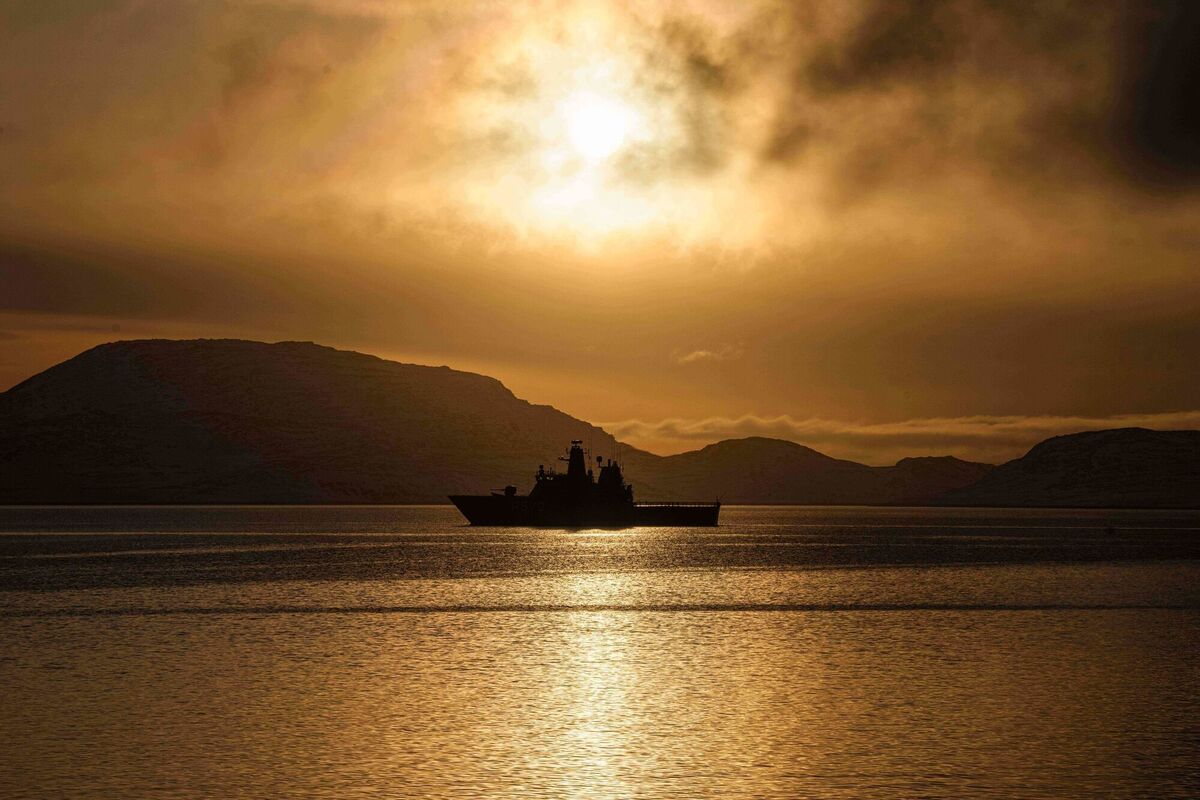
My worry is that we’re allowing game-language, macho-language, a lexicon of winners and losers, strategies, and tactics, to infect our way of speaking and reporting. Greenland is not a game. It is a country made up of people. It is also home to the world’s largest national park, a vast protected wilderness of polar bears, Arctic foxes, musk oxen, and numerous bird species.
I’m sure I don’t need to tell anyone, but game-language is Trump’s language. A 2016 article found he’d tweeted about ‘losers’ 170 times during his campaign. His sycophants like to compare his foreign policy to a game of 4D chess.
By contrast, Trump has said his opponents are playing "tic tac toe in the sand". Trump revealed at a 2019 rally how he felt about being associated with losing. "I never want to be called a loser," he said.
Human lives, whole countries, are mere lumps of plastic on a board to the man. It’s all part of the same strategy — dehumanise people, then destroy them.
This week he was off playing monopoly, with his threat of a 200% tariff on French wines and champagnes — a ploy to pressure Macron into joining his 'Board of Peace' initiative. No doubt the ‘Board of Peace’ looks like an actual boardgame to him, something like Risk perhaps, the 1957 game invented by another Frenchman, Albert Lamorisse.
Having threatened eight European countries with tariffs if he didn’t get to ‘own’ Greenland last week, his “piece of ice”, he has now backed down announcing a ‘framework’. It’s a game of chicken.
This game language is everywhere. Only the other day a teenager told me to “take the L”, meaning take the loss. I looked it up online to discover the phrase peaked in popularity around 2016 to 2018, right when Trump began his first presidency.
But back to in 2026 — in another segment the same morning, Carville interviewed Lars Christian Brask, chair of Denmark's Foreign Policy and Security Council. Again, the presenter looked for a statement about next steps, about Denmark’s game plan.
Contrastingly, Brask shared his feelings of anger and disappointment, his human reaction at a "friend betraying a friend". Carville responded with the question: “If US tanks turn up in Greenland, how should Europe and Nato respond?” She pushed, moving straight to the worst-case scenario, the ultimate ‘play’ in the game.
Brask pointed out that with only two roads, tanks would be useless in Greenland, puncturing the question, satisfyingly releasing its hot air. “It won’t get to that,” he said simply.
I understand the desire to produce exciting radio. And when it comes to domestic policies on things like housing and education, I am thrilled for politicians to be grilled, pushed up against the ropes, sweaty and panting, as in a game of boxing. One of the main jobs of our media is to hold power to account.
The possible invasion of a peaceful country must be treated very differently. How it’s reported on our national radio station is of moral significance. It has consequences, setting the mood, turning the dial either up or down for listeners. When it comes to these highly sensitive, geopolitical matters, we must be measured and patient — our radio presenters especially so.
I’m tiring of interviews that are so interested in the cat and mouse game of reporting, that the heart, along with the common sense, simply drops out.
, a poem by Jorie Graham appears in this month’s magazine. It’s worth a read. It depicts a near-future media landscape, where reporters behave like robots, documenting a catastrophe without comprehension or human emotion.
Graham’s poem speaks of a “dry weather of information”, where “we do not write in order to remember”. The poem calls us on to remain connected to one another through language.
A week before, and to their credit, included a segment on Greenland and its people. Edmund Heaphy, RTÉ deputy foreign editor, reported from the capital, Nuuk. In this exchange Audrey Carville asked about the “fears and feelings and thoughts” of the people there.
A local woman, Tillie Martinussens, worried if she should take her stepson and an “old lady” she knows and move to Denmark. The report gave an insight into the population, a “reserved” and “tight-knit, closed community”.
Inuit culture values peace above everything else, the interviewee explained, describing how her grandmother used to bring her Wrigley’s gum from the American soldiers because it was exotic and America was a hero to them. The segment did a lot of heavy lifting by educating us on the culture of Greenland, (Kalaallit Nunaat in Greenlandic).
I’m not suggesting that tough reporting can’t happen. Politicians must be questioned. But expecting Irish politicians to commit to a particular strategy in the face of international chaos, live on air, is unhelpful. And I use as an example here — the approach is widespread and it gives power to Trump, legitimising his antics.
International policy is not decided on the radio or on television in seconds. It’s done over an extended period behind closed doors. The media must not assume the public wants everything to be punchy, cerebral, and fast-paced. More than ever, I think we want calm. We want to feel the human heart in the conversation.
Ireland is a fortunate place in which to live; we must accept the challenge of that. We are lucky to have the time and freedom to be considered in our language. However Trump might spin it, there is always time to pause and calmly discuss matters with our elected politicians.
There is a time for everything. I swear it’s not too late.
CONNECT WITH US TODAY



Be the first to know the latest news and updates