Gareth O'Callaghan: Could Ireland be on Donald Trump’s geopolitical radar?
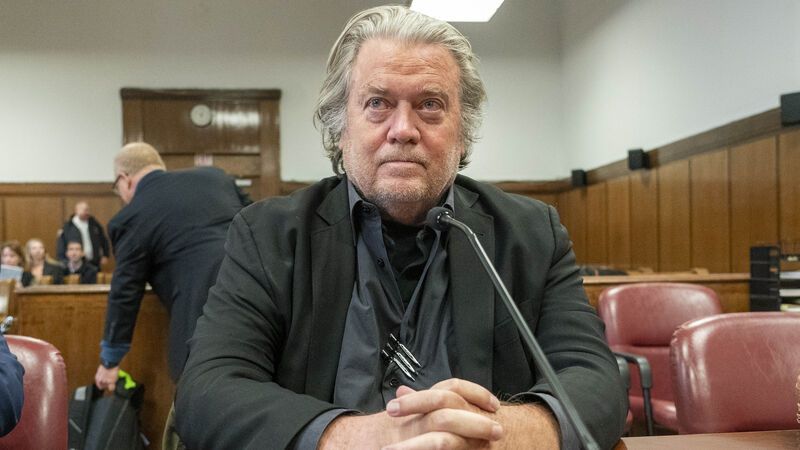
Former White House strategist Steve Bannon is no stranger to migration. His great-great grandfather left Ireland at the height of the Famine. (Steven Hirsch/New York Post via AP, Pool, File)

The year is 2028, two weeks into January. A farmer stands in the darkness on a hillside near Allihies watching a convoy of planes with a distinctive military drone to their engines high overhead as they close in on the coastline. The ground beneath his feet shakes.
Some 200 miles away, it's a quiet frosty morning at Shannon airport.
Shortly after 5am, six C-130 Hercules transporters touch down to refuel while enroute from Edwards Airforce Base in California to Ramstein in Germany.
Nothing unusual. Or so air traffic control has been told.
However, now they're all on the ground, stationary on the two-mile long runway, none of the pilots responds to commands from the tower.
Through his binoculars, a duty controller watches as helicopters emerge from the rear ramp of two of the planes. They are airborne within minutes — destination unknown.
Heavily-armed soldiers in black combat quickly file out onto the tarmac and take up positions at strategic points around the airport.
Another controller is receiving messages that planes and troops have also landed at Dublin and Cork.
Armoured personnel carriers roll down the ramps at the back of the aircraft at Shannon and take up positions on the roads around the airport’s buildings at vantage points that give them a scope on all approaching traffic.
A fleet of Joint Light Tactical Vehicles “built to outlast Hell” disperse — destination unknown.
Meanwhile, US F22-Raptors arrive from RAF Brize Norton and circle high in the skies above Dublin’s Government district.
Irish airspace will remain closed until further notice, with all incoming flights redirected to UK airports and beyond.
A digital blackout occurs right across the country at 0600 military time. Internet infrastructures fail.
A series of electromagnetic pulses renders communication systems useless and disables the electrical circuitry of most road transport.
Troops take charge of RTÉ radio and television.
The US annexation of the Irish Republic has begun.
Of course it’s fiction — what might have been a great Tom Clancy novel.
But what if it wasn’t fiction? What if it were to happen? Who is to say it won’t?
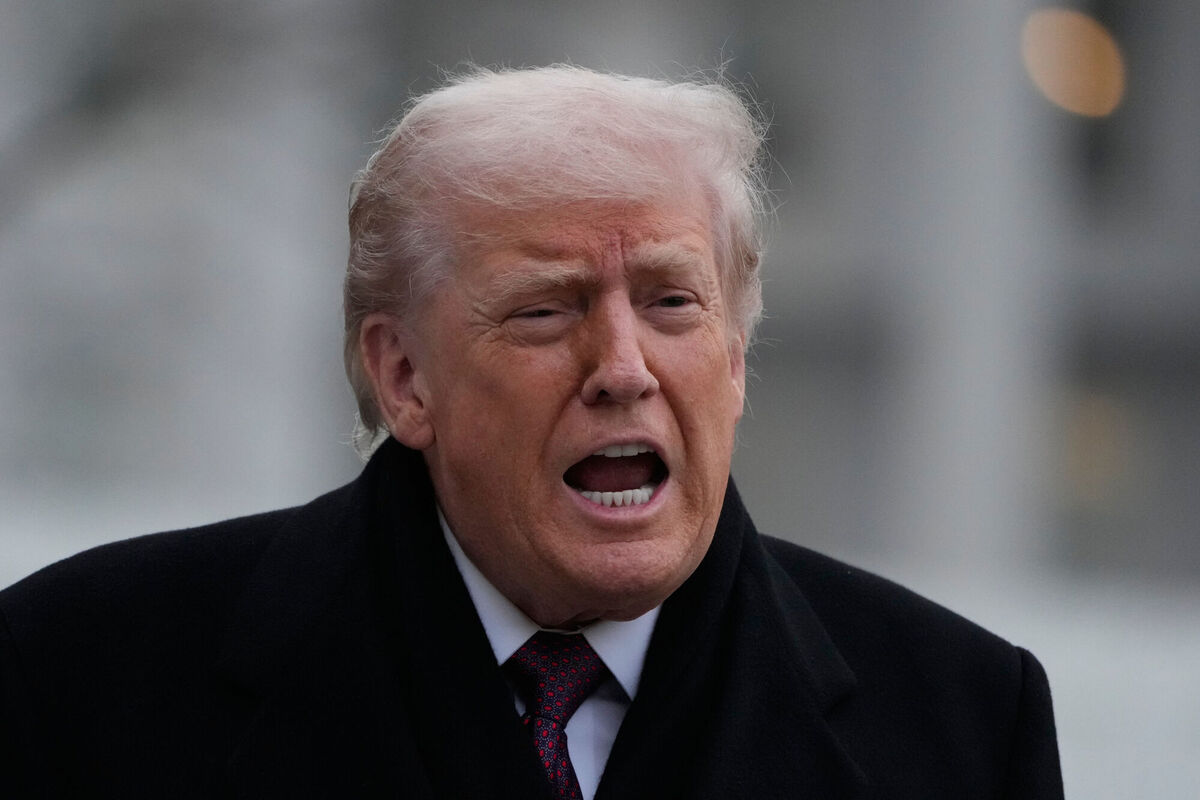
Donald Trump’s new national security strategy is barely a month old.
Its 29 pages of uneasy reading are surely an urgent wake-up call to our Government that this administration could be looking for more than just an alternative landing site for what was once the Space Shuttle.
“The United States must be preeminent in the Western Hemisphere as a condition of our security and prosperity — a condition that allows us to assert ourselves confidently where and when we need to in the region,” the document reads.
Ireland is located in the Western Hemisphere, lying west of the Prime Meridian.
We are the Atlantic gateway to Europe, with the second highest GDP per capita globally.
Short of 1,000 US businesses have their European headquarters here, including Google, Microsoft, PayPal, Meta, Apple, LinkedIn, and eBay.
Ten US companies represent 60% of Ireland’s corporate tax revenue.
Despite the shock of Russia’s attack on Ukraine in 2022, Ireland’s focus on strengthening its security and defence systems has remained largely unchanged.
I doubt this has gone unnoticed in the White House, which will want to safeguard its political and corporate gateway to the continent.
Maybe our special relationship with the US won’t soon be enough for its president.
We are rich for our size, but we are incredibly vulnerable with the most inadequate defence capabilities among our European neighbours.
Of course, they won't need to invade in this manner if Steve Bannon gets his wish.
Bannon, who spearheaded Trump’s first successful presidential election, and was once referred to as the second most powerful man in the world, wants to shape Ireland into a Trumpist satellite.
He is “spending a ton of time behind the scenes on the Irish situation to help form an Irish national party,” Politico quoted him as saying.
“That country is right on the edge thanks to mass migration.”
Bannon’s no stranger to migration. His great-great grandfather left Ireland at the height of the Famine.
“They’re going to have an Irish Maga, and we’re going to have an Irish Trump,” he said — with an emphasis on “we’re”.
Was he referring to the US government having a hand in that?
Financial adviser and podcaster, Eddie Hobbs — who brought us the ratings-winning RTÉ show in 2005 — while speaking at the IRL Forum last weekend in Ashbourne, Co Meath, told his audience to “reach across the Atlantic” to the Irish diaspora who support Trump.
Among those present at the forum was US ambassador to Ireland, Edward Walsh.
Hobbs appeared on Bannon’s War Room podcast last June.
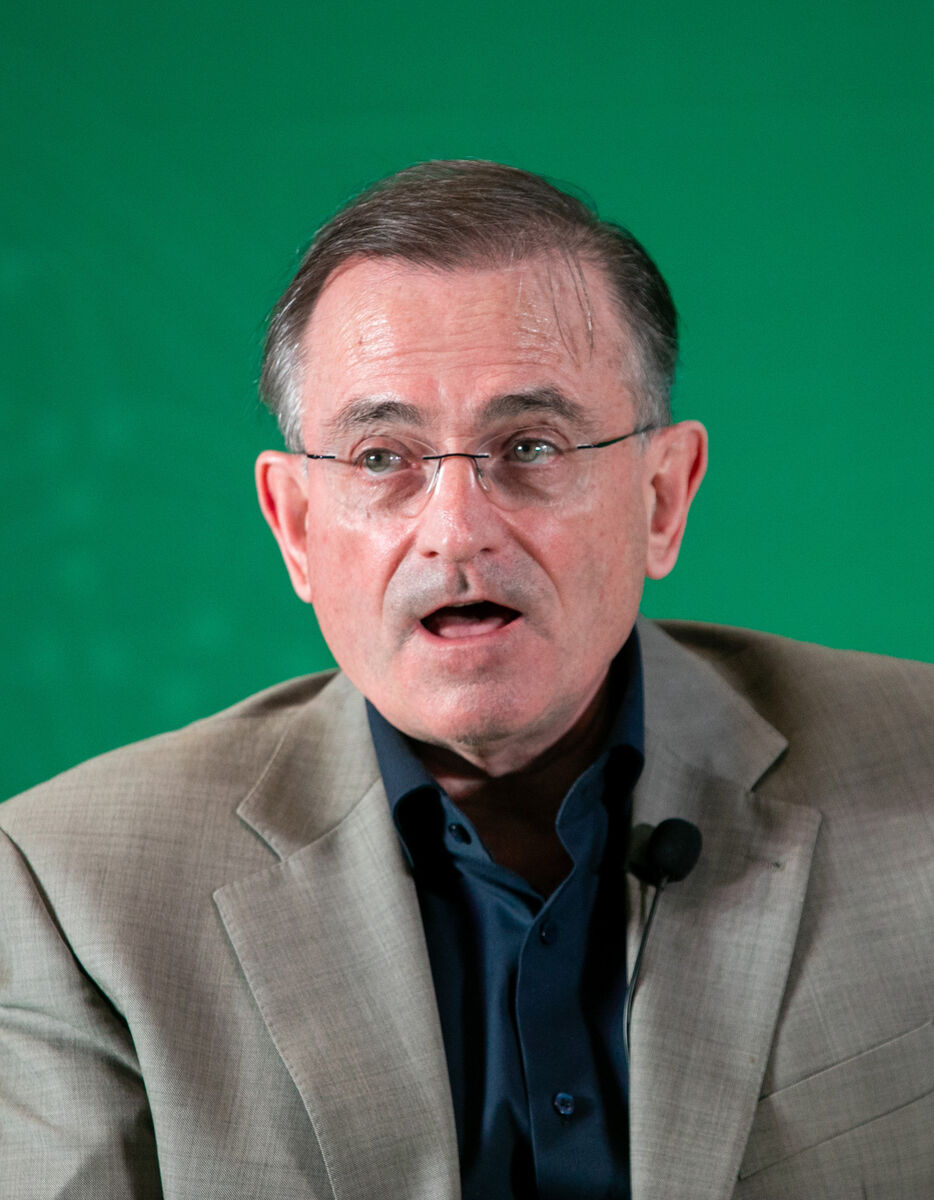
While discussing the absence of a populist alt-right party here, Hobbs described Irish mainstream media as “the North Korea of Europe”.
He was a co-founder of political party Renua in 2015. His days in politics, it seems, might not be over.
To understand Bannon, it’s important to consider how life in America during the Reagan years differed from an Irish upbringing.
Forty years ago, I boarded a 747 and flew west. My intention was to live and work in the States for the rest of my life. I was tired of what Ireland had to offer, which in hindsight was nothing compared to what America stood for in the eyes of an ambitious 25-year-old.
I stayed with an Irish family who were first-generation emigrants. They kindly offered me a home and a place at their table to come back to each evening until I found my feet and decided whether or not I planned on staying for the long haul.
I became close to one of their daughters. The feeling was mutual.
She even suggested we should get married so I could stay in the States as a legal resident — my visa sorted. She told me it wouldn’t bother her if we divorced, once we could have a couple of children together.
I was shocked by how convenient she made it sound; but that’s how different America was compared to what felt like penal servitude back home in dear old holy Ireland.
I had arrived in the land of the free and home of the brave, and it felt good for me. As Joe Biden once said, “That’s the magic of America”.
The land of opportunity where anything felt possible. Believe in yourself, in your ambitions. Pursue your dreams, regardless of your background or circumstances. It’s not what the Christian Brothers taught us.
I resisted the offer to stay and eventually came home, broke and deflated. But the experience of my time there stayed with me.
In America, I quickly learned that its natural-born citizens can become anything, even president (as the incumbent has proved).
Maybe it's why Trump intrigues me — that one man can make decisions single-handedly that affect us all.
“I run the country and the world,” he told last April.
Is Ireland on Trump’s bucket list? I suspect we are. Imagine while we’re all watching Greenland, he’s watching Ireland. Could we resist a grab?
The man who says it can’t be done is generally interrupted by the person doing it.
Bannon intrigues me more. Political strategist, film producer, investment banker, it’s a year since he pleaded guilty to defrauding donors who gave money to build a wall at the US southern border. To write him off would be foolish, considering the White House will need a new resident in 2028.
When he graduated from Harvard Business School in 1985, it’s unlikely he was focusing on the White House chief of staff job 30 years later; but that’s the magic of America. No one knows what opportunity is waiting just around the corner — including Ireland.
Bannon in one word? Complicated. But aren’t we all.
Maybe we should be keeping an eye on the western skyline — just in case.
CONNECT WITH US TODAY



Be the first to know the latest news and updates