Sarah Harte: Thank the Bard for Jessie Buckley! January was a Shakespearean tragedy up to now

Paul Mescal and Jessie Buckley are excellent in Hamnet. Picture: universalpictures.ie

Wow, the first week back at work was tough. In what is traditionally a quiet time, we were supposed to switch on the laptops and eat the rest of the chocolates.
Instead, we got Venezuela. Minnesota. Seized Russian tankers. It’s ugly, worrying stuff. Conversations with friends ran along the lines of “What the hell just happened. It’s going to get better, right?” Cue nervous laughter.
It all feels like a Shakespearean tragedy. The theatrical political goings-on, good and bad actors, hubris, destruction, self-destruction, and many lemmings. Modern medieval monarch Trump doubles as Shakespeare’s Richard III, an erratic "poisonous bunch-backed toad” demagogue who seduces his supporters with his clownishness and brutality.
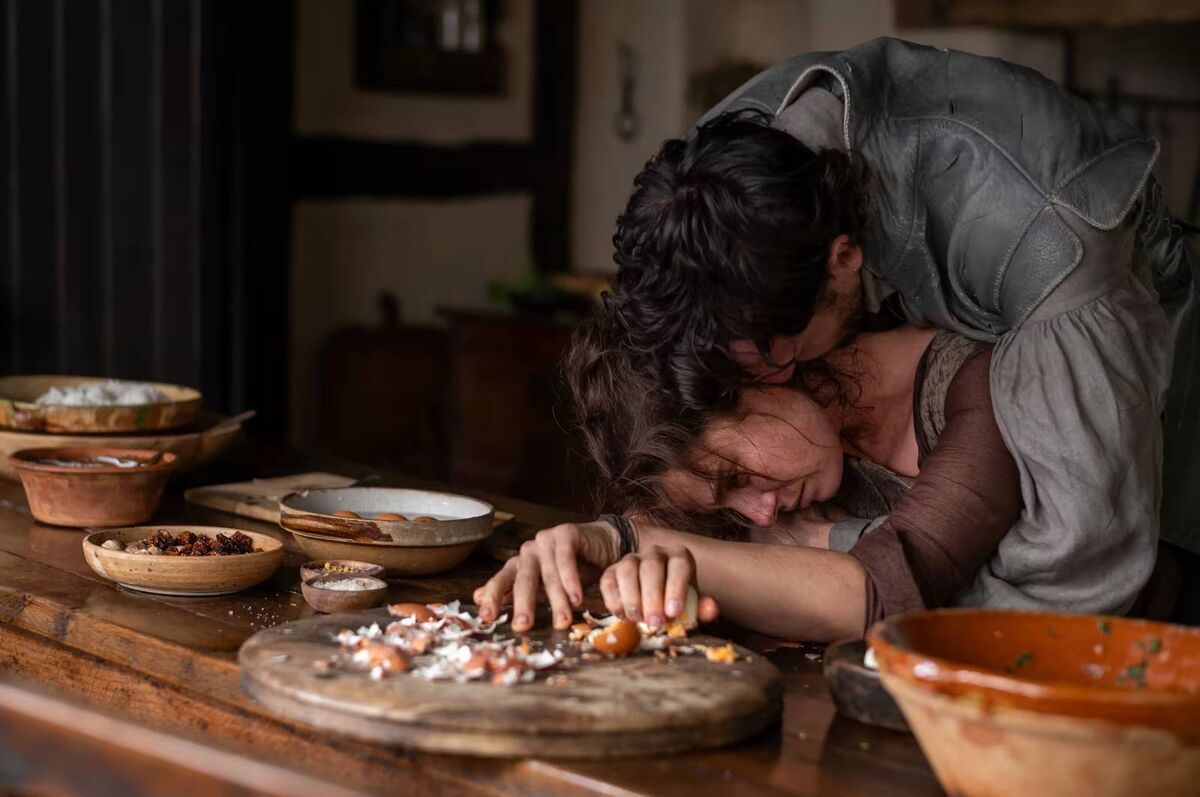
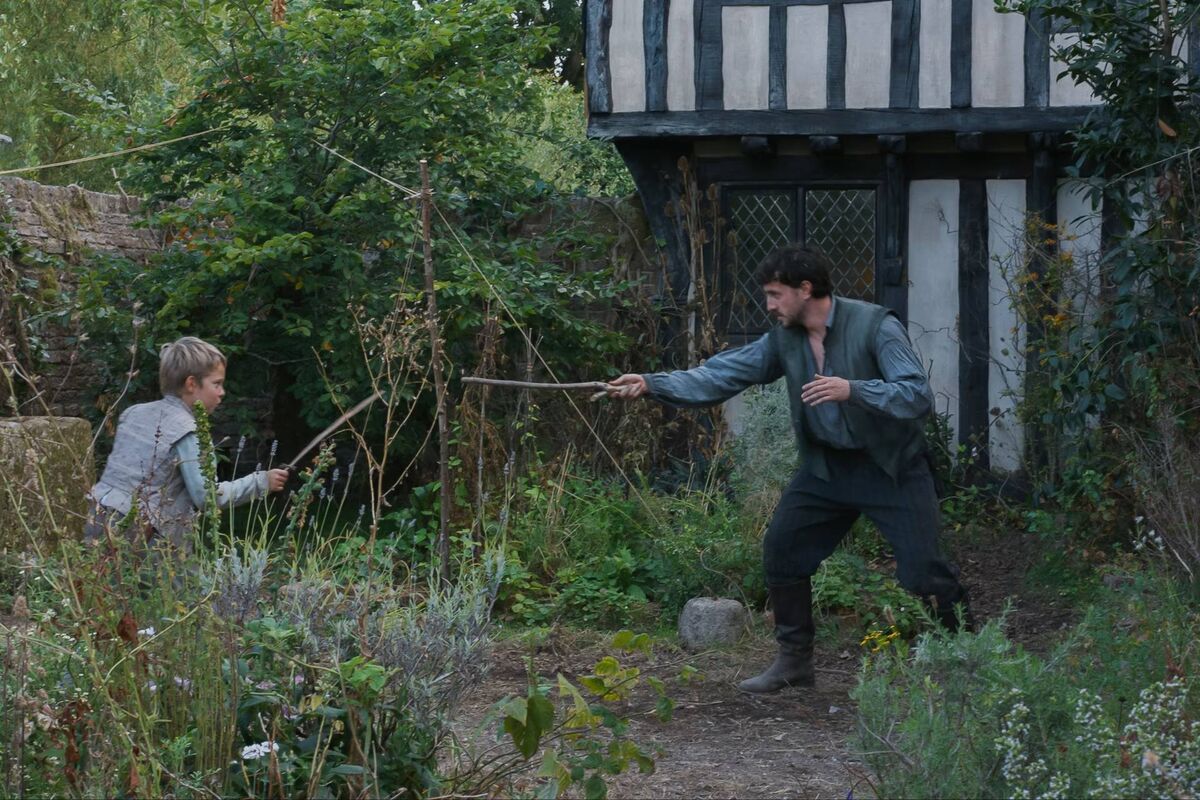
On the subject of Shakespeare, I’ve just seen with the magnetic Jessie Buckley and Paul Mescal, which is an adaptation of Maggie O’Farrell’s acclaimed novel about William and Agnes (Anne) Shakespeare and the death of their son Hamnet.
Both Mescal and Buckley were excellent. The Oscar nominations are out at the end of the month. Both actors are likely to be nominated, with Buckley, who has won a Golden Globe, seemingly in contention for Best Actress against Rose Byrne.
Mescal lost out to Stellan Skarsgard for Joachim Trier’s . The smart money says the film is poised to sweep Oscar season. In the cinema in Bantry, the response was overwhelmingly positive.
The cinematography is beautiful. At times, it can be a tad slow-moving. There were several sections when I thought enough of the kneading of plants, and the close-ups of tree sap and dirty fingernails. But the film caught me in the end.
Read More
Actually, in a different life, I knew David Wilmot, who plays Shakespeare’s father. A great actor and a very witty, engaging character. He does a brilliant job as always. The cast is stellar, with a standout turn from Emily Watson, who plays Shakespeare’s mother.
The gave the film a measly three stars, and somebody I mentioned it to joked, “Probably too many Irish people in it for The Brits”.
Initially, I thought Danny Leigh’s review of in was a tad mean-spirited because the movie is quite something, but actually, his reluctance to go along with the tribe in what is largely a sea of adoring reviews is valuable. Too often, critics act with a herd-like mentality.
Saying your piece matters now more than ever, whatever the context, when Trump is treating other countries as vassals of his ego. It’s like watching the worst kind of live theatre when we are cowed into silence.
On the subject of saying your piece, I have never personally gotten Shakespeare's magic. Heretical, I know. Yes, I’m fully aware that he is the big dog of English writing.
At the Golden Globes, Jessie Buckley described him as “the most famous Brit who ever lived”. He contributed more than 1700 words to the language, as well as much of the idiom we use.
I learnt from that it was important to get sleep (still working on that), but I found it extraordinarily boring. By the end of it, I prayed that somebody would gouge my eyes out, Earl of Gloucester style.
Maybe when it comes down to it, Shakespeare isn’t meant to be read as literature; his work is intended to be performed on stage. There are moments that you never forget. Shylock’s speech in stands out. Not remotely antisemitic by the way, the reverse.
But his comedies are tedious. There is the standard set-up. A case of mistaken identity, somebody about to be put to death, then everything gets resolved in the end, and so, so many soliloquies. I guess if Elizabethan English wordplay and puns float your boat, then fine.
My experience tells me that there is limited scope for saying you don’t enjoy Shakespeare without being called a philistine. I still say it anyway. I have known characters, who mime horror, as if to denote their own singular tastes, “What, you don’t adore Shakespeare? Are you serious?”
I wonder, though, whether they take the go-to name for gravitas, Shakespeare, to bed for a good old read? Hmmm.
More generally, with the chattering classes, certain writers become monuments. They are untouchable, with mythic status, because the legitimators of taste say so. They write a great book, followed by a mediocre one, and the mediocre is celebrated as the wonderful because it came from their pen, and nobody wants to break ranks.
The odd thing is that sometimes, the more formally educated people are the more afraid they are of putting a foot wrong. They allow their own perceptions to be reshaped by somebody else’s view because they figure they must know. And it’s not just in the realm of the arts. It’s in politics, too, to our detriment.
There is a historical evolutionary basis for agreeing. At one point, standing out from the tribe could mean possible death, so there was a strong imperative to rationalise whatever the group believed.
In modern life, psychology and anthropology point to conformity and prestige biases that impact how we perceive information. Basically, we tend to believe or agree with those we respect or see as successful or fear, which might explain the behaviour of Trumpian courtiers.
The groupthink around Trump is striking. Jen Psaki, former president Biden’s press secretary, famously referred to GOP supporters as “silent lemmings [walking] behind” Trump for not publicly repudiating his claim that the 2020 election was stolen from him.
You watch some Republican courtiers and sense qualms in those dead eyes about moral nullity, but presumably they rationalise that everyone else is doing it, and they participate in harmful systems.
So, they follow him blindly over the cliff, aligning their interests with his whims to the detriment of their political reputations. History will judge their transactional loyalty and cowardice harshly.
Not much we can do about any of this. But lemming-like thinking is bad for society, and the habit of unthinking conformity starts young.
Now more than ever, it seems important to teach our children to think independently, even if that means tolerating social discomfort.
I would say to the young: “If it’s your opinion that you find Shakespeare a drag, then say it. In a certain cultural milieu, you will receive pushback, but so what?”
Never laugh at a joke you don’t understand; instead, say: “I don’t get it.” Most importantly, don’t be afraid to say: “I don’t agree.” Popularity is no replacement for speaking your truth.
Maybe all we can do is be counted in our small ways, resisting the urge to go along with things because it appears safer. From acorns oak trees grow. That’s my current comfort blanket anyway, or one of them.
So even if the context is local or seemingly insignificant, we should embrace constructive social disagreement and learn to say, “No, I disagree.”
It’s fitting to leave the last word to Edgar in . “The weight of this sad time we must obey. Speak what we feel, not what we ought to say.”


CONNECT WITH US TODAY



Be the first to know the latest news and updates