Gareth O'Callaghan: Why solitude still matters in an always-connected Ireland
A January reflection on solitude, nature, and why constant connection is eroding our inner lives and sense of self
Gareth O'Callaghan: Why solitude still matters in an always-connected Ireland

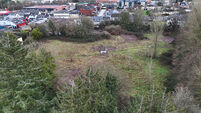
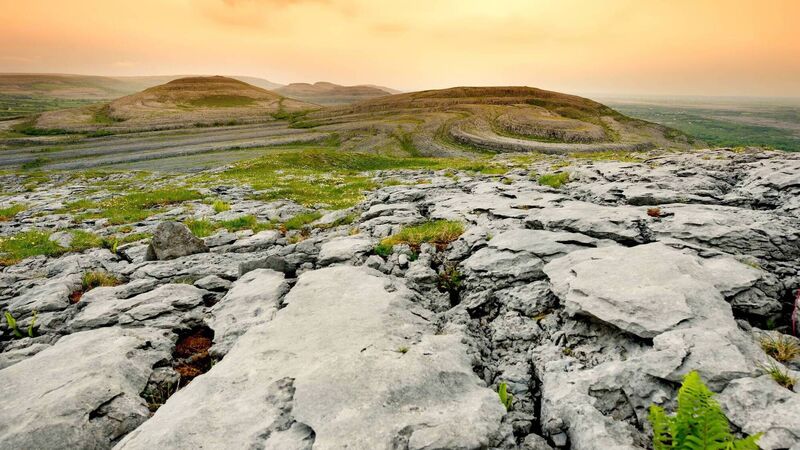
‘Imagine if you were offered the keys to a comfortable cottage in the Burren for the month of January... However, there’s no Wi-Fi or television.’ File picture

If January were a state of being, it would be solitude.


So, for a moment, imagine if you were offered the keys to a comfortable cottage in the Burren for the month of January.

However, there’s no Wi-Fi or television. No internet — no social media, no scrolling. No access to modern artificial intelligence. It’s just your own company for the duration. No one else’s. Your nearest neighbour is half a mile away.

You can bring CDs, vinyl albums, musical instruments, your favourite books, and of course enough food to fill the fridge and freezer. The closest shop is a three-mile walk. It’s going to cost you nothing. Only condition is that you stay for the month.

Your time here will be spent ‘in uaigneas le dúlra’, in solitude with nature. There will be no demands on you and no connections to your other life. You create your routine — it's all up to you. So would you jump at the chance, or baulk at the notion?

In more religious times not so long ago, it would commonly be known as a silent retreat. In my great-grandparents’ day in rural Cork, it was life as they knew it.

In 2009, I spent a fortnight doing what I’ve just described. At the time, I was at a crossroads; directionless. I was tired beyond any word that could make sense of my confusion, which felt more like a deep loss.

It was like looking at a map I had never questioned that had been my guide and slowly realising I had lost my direction somewhere back along the road; and now, at that point, I had no idea where I was, or where I wanted to go. I knew the only solution was to take myself away from the distractions that were adding to the distress, to find space in a quiet place, and ride out the storm.

My first 24 hours in the cottage felt daunting. Time meant absolutely nothing. It didn’t matter if it was four in the morning, or five in the evening. I remember staring at the pile of books I’d brought, asking why I’d bothered. I was afraid to sit quietly and read. The silence felt as though it was watching me.

I cooked a meal on my first evening, and ended up throwing it in the bin. It wasn’t hunger that was calling, it was something else. That evening I thought I would have a panic attack. The darkness outside was like nothing I had ever experienced. Pitch blackness multiplied by a thousand.

I couldn’t sleep that night. I opened the door onto the gravelly driveway just after midnight and turned out the lights. All the landmarks I had become familiar with earlier — trees, hilltops, stonewalls and gulleys — had been sucked into a darkness so overwhelming I couldn’t find my bearings. Even my balance was struggling.

I brought out a chair and sat in the garden wrapped in a blanket for what seemed like hours. Slowly the cloud lifted, and I was treated to a display of constellations and stars in a night sky like I had never seen before. I was captivated.

'My first 24 hours in the cottage felt daunting. Time meant absolutely nothing. It didn’t matter if it was four in the morning, or five in the evening. I remember staring at the pile of books I’d brought, asking why I’d bothered. I was afraid to sit quietly and read. The silence felt as though it was watching me.' File picture

Blue supergiants burned bright with a cobalt hue, while white dwarfs, like tiny glistening embers, dotted the background of this stunning tapestry. I knew then I had come to the right place.

I walked a lot in the days that followed. Everything about life slowed down. I quickly grew to love it. Stress unwound, anxiety vanished. I didn’t eat half the food I’d brought. No alcohol. I rested a lot, and I read. What also surprised me was how little if any music I listened to.

This place had its own natural frequency, and that was all I wanted to hear. It would be easy to mistake it for silence, but that would miss its cathartic power. It had a timbre. My sleep at night was deep and I would wake feeling more refreshed than I had ever felt.

On some days, I’d leave the cottage and walk for hours using a map I had bought in the tiny shop in Fanore. On others I would sit in the garden and stare in awe at the huge limestone hills that dated back to the dinosaurs, as they changed colour depending on the time and the light.

When it was time to go back, I begged myself not to leave. It had become like a home I had missed all my life. But it was there to return to. It took me another fortnight to ‘reintegrate’ into the noise and the chaos of what we regard as reality.

What we do with our lives these days is what we believe is normal. It’s not. What I did 17 years ago helped me to discover what the human spirit craves — the same spirit that is the driving force in all our lives. But we’re driving the spirit in the wrong direction, against its will.

Where I stayed was close to where the poet and writer John O’Donohue grew up as a boy. I met and interviewed John almost 30 years ago on the day his first book Anam Cara was published. We were friends from that day on. John was no stranger to the benefits of solitude.

We live in a world that is nothing more than an illusion we buy into as a way of being accepted by others. In order to honour the illusion, we ignore our need for solitude, until the mere notion of being alone terrifies us. Our hunger for the ego is taking us down a lonely, isolating road – call it the road to perdition.

Smartphones are the nemesis of solitude. Technology was meant to bring us closer together, to unite us in our similarities; instead it’s killing us, and like pigs to the slaughter, we’re quite happy to endure that slow death. We are losing our identities, which only solitude can restore.

In his book Divine Beauty John talks about how the slowness and stillness of solitude takes us over: 

When serenity is restored, new perspectives open to us and difficulty can begin to seem like an invitation to new growth.

The stillness of nature is not some “narcissistic cocoon”, he writes.

There is healing in the silence of mountains and the roar of waves on a beach, but the artificial noise of the dopamine-driven world of social media has managed to kill the heart’s connection to nature.

It would take years to feel the real benefits of my time at the cottage. Now I look for solitude all around me.

There’s a beach in West Cork that I stood on for the first time last year where I found a solitude not unlike the Burren.

It entails a short boat journey to Sherkin Island, followed by an hour-long stroll along a quiet road that looks out at breathtaking views of Cape Clear and beyond at a vast expanse as far as the western horizon of the Atlantic.

A narrow stony laneway leads down to the unspoilt white sands of Silver Strand. It is utopian. Apart from at the heighth of summer, there’s rarely a soul in sight. This place is almost two billion years old.

John O’Donohue died this weekend in 2008, just as he was about to publish Benedictus: A Book of Blessings. He was 52. It was a blessing to be his friend.

Solitude was at the core of his life, as it can be for each of us. It’s where we recover and discover. Without it we’re starved of inner peace and a connection to the power of nature. Society’s obsession with social media and modern artificial intelligence is destroying private life and personal space. When solitude loses its importance in our lives, we no longer know ourselves.

“I would love to live like a river flows, carried by the surprise of its own unfolding.” 

May you find the peace of solitude this January. Happy New Year.

More in this section

Revoiced

Newsletter

Sign up to the best reads of the week from irishexaminer.com selected just for you.

Cookie Policy Privacy Policy Brand Safety FAQ Help Contact Us Terms and Conditions

© Examiner Echo Group Limited