Colin Sheridan: We can imagine life on the Moon, but not dignity on Earth
As Nasa plans humanity’s return to the Moon, our tolerance for civilian slaughter exposes a disturbing ethical divide
Colin Sheridan: We can imagine life on the Moon, but not dignity on Earth

Artemis II, we are told by Nasa, is priced, planned and pencilled in for 2026: four astronauts, looping the Moon, humanity once more flirting with the poetry of space and silence and distance. File picture

At the tail end of the year, when the news thins like air at altitude and the conscience thickens like yesterday’s soup, certain stories sit beside one another like strangers on a late bus, refusing to make eye contact yet impossible to ignore. One of them arrives dressed in the language of wonder.


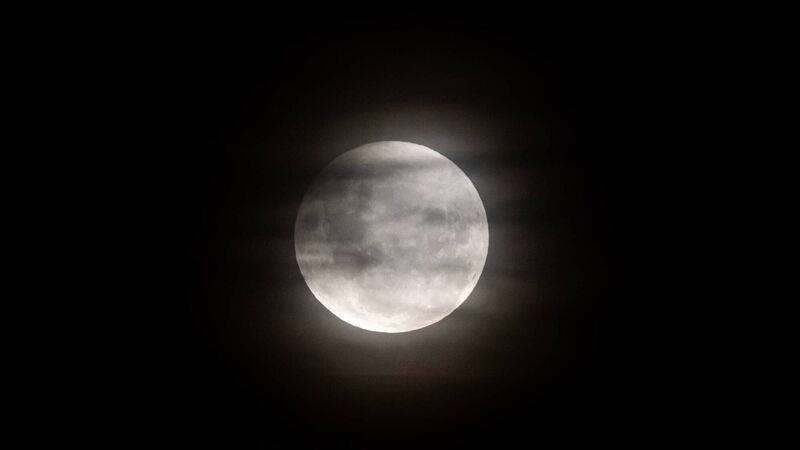
Artemis II, we are told by Nasa, is priced, planned and pencilled in for 2026: four astronauts, looping the Moon, humanity once more flirting with the poetry of space and silence and distance.

Following along soon after it, Artemis III, promising something grander still — boots on lunar soil at the South Pole, a flag in the dust, a paragraph for the history books.

Artemis IV and beyond speak of permanence: a Gateway, a space station circling the Moon, a Starbucks, maybe.

The beginnings of a long-term human presence not on Earth, but away from it.

Billions upon billions of dollars. Oceans of awe. Sky-loads of ambition. All delivered under the political stewardship of Donald Trump, a man whose ego can be seen from a galaxy far, far away, and whose appetite for attention would dwarf solar systems.

When asked why he wanted to climb Everest, George Mallory famously replied: “Because it’s there.” It was meant as a shrug, a summation of human curiosity.

But there is something revealing about how often that line resurfaces whenever ambition needs no further justification.

The Moon, like Everest, exists. And existence alone, it seems, can still trigger a blank cheque.

The other story wears no romance.

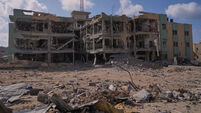
It does not speak of gateways, only of exits that no longer exist. It tells of another vast expenditure by the same nation — not to escape gravity and discover new worlds, but to press the boot of oppression down harder upon a vulnerable neck already pinned beneath it.

Billions of dollars more, this time not for space rockets, but for bombs; not for lunar modules, but for the steady eradication of life in Gaza into something unrecognisable, something spoken of as collateral, something treated as less than human.

There is no great technological mystery here. There is no moral one, either. We know how to build spaceships. We also know how to level cities.

The end-of-year habit is to ask what kind of year it has been, and wonder what the next one will bring. But perhaps the more honest question is what kind of species we continue to be?

NASA’s language is immaculate. “Exploration.” “Presence.” “Pathfinding.”

Even “Artemis” itself — a goddess, a huntress, moonlight made myth. It all suggests forward motion, progress, a better version of ourselves unfolding somewhere beyond the atmosphere.

And yet the same cheque book that funds the dream of humanity living among the stars is underwriting the deliberate unravelling of humanity on Earth.

This is not a budgetary contradiction. It is a moral one.

Norman Mailer, watching the Apollo missions in Of a Fire on the Moon, was already uneasy about this split personality.

He sensed that America’s reach for the heavens was also an escape — a way of avoiding harder reckonings at ground level.

The Moon, he suggested, was being used as a mirror for national power rather than a window for human humility.

We are told, often, that these are separate conversations. That science must be insulated from politics. That defence spending is regrettable but necessary. That the Moon is about “all mankind,” while Gaza and Palestine is a deeply complex “problem” requiring diplomatic dexterity.

The language works hard to keep the worlds apart.

But the numbers refuse to cooperate. Both the dead, and the money spent to slaughter them. They sit there, blunt and unembarrassed, insisting on comparison.

There is something deeply unsettling about a civilisation capable of planning a lunar base decades in advance while accepting, in real time, the mass extinguishing of civilian life.

It suggests a future-facing imagination paired with a present-day moral exhaustion. We can picture ourselves on the Moon, but cannot countenance our responsibility to the children under rubble we helped create.

Perhaps that is the real dichotomy of 2026: not Earth versus space, but aspiration versus empathy.

The Moon, whether we fly there or not, will still be there. It has survived worse than us.

Gaza, by contrast, is running out of time. And history has a way of noticing which projects were urgent, and which were merely the human race flexing its muscles.

As the year closes, the lights dim, and another round of speeches is prepared about hope, innovation and humanity’s shared destiny, it might be worth asking what kind of species we are exporting into the cosmos. One that builds gateways in space while blowing bridges to smithereens on Earth? One that reaches for the stars while shrinking the meaning of human life below?

The Moon does not need us yet. The people of Gaza do. And no amount of rocket fire will ever drown out that quieter, heavier truth.

At the end of the year, when the noise settles, it is usually the silences that judge us most.

x

More in this section

Revoiced

Newsletter

Sign up to the best reads of the week from irishexaminer.com selected just for you.

Cookie Policy Privacy Policy Brand Safety FAQ Help Contact Us Terms and Conditions

© Examiner Echo Group Limited