Sarah Harte: Feeling more content in 2026 can start with looking beyond yourself
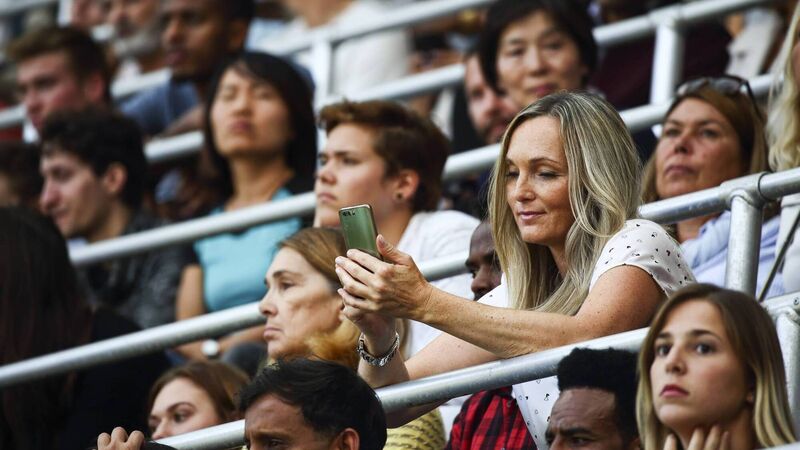
Is it possible that the tenets of Western thought, which encourage us to view ourselves in highly individualistic terms, often in a win-lose mentality, hamper our ability to look beyond ourselves and feel content?
New Yearâs Eve is the last hurrah before gluttons look in the mirror and say, "Enough."
Of course, ascetics judge those of us who subscribe to the Wildean idea that the only way to get rid of a temptation is to yield to it. Presumably, some of them get an arid kick from watching us being dragged kicking and screaming away from excess and fun.
I like the quote from the late journalist AJ Liebling, âno ascetic can be considered reliably saneâ. Incidentally, if you are at a loose end tonight, thereâs a new film about the that has just dropped on Netflix. Itâs called . Iâd highly recommend it.
Anyhow, tonight, as the corks pop, guzzlers know the gig is up. Itâs hair shirt time. While I hate wearing hair shirts, NYE is my favourite night of the year. Therefore, I will studiously avoid friends and relatives, otherwise positive sorts who transform into Eeyore on this night. In bed by nine, asleep on a chair, snoring unattractively in public. Or worst of all, staying up until the bitter end, emitting their curmudgeonly vibes and killing the room. Around these buzz-kill types, I have found myself rationalising that a maximum life sentence for murder in Ireland means youâll be out in eight.
Iâve always been evangelical about New Yearâs resolutions. Every year on the 31st without fail, in the face of mounting evidence to the contrary, as a natural optimist (or fool), I think, "This year will be different!"
The writer GK Chesterton said about the New Year: "Unless a man starts afresh about things, he will certainly do nothing effective." The writer Katie Kitamura wrote in her excellent new novel : âThereâs a certain degree of immutability about middle age that change is experienced as a kind of attritionâ. I reject the downbeat idea that our life circumstances become largely fixed in the middle years. We can change. However, I am questioning the point of making unsustainable resolutions. The inevitable backsliding is bad for morale.
You may be thinking, "How convenient." On the brink of reform, sheâs intellectualising her unwillingness to give anything up. Weak-willed sloth. Maybe thereâs an element of truth in there.
But this year, Iâm dubious about buying kale and letting it wilt in the fridge. Or purchasing a new gym membership in January and falling off as the smelly gym gear moulds at the bottom of my gym bag.
To take one anodyne personal example, every year, one resolution (or fantasy) is to cut down on sugar. Within a day or two, Iâm mainlining Walnut Whips. Cue feelings of self-loathing and semi-dislike of those who announce that theyâve effortlessly been on a sugar-free regimen for months. Their dull, aggressively public announcements (an unfortunate feature of modern life) are a subject for another column.
So, whatâs the solution? To wallow interminably in a vat of white wine, chocolate, late nights, Netflix binges and lie-ins. Retrenchment is needed if one isnât to end up in the Rutland Centre or sliding into Homer Simpsonâs mumu.
However, having had time to ruminate over the extended psychodrama that is Irish Christmas, Iâve concluded that one positive change would be to cease obsessing over personal goals seen through the prism of the I, me, my body, my walk, my Pilates, my meditation, living MY best life. Me, me, me.
Thereâs a difference between goals, specific measurable destinations you want to reach that entail a self-obsession disguised as self-improvement. And values or core principles guiding how we live, act, and treat others.
A standout scene in featured Tonyâs Russian girlfriend, Irina, telling him that Americans who had âeverythingâ were still unhappy and, as a result, sought therapy.
By contrast, in Russia, where illness, hardship and poverty were more normal, people werenât so hung up on being happy. The implication being that having too much was not a recipe for contentment.
There are holes in Irinaâs theory. Therapy is valuable. As somebody said to me, itâs like a personal training session for your mind and emotions. If you encounter roadblocks in your life, itâs an efficient way to drive around them. But I canât help but feel that Irina was onto something about a Western mentality.
Is it possible that the tenets of Western thought, which encourage us to view ourselves in highly individualistic terms, often in a win-lose mentality, hamper our ability to look beyond ourselves and feel content?
I am sceptical about the wellness woo-woo industryâs commodification of basic common sense. There are many charlatans in the wellness industry, coining it, selling hope to the naĂŻve or unhappy. But Iâm curious about the notion of practising gratitude, the promise of a psychological reset, and achieving serenity.
One suggestion is to write down three things youâre grateful for each day in a gratitude journal. Iâd avoid âgratitude journalsâ sold at inflated prices, often with shmaltzy aphorisms and corny covers, and make do with an ordinary notebook from the corner shop.
I wonât be journaling the things I am grateful for. My finger pads are so worn out from writing that if I commit a crime, I doubt my fingerprints could be taken. Yet, reflecting each day on what youâre grateful for seems like a good habit. Appreciating the small and simple things that are meaningful to life. Our grandmothers called it âcounting your blessings.â Those women instinctively knew their onions.
An obvious qualifier is assuming serious mental health issues can be cured by practising gratitude, a dangerous notion.
However, several studies suggest that practising gratitude can do everything from lowering blood pressure to enhancing feelings of contentment, emotional well-being, and mental health and resilience.
These studies are from reputable sources like Harvard Medical School, although as the science evolves, researchers canât yet pinpoint why gratitude is associated with longer life, including better cardiovascular health. The studies are more observational in nature, meaning they offer no scientific proof that gratitude helps people live longer. It seems more obvious why gratitude might strengthen pathways to positive thoughts and emotional control.
You could draw an analogy to praying, but not everyone prays. By taking God out of the equation, tracing your gratitude back to its source prompts you to consider not only the good things that have happened, but also the people in your life who have helped make them happen, even in small ways.
Whatâs appealing about this is that it may help a person stop obsessing over what they got wrong (I am a big raker of old coals), brooding over who did you an injustice (translation: making voodoo dolls at home), and switching to thinking about whom you should thank.
On that note, I want to sincerely thank you for reading this column. Without you, it wouldnât exist. Itâs a joint endeavour. A very happy new year to you all. See you on the other side, guys.