Gareth O'Callaghan: When Christmas isn’t about presents, but about where — and who — we belong to
Is Christmas all an effort made for the children, so they can enjoy that same magic we felt when we were their age, or maybe to give them the enchanted memories to store away that we missed out on ourselves?
“Then the grinch thought of something he hadn’t before! What if Christmas, he thought, doesn’t come from a store. What if Christmas…perhaps…means a little bit more!” Unlike the gifts we’ll buy in these next few days, you can’t put a value on these words by Dr Seuss.
What is Christmas? I ask myself that question around this time every year, and I can never find an answer that satisfies that side of me that I always associate with winter. I love Christmas, but what is it precisely that I love?
Everyone experiences it differently, as I’m reminded by the words of Elvis Presley: “Values are like fingerprints. Nobody’s are the same”. Yet, we’re all expected to be the same at Christmas, which of course never quite works out. So where exactly should we look for the origin of that secret ingredient that makes it Christmas?
If I were to take away everything that’s associated with this time of year — spiced beef and Brussels sprouts, pop songs and carols, office parties, booze, selection boxes, gifts, decorations, religious beliefs and church services, even the family get together on the 25th with the four-course dinner that winds its way precariously through a long evening — would there still be a Christmas?
Is it all just down to a single day in time, or is it a feeling that gradually builds on our expectations? Is it all a search for the perfect gift? Is there even such a thing?
That’s a lot of questions, but maybe I’m channelling my inner child here at a time when we all wish we could experience that sense of magic that we see in the eyes of the believers early on a Christmas morning — a magic we envy that we have sadly outlived.
Try for a moment to reimagine the thoughts of yourself as a child and the wonder you felt late on Christmas Eve at the sound of bells, somewhere.
Is it all an effort made for the children, so they can enjoy that same magic we felt when we were their age, or maybe to give them the enchanted memories to store away that we missed out on ourselves?
Is it a case of doing our best to pretend so as to make it perfect for those we love? I’m sure many reading this would wholeheartedly agree that Christmas is not real, not like it once was; that as years pass, the patience wears thin for the pageant of presents and performances that has become more of an annual obligation than a joyful inclination. If it’s not ostentatious, then it’s not a modern Christmas.
So what if there was none of it? Imagine an empty day, and how that might feel. Think of what it’s like to live far away. Nothing quite beats the homesickness that consumes you when you can’t revisit your roots for Christmas.
Christmas devises its own form of depression whose origins lie in distance and absence. We take hugs for granted until there’s no one to hug when we most need one.
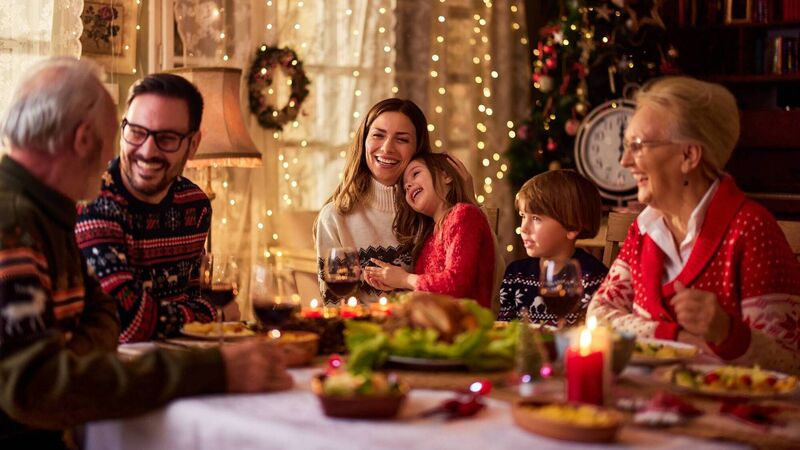
Like no other, it’s probably the greatest insight you’ll experience as to what Christmas is about. In a word, Christmas is belonging. Without a physical sense of belonging you experience at that familiar table you’ve sat at for years, absence creates a pain all of its own that is indescribable.
Ex pats know it only too well — no matter how long we’ve been living abroad, every Christmas feels empty in that part of your heart that you’ve always reserved for the familiarity of where you grew up and who with.
My first Christmas away from home was in 1984. On Christmas Eve that year I found myself between jobs. Early that morning, I packed my old Toyota Corolla with the clothes and the keepsakes I’d brought with me when I made the move to England the previous April, and drove out along the M6 from Coventry.
I spent most of that snowy day in heavy traffic driving north on the M1 towards Leeds, to my new home. It was almost dark when I arrived. My accommodation was a rank two-room basement flat not far from Elland Rd.
A small gas heater kept me warm throughout that night until the cylinder ran dry. Then I woke up freezing in subzero temperatures.
I was never more miserable in my life up to that point. I woke on Christmas morning after a broken sleep to an empty fridge and a dodgy cooker. I took a stroll around Beeston to find a shop, but everywhere was closed. It felt like I was the only living soul on an alien planet. Then I came back to the flat and discovered the television didn’t work.
I had bowls of cornflakes for Christmas dinner, and spent the day reading by Charles Dickens, which — was it irony or a mere coincidence? — someone had left a copy of on the windowsill. “I will honour Christmas in my heart, and try to keep it all the year.” Scrooge’s words, not mine.
It’s a time I never forgot, all these years later — spending Christmas alone away from home.
Without a sense of belonging, Christmas is just a mess. We all need to be wanted; but there’s a huge difference between belonging (on our own terms) and a habit we slip into at this time called normative influence, which is the pressure we find ourselves under to conform to the expectations of others to get their approval.
It’s the thorn in my side, and there’s always at least one guest who arrives filled with a sense of all-day all-inclusive entitlement. “Me, me, me — it’s all about me.” Hang on, I’ll get your jacket.
Perhaps Christmas feels at its most stark and solitary when you’ve little choice but to spend it alone. An old friend of mine checks into a decent hotel in Albufeira every year at this time, and stays there alone until the festivities are over. His wife died some years back, and since then he’s had enough of the traditional “warfare”, as he calls it. His children are grown and dispersed. Now it’s their time.
He swims every morning and afternoon at the beautiful Praia da Coelha beach, which he has to himself, close to his hotel — the same one where he spent his honeymoon — and walks for miles when the weather permits. He eats with locals, and minds his own business. His two-weeks leave of absence is a gift to himself, something most of us neglect to do.
His books are his only companion. This year, he’s packing by Matt Haig — a novel exploring the choices we make and the lives we could have lived. He’s also bringing by Brianna Weist, which tackles the thorny issue of self-sabotage, and why we do it.
They’re books I bought him, and titles I would recommend to anyone who feels unmoored over the holidays.
So what is Christmas? Maybe it’s a state of mind in which we go the extra mile for people who instil in us that sense of belonging. It’s just a shame that we wait till Christmas every year to do it.