Gareth O'Callaghan: Why Ireland must protect the presidency from political vanity and empty celebrity
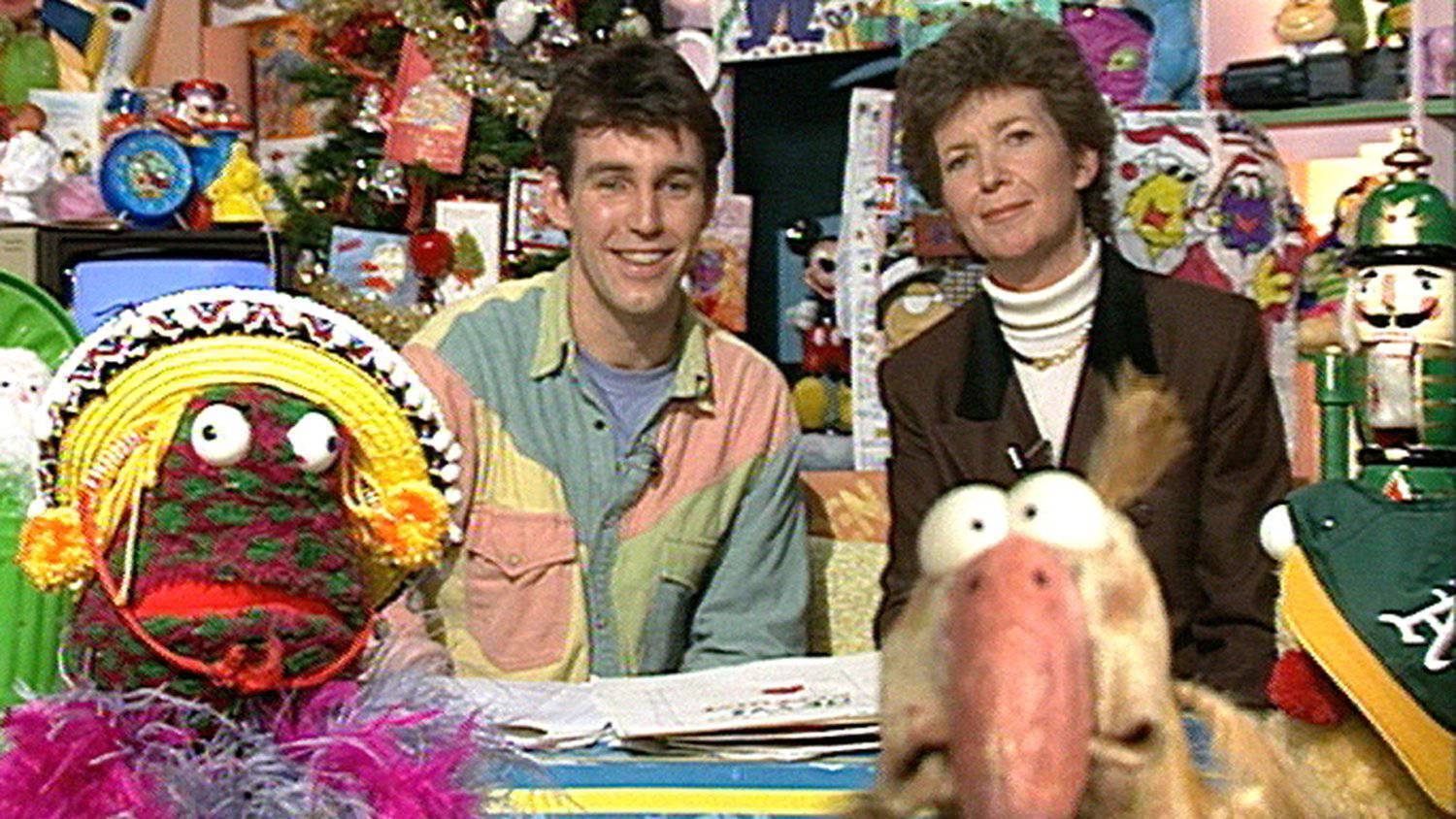
President Mary Robinson replies to allegations that she has smelly feet. On November 7, 1990 the people of Ireland voted and Mary Robinson became the first woman President of Ireland. Just weeks later, and ahead of her formal inauguration, Mrs Robinson paid a visit to Zig and Zag, Dustin, and Ray D’Arcy on The Den.

Sagacity is a powerful word. Former Fianna Fáil deputy leader Mary O’Rourke used it to describe Mary McAleese in 2011 as she bowed out of 14 years as president, and how as a nation we were richer for the humanity and the qualities she brought to the job. “I just think she overwhelmed us with her sagacity and know-how and the way she could carry it off,” O’Rourke said.
The only occasion I can recall its use before then was in Jane Austen’s . Sagacity is a virtue as rare as a red-winged Blackbird.
It dates back to the 17th century when it was associated with the acute sense of smell in animals, which later led to the belief that some people were better at sniffing out a good idea from a bad one.
In more recent times, sagacity is the trait of solid judgement and intelligent choices. It’s the bedrock of sound thinkers, of which we need more — especially when it comes to the role of president of Ireland. Unfortunately we have no choice but to say farewell to one of the most sagacious in November. As of today, it’s a challenge to suggest who might replace Michael D for wisdom.
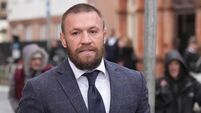
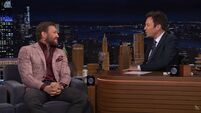
In 30 weeks’ time, a new president will be elected. If it hadn’t been for the news of Conor McGregor’s intention to run as a candidate, which he announced shortly before upstaging the Taoiseach’s visit to Washington by meeting Trump in The White House on Saint Patrick’s Day, a November election would still be rock bottom on most people’s radar of priorities. I hope that has changed. If it hasn’t, then it should.
The early years of the presidency saw it treated as more of a retirement home for distinguished, ageing, politicians. Up to 1990 the president was essentially neither seen nor heard very often.
It's almost impossible to comment on the presidency of Patrick Hillery, for example, because he was rarely seen, and he never really challenged the conscience of the country over those 14 years.
Hillery was a quiet man who never wanted to be president during a period when the country was mired in sectarian violence and political corruption. It wasn’t until the 1980s ended that a series of events happened that took us to the core of what ‘proud to be Irish’ meant in a very short space of time.
In 1990, a wind of change blew across Ireland. It was nothing less than a paradigm shift in how we started to take stock of ourselves and our place in a modern progressive world. We had emerged from a stultifying time of recession, repression, and rejection.
Looking back, we were on the cusp of a renaissance. 1990 became the year of new beginnings.
Ireland started 1990 by securing a six-month presidency of the European Union.
In February, Nelson Mandela was released from prison in South Africa after spending 27 years behind bars. One of his first international visits was to Dublin in July, where he was conferred with the freedom of the city.
On May 17, the World Health Organisation declassified homosexuality as a mental illness — a date now celebrated annually as International Day against Homophobia, Transphobia and Biphobia.
In the aftermath of the Berlin Wall being taken apart stone by stone, East and West Germany signed a treaty to merge their economic and social systems. Brian Keenan arrived home safely after 1,574 days in captivity in Beirut, and Ireland defied all the odds by reaching the world cup quarter finals. We even got a shiny new coin to replace the old shabby pound note.
And finally, to round off a year of celebrating what felt like a new dawn, Mary Robinson was elected the seventh president of Ireland. The old-world male rigidity of the ruling classes had finally been taken down by a woman laying claim to the highest office in the land.
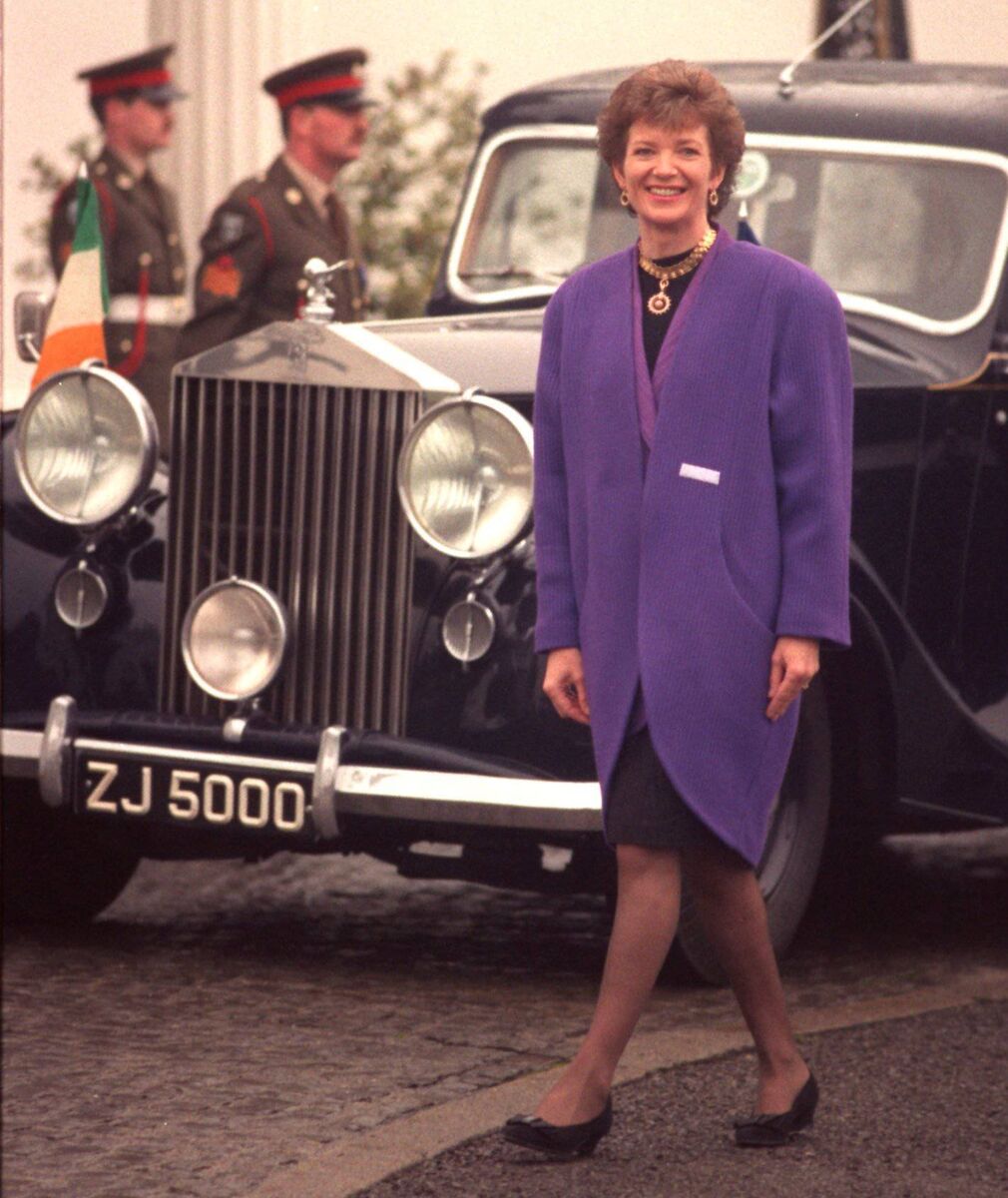
She was an outspoken campaigner and legal activist on issues including decriminalisation of homosexuality, contraception and divorce legislation, and changing the law so women could sit on juries. At one point in her presidency she had a 93% approval rating among the electorate, making her Ireland’s most popular president ever.
No one — no man or woman — has ever had such a transformative effect on the moral conscience of Ireland as Robinson did, and we owe her much respect for her relentless drive for equality that gave back to so many their denied identity. I can still recall her television interview days ahead of her inauguration on RTÉ’s , when she took Dustin the Turkey to task for accusing her of having smelly feet.
It’s notable that she was the first president not to have the support of Fianna Fáil.
In 1991, Charles Haughey prevented her from leaving the country to deliver the famous BBC Dimbleby Lecture in London, which had been delivered the year before by German chancellor Helmut Schmidt whose lecture was titled ‘Europe in the Nineties’. Robinson was due to deliver a talk on the position of women and the family in Ireland. Fearful of the negative publicity, Haughey refused to allow her to travel.
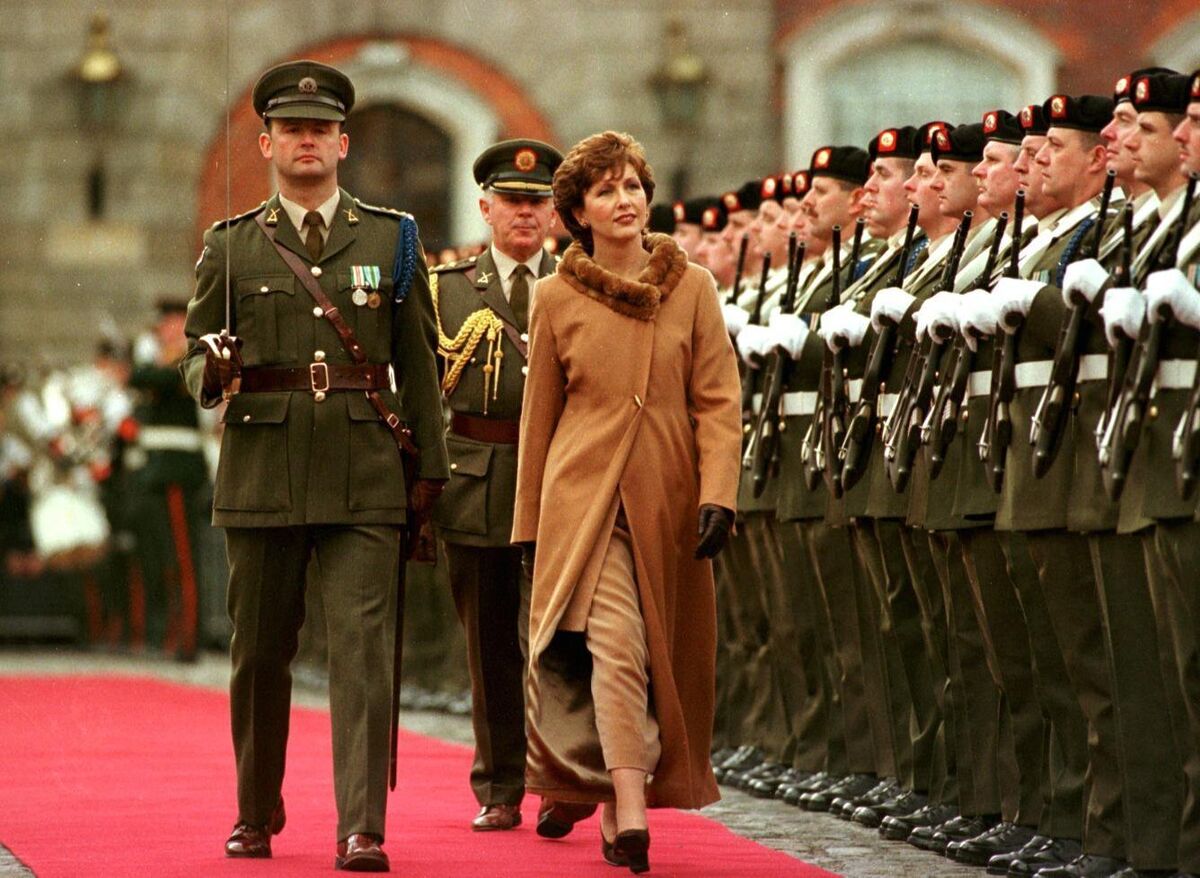
Mary McAleese continued her predecessor’s stalwart work by bridge-building on themes including anti-sectarianism and social inclusion. No doubt, the defining moment of her presidency was when she stood with Queen Elizabeth II, heads bowed in Dublin’s Garden of Remembrance, honouring those who died fighting for Ireland’s freedom. Few believed they’d see the day; but McAleese’s sagacity made it happen.
Her successor Michael D became the first politician in Irish history to obtain over 700,000 first preference votes in the 2011 election, and over one million in a final count. The weeks leading up to his victory were described by as “the most fractious presidential election campaign since the Republic was founded”.
As president, he has continued to speak out for equality and human rights across the globe; and in recent years for the plight of those in Gaza.
One of his first priorities as president was to request that his salary be cut by almost a quarter. Five years ago, during his Christmas message, he called for greater solidarity, sensitivity, and forgiveness — the same qualities he brought to the office.
Thirty-five years of momentous presidents will end this year. So who comes next? Of those mentioned so far who might throw their names in the hat, none of them could hope to hold a candle to these three pioneers.
Every country deserves a great leader. We’ve had three since 1990, and their successor has big shoes to fill. The presidency, is arguably the least defined yet most challenging political role in the State.
It should never be regarded as a golden handshake. Áras an Uachtaráin is not a retirement home for has-been politicians, showbiz celebrities, or any washed-up do-gooder for that matter.
The president, on behalf of all the people of Ireland, should be a watchdog — fearless to call out and criticise the government if it’s obvious they’re slacking off, which they have been lately with the jaded speakers’ rights row.
While it’s highly improbable that Conor McGregor’s name will appear on next November’s ballot paper, his determination to run for election should be a reason to focus us more fiercely than ever on protecting the inviolability of the office.
We need another Robinson, or McAleese, or Michael D, with their perception and their brilliance; but such a successor so far hasn’t stepped forward. As Mary O’Rourke said of Mary McAleese: “Not fussy, but perfect in the role”.
Perhaps sagacity is in danger of extinction. For all our sakes, I hope not.


CONNECT WITH US TODAY



Be the first to know the latest news and updates