Mick Clifford: Protect those in precarious employment
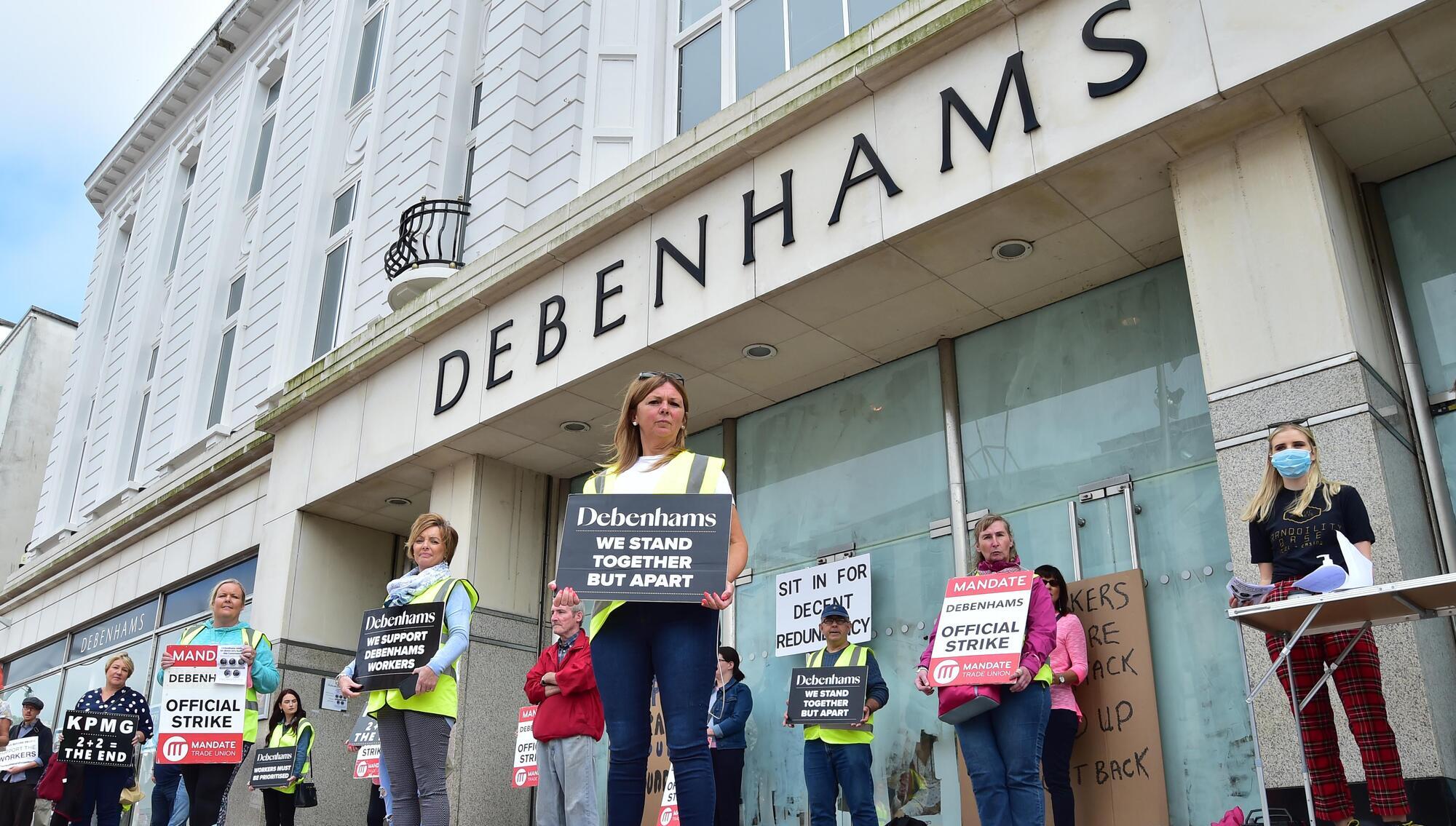
Former workers on picket line duty outside the Debenhams Store on Patrick Street, Cork. Picture: Dan Linehan

Early on in the documentary , there is footage of a deserted Henry Street in Dublin during the pandemic lockdown. Nothing moved. There was no life, no marching of feet, no rubbernecking shop windows, all activity suspended as the country hid in fear of a raging virus. Retrospective comment today appears to be divided on whether the lockdown was necessary, but one way or the other the vistas of deserted streets evoked images of the end of the world as we knew it.
Of course, it wasn’t. Lives were lost, and others suffered long-term effects, but, with the help of science, we have learned to live with the virus. For one group of people, however, it was the end of the world as they knew it. The 1,000, nearly exclusively women, who worked in eleven Debenhams stores around the state found themselves dealing with the closure of the business that had been their lives.
Debenhams was closed with little prior notice, days after the first covid lockdown came into effect. Many saw the owners, domestic and foreign banks and funds, as using the health crisis as an opportunity to cut and run. All of that was bad enough, but what really piled anger on heartache for those put out of a job was a refusal to honour an agreement brokered in 2016. At that time, the staff agreed to major restructuring of their roles on the basis that in the event of closure, they would be entitled to the statutory two weeks redundancy per year worked plus a contribution of two weeks pay per year from the employer. Then, when the hour arrived and the world outside was preoccupied with an existential crisis, the employer shrugged and reneged.
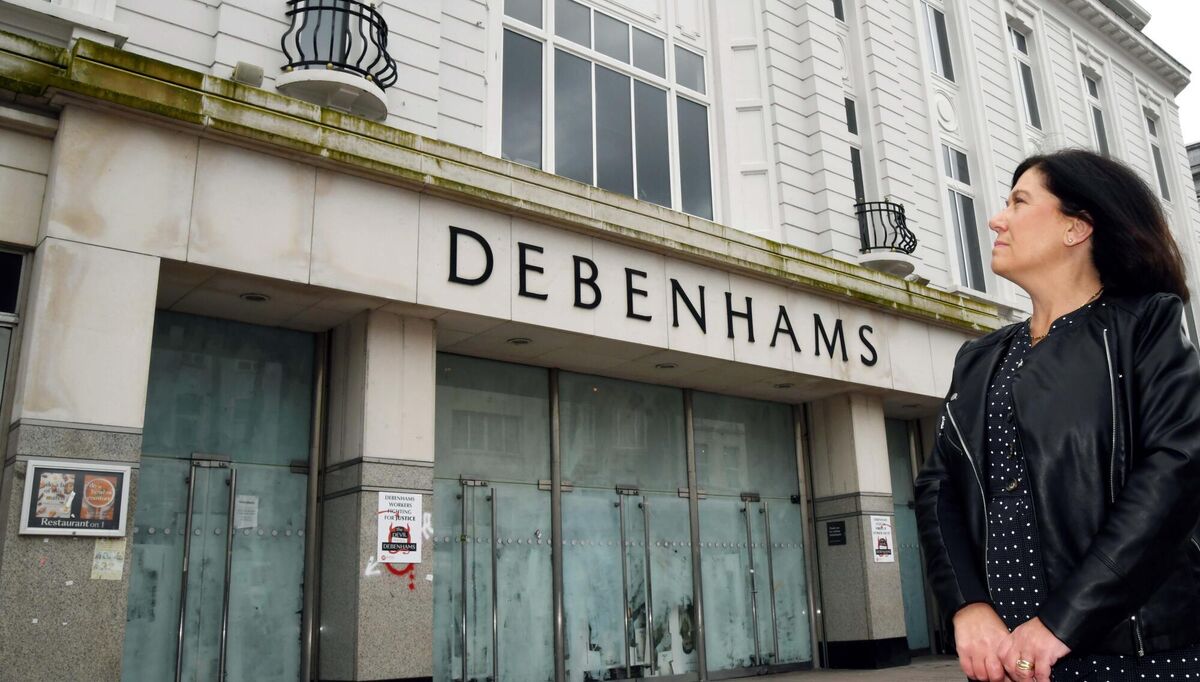
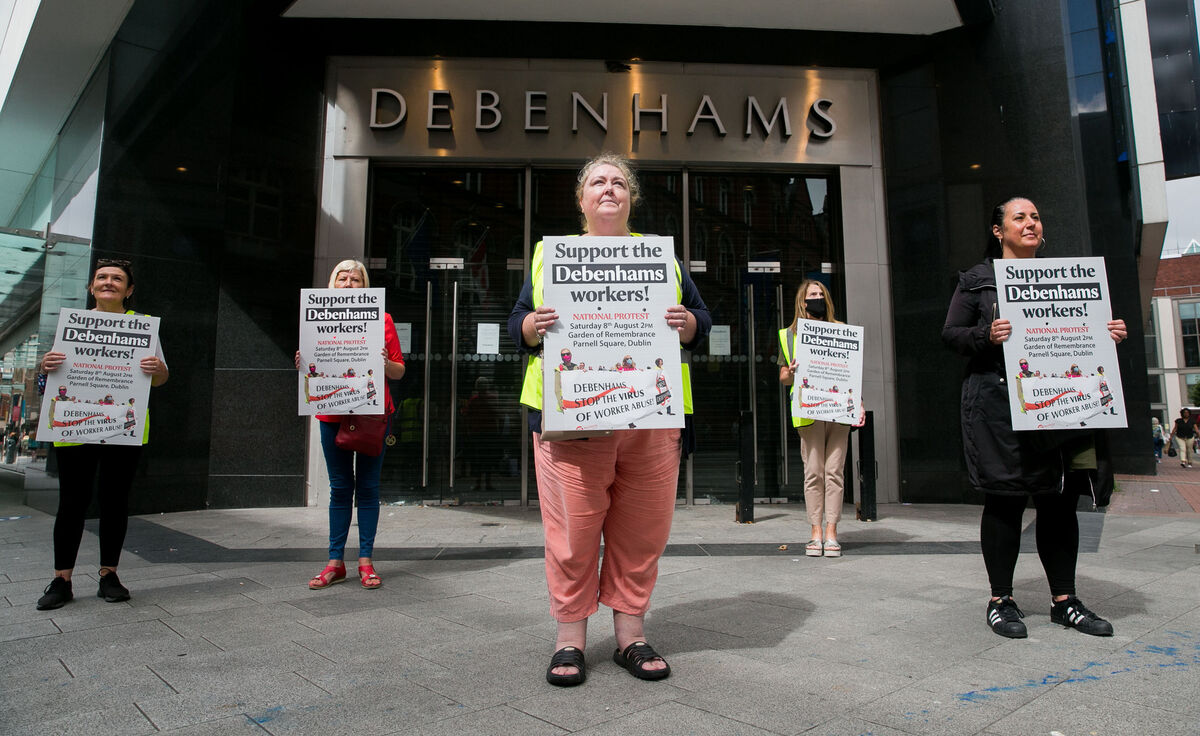
What ensued was the longest industrial dispute in the history of the state, persisting for 406 days. The workers, on their own initially, and eventually backed by their union, took to the pickets at a time when everybody was ordered to stay indoors. They were fighting against injustice, but also against the virus which was holding hostage politics, business, society, and the public imagination. For that reason, it may well be posited that this dispute and what was at issue did not receive its due attention.
Luckily it has been captured on film in the excellent documentary. The story is told from the mouths of the workers who manned — or womaned more accurately — the picket line. They follow the story as it unfolded through the various stages of grief, but their contributions are imbued with a quiet toughness that informed their resilience through a horrible time.
Some of the scenes will be familiar from newsclips, and a few of the faces may ring bells from media interviews. Injustice was at the heart of the matter, the unequal struggle that is played out in today’s world when capital comes into conflict with labour. Lingering in the background of the main issue, however, was a sense of sadness. Many spoke of the closure like it was a death, their lives now having to readjust outside a community that was probably more familiar to them than the one in which they geographically live.
In this respect, the interior filming of the empty stores on Henry Street and on Patrick Street in Cork was freighted with huge poignancy. As a very occasional visitor to both of those outlets, it was sad to observe the skeletal interior, recognisable only through the location of escalators and such like. For those who visited at Christmas down through the years, or other familial occasions, the sight evokes snatched memories. For the workers, it was their way of life, one in which they had a right and expectation, particularly after long service, in which to harbour a sense of security.
Shops fail, the world changes, such is the way commerce. But, as is often the case with employers, it is the manner of their leaving that best defines them. Some genuinely lose sleep over the fallout for employees when a business fails. Some do all in their power to best cushion the fall for workers who have served faithfully. And then we have the likes of Debenhams in how they cut and ran.
traces the actions taken by the employees from initial shock to a decision to picket and then blockade the various premises to stop the removal of stock. Then, as things dragged on as the rest of the world concentrated on fighting the virus, further action was required. So a decision was taken to occupy some of the buildings. That in turn led to government intervention through industrial relations expert Kevin Foley. What emerged from protracted talks was an offer from the government to set up a training fund for the workers to the value of €3m. There was mixed reaction to this, understandably so. It fell far short of what the workers felt they were entitled to. The climax of the saga was the forceful removal of workers from blockades by the gardaí on foot of court action, which ultimately led to the end of the dispute in May 2021.
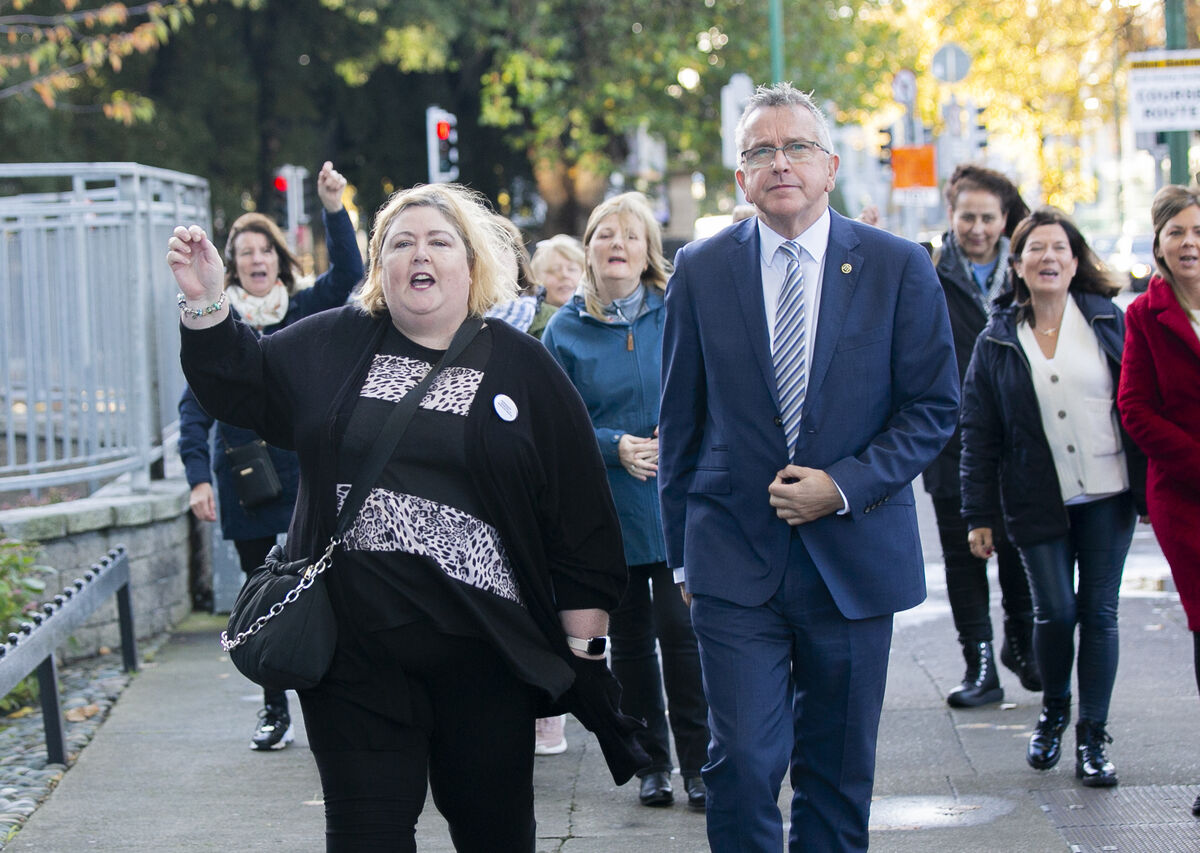
There was a postscript to the whole affair last month when Jane Crowe, who features prominently in 406 Days, won a test case in the Workplace Relations Commission over how she had been made redundant. Her union Mandate had claimed that Debenhams had failed to comply with its responsibilities in a collective redundancy scenario by not consulting with the union or providing any information ahead of the announcement. The WRC agreed and awarded Crowe €2,280, the equivalent of four weeks' pay.
Major industrial disputes are relatively uncommon these days, but they do still occur. A few years prior to the Debenhams closure, the workers in the iconic Cleary’s on Dublin’s O’Connell Street had a similar experience. A review group set up to examine what could be done to better protect workers following that case made a number of recommendations. They have yet to be implemented.
Lessons need to be learned from the Debenhams fallout. Today’s booming economy is driven by foreign capital and high-tech jobs. A cohort is doing very well out of the current dispensation and it could be argued that the trickle-down effect has ensured we have what is approaching zero unemployment. But there is still a large section of the economy on low pay, and, increasingly, in precarious employment. Proper protections must be in place for employees in these sectors. The alternative is a drift towards the kind of ‘mé féiner’ society we see in places like the USA. It’s difficult to believe that anybody would consider that to be a progressive move.
is showing in selected cinemas.
CONNECT WITH US TODAY



Be the first to know the latest news and updates