Michael Moynihan: Why we need a Day Mayor to give Cork a good environmental vibe
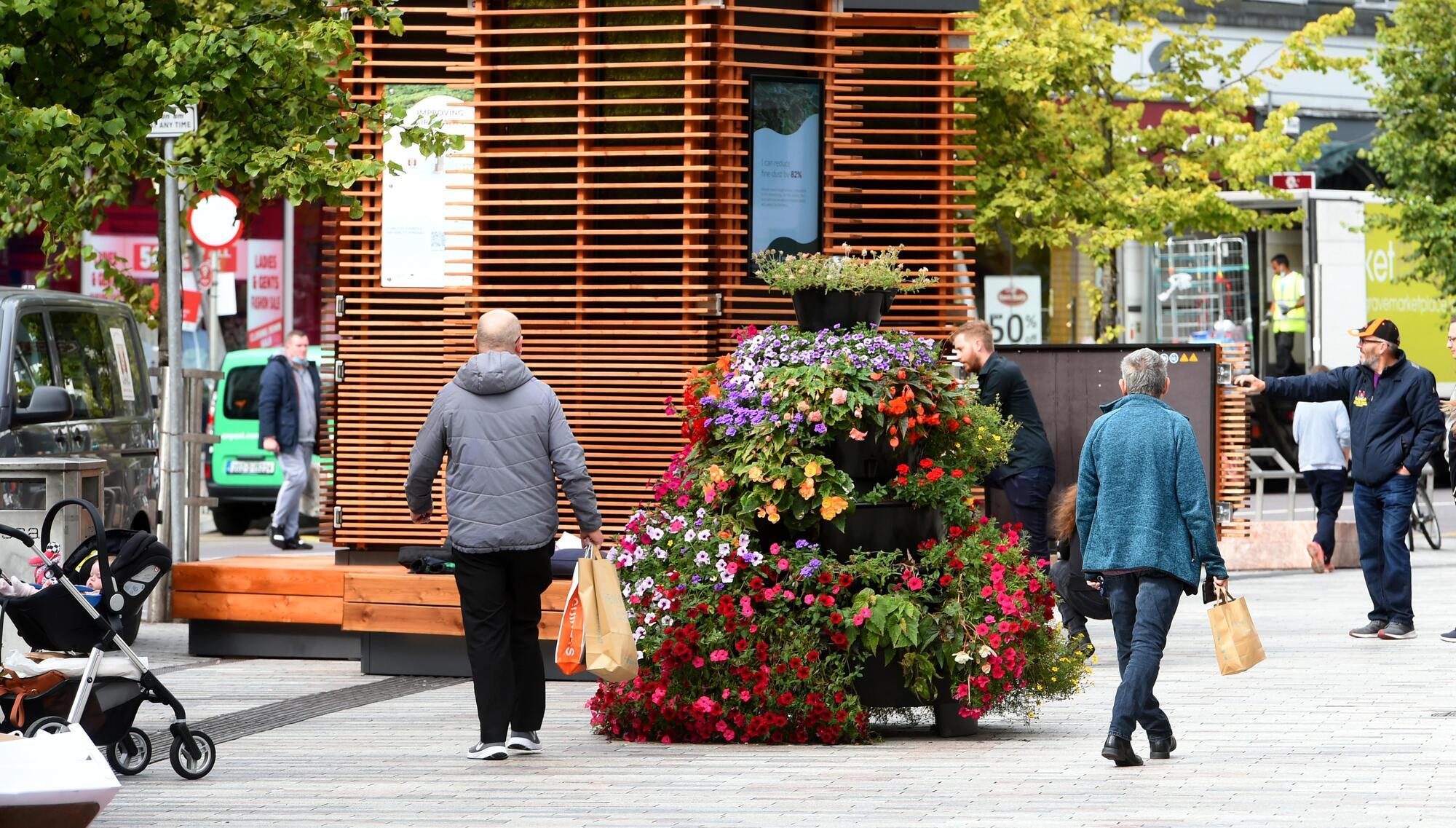
'What benefit is Cork getting from these TreeBorgs, exactly? They cost €350,000. And if one of them needs almost 950,000 litres of water, then there are questions to be asked about the cost — not only in cash but in terms of the environment.' Picture: Larry Cummins

Still waiting on news of the Night Mayor, which is not an obscure character from the Batman comics but a real position earmarked for several real places around the country, Cork included.
The Night-Time Advisor Pilot initiative is the technical term, but to me Night Mayor sounds a better name than someone appointed under a pilot scheme to “help drive and support a more sustainable night-time economy”. Night Mayor sounds like someone with a costume in bright primary colours. Or a secret identity at the very least.
This surfaced as a news story last October, though, and still no sign of the Night Mayor. Perhaps we need someone to organise a huge spotlight on top of City Hall, to be switched on like the Bat-Signal in Gotham City, in order to get the Night Mayor to unfurl his or her cape and get to work.
What work? The NM is supposed to work with businesses, communities, venues, residents, and artists to create a more vibrant nightlife for all and bring vitality back to city and town centres, but I have a slightly different question: do we need a Day Mayor as well?
To put the vital back into the vitality of our day-life?
CLIMATE & SUSTAINABILITY HUB
To me, daytime in the city could do with improvement as much as nighttime. In fact, is one of our pressing issues the general sense of that much-abused term, the vibe in town? A Day Mayor could look into this area with a view to improving the vibe for everyone, residents and visitors alike.
The environment is a big part of everybody’s sense of a city, and there are a couple of interesting candidates for improvement in this sector which come to mind very quickly.
Take the recent conversion of the old O’Connor’s shoe shop on Oliver Plunkett Street.
A friend of this column, Eoin Lettice, pointed out that the conversion in question covers up the eye-catching old vitrolite shop front, and it is fair to say that for many the new frontage is not as attractive as what it is replacing. Eye-catching and stylish, smooth craftsmanship and an addition to the streetscape, replaced by functional covering: the new front is for a phone and vape shop.
In some ways, this is almost too much, almost too on-the-nose, that a traditional old outlet supplying an essential product should be replaced by a shop supplying vaping products. It offers an example of the transition occurring in our city centre — something our Day Mayor should look into — which goes beyond merely disliking a less attractive shop front. A move from the permanent to the temporary.
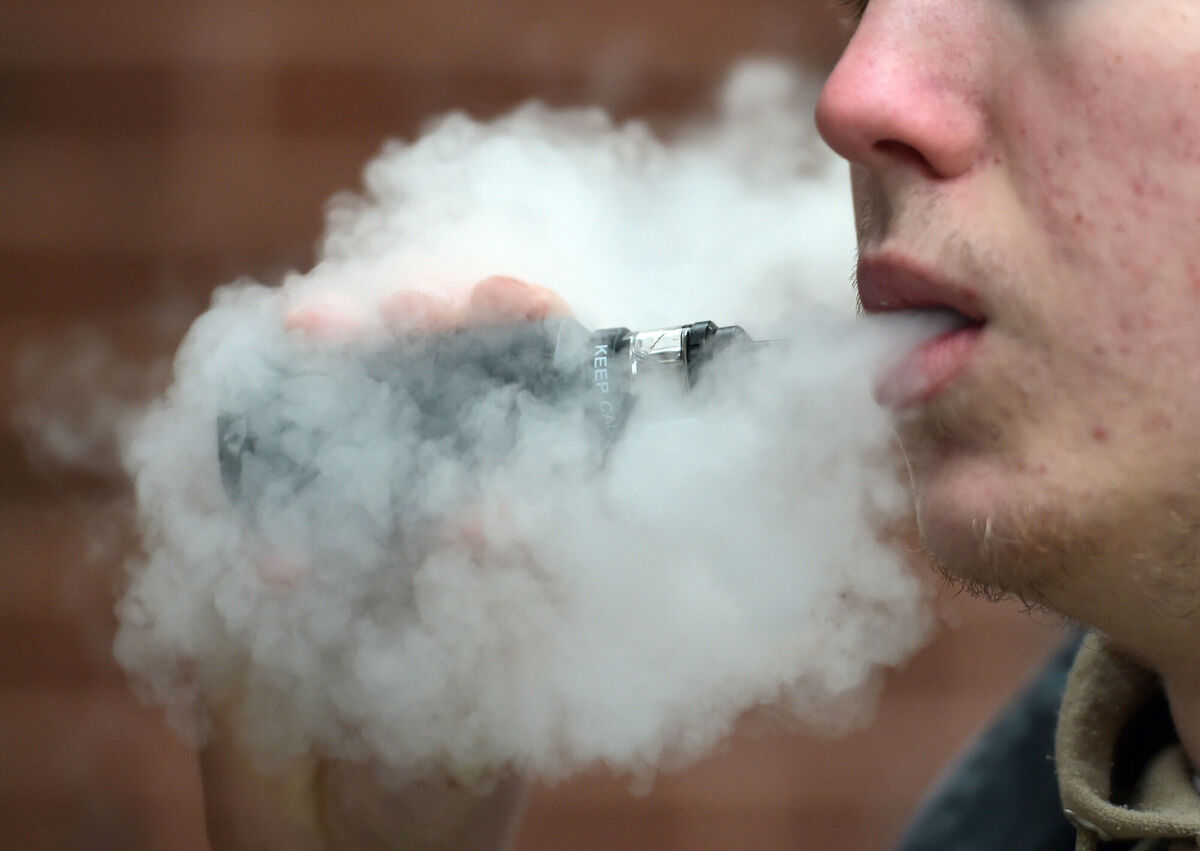
Vaping is not itself illegal. Much like the freedom it grants citizens to smoke tobacco, the State leaves it to the people themselves to decide on the advisability of drawing chemicals deep into their own lungs through vaping.
How much longer that freedom will last is unclear, given the lead being given by Australia in the matter, mind. We reported recently that the sale of vapes in retail stores down under will be banned as the Australian government seeks to prevent the next generation from becoming addicted to nicotine, health minister Mark Butler said a couple of days ago.
Obviously, our Day Mayor would not have these kinds of legislative powers, but he or she might look into addressing the environmental cost of vaping to Cork at least. It’s only a few weeks since Chris Moody told this newspaper that he found over 50 single-use vapes in the Bride in Blackpool during one day’s search.
None of this contributes to the vibe, but mentioning the environment brings me nicely to another possibility for the Day Mayor’s in-tray.
Just last week David Teixeira-Lynch shared some extraordinary figures on social media in relation to the CityTrees which were erected on Cork’s streets.
You know these better as the robot trees which were very much not intended to replace trees, according to Cork City Council. When they first appeared a Council spokesman said they were supposed to “take in particulate matter — dust — from diesel engines, from burning fossil fuels, and it captures that dust and eats the dust so it takes 80% of that dust out of the air”.
In a previous column, I pointed out that there have been contradictions when it comes to the council website’s claims about what the robot trees do, and the claims of spokespeople about what the robot trees do.
But there doesn’t seem to be any contradiction about one thing: the thirst of the TreeBots. Whatever about their work straining out particulate matter at the, ah, intake end, at the other end they’ve been drinking in water at a stunning rate.
Teixeira-Lynch revealed an intake among the five robot trees of 1,076,260 litres. It’s unclear whether that’s since they were unveiled in late 2021 or in the calendar year to April, but if accurate that is an astonishing amount of water in either case.
One tree, well-known to all of Cork and universally beloved as CT305 — the poetry in that name means it practically trips off the tongue — is responsible for almost 950,000 litres on its own.
What benefit is Cork getting from these TreeBorgs, exactly? They cost €350,000 to begin with, which seems a lot more than an ordinary tree might cost.
The irony, of course, is that TreeBots are in place ostensibly to remove some particulate matter from the air and are supposedly helping the environment.
Is that benefit offset by supplying them with over one million litres of water?
I note with some interest that a little research reveals that fruit farmers plan on 200 litres per week for a mature fruit tree, but then again, what are those fruit trees contributing to the environment apart from fruit?
A quick checklist: real trees combat climate change, reduce water run-off and water pollution, prevent soil erosion, clean the air, produce oxygen, help to heal patients and reduce violence, mark the season, beautify neighbourhoods, cool the city streets, provide a habitat for wildlife, muffle sound, and screen the unsightly, and increase people’s property values (which is where the term leafy suburbs originates, after all). As noted previously, some of them also produce fruit.
Cork’s robot trees take something out of the air and apparently need a million litres of water to do so.
No comparison between these when it comes to contributing to the vibe.
Enough there for the Day Mayor to be going on with? I think so.
The vibe in the city is a serious matter. The atmosphere and the environment of Cork are significant factors when it comes to that sense of the city. After all, a place can’t be vibrant if it doesn’t have the right vibe.
CONNECT WITH US TODAY



Be the first to know the latest news and updates