Clodagh Finn: Time to celebrate the first Irishwoman to sell books by the million
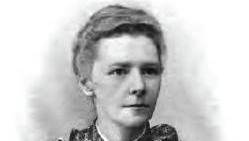
Cork-born Ethel Lilian Voynich (nee Boole), daughter of George Boole., was a publishing sensation.

Here’s a great quiz question; no sneaky Googling now. Who was the first female Irish writer to sell books by the million?
Double points to anyone who answers Ethel Lilian Boole, author of the international bestseller . She was born in Cork, even if the city doesn’t make enough of that glorious connection.
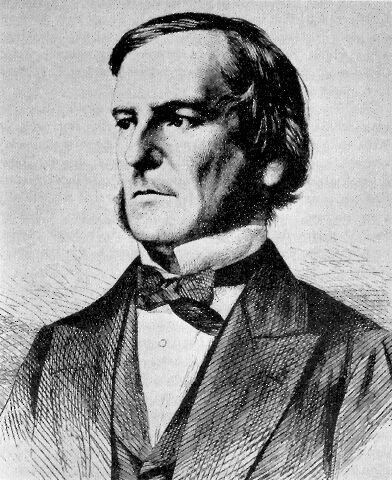
True, she didn’t live there for very long but now that Boole House and its restoration are back in the news, perhaps we might recall the family it is named after. The male head of the family, George, is well known as first professor of maths at what is now University College Cork. He developed Boolean algebra, laying the foundations for modern computing. The library at his former place of work is named after him, and rightly so.
The women of the family, though, are shamefully neglected, and all of them are worthy of more attention.
Let’s start with the youngest of five daughters born to George and his wife Mary, herself a mathematician. Ethel Lilian came into the world in 1864 not at Boole House but at Lichfield Cottage, Blackrock Road, Ballintemple, Cork, where the couple was living at the time.
HISTORY HUB
If you are interested in this article then no doubt you will enjoy exploring the various history collections and content in our history hub. Check it out HERE and happy reading
There’s a plaque recording the fact that George once lived there, but surely it’s time to add one claiming it as the birthplace of Ethel Lilian Voynich, translator, composer and the international bestselling author of .
In the USSR, where it was considered one of the world’s great novels, it inspired theatre adaptations — including a version by George Bernard Shaw — several musical productions and films.
In 1955, a Russian version of the film, , sold almost 40 million tickets at the box office in the Soviet Union. Celebrated composer Dmitri Shostakovich wrote the score.
Here, it was embraced by Irish revolutionaries — it was widely read by prisoners in ‘C’ wing in Mountjoy prison in 1922 — while in Britain, it was a must-read for the labour movement.
But her successful book is only a small part of this woman’s remarkable life. To quote Zoë Comyns, maker of the excellent documentary : “Her life has all the elements of a film noir: there is a mix of cruelty and love in her childhood, intrigue, spies, escapes, cryptic manuscripts, love affairs, revolution and one hell of a leading lady.”
Here is broad-brush summary of Ethel’s eventful life. The family was dispersed after the death of George Boole when she was a baby. She was sent to live with an abusive uncle in Lancashire. She was resilient, though, and survived the experience even if it left her with a deeply melancholic view of the world. At 15, she wore only black to reflect the mournful state of the world.
But that did not stop her from embracing opportunities — and travelling.
Two years after that, she had an affair with British spy Sidney Reilly who, according to his biographer Benny Morris, “was said to possess eleven passports and a wife to go with each”.
He was also said to have been a model for James Bond — and for main character Arthur Burton who, with his childhood sweetheart Gemma, joins the Young Italy movement in the 1830s to fight Austrian rule.
What follows is a thrilling tale of “revolutionary zeal, religious devotion, clerical betrayal and romantic love”, to quote one review.
British intellectual Bertrand Russell called it “one of the most exciting novels I have read”, while literary critic Arnold Kettle said Voynich’s portrayal of Gemma was “one of the most impressive attempts to present an emancipated woman”.
Here’s a taste of the kind of woman the fictional Gemma was, as seen through the eyes of the book’s protagonist Arthur: “No, Gemma would never learn to flirt and simper and captivate tourists and bald-headed shipowners, like the other English girls in Leghorn [Tuscany]; she was made of different stuff.”
For more, you’ll be able to download on Kindle for a single euro, although it remains out of print.
In 2020, documentary-maker Zoë Comyns called on Irish publishers to get Ethel Voynich’s work into print in Ireland. There were three other books — (1901), (1904), and (1910)— though none were as successful as .
And then there is her music. In later life, when living in New York with William Voynich, she composed music which is now archived at the Library of Congress in Washington.
When the anniversary of her birth comes around on May 11 maybe someone in Cork City Council or at University College Cork will mark it — and consider shining a light on the other Boole women.
George Boole’s wife Margaret (née Everest) was a philosopher and a mathematician in her own right. Much has been made of the fact that her uncle was George Everest, the geographer after whom Mount Everest is named. That is certainly a choice detail, but I prefer to imagine the conversations that took place between this woman and her husband. She edited his work on algebraic logic, .
She also wrote her own book, which explained algebra and logic to children. You’ll get that on Kindle, too, for not much more than a euro.
She was a gifted teacher, too, and one who brought a sense of fun to the classroom. One of her former pupils wrote: “I thought we were being amused not taught. But after I left I found you [Mary] had given us a power. We can think for ourselves, and find out what we want to know.”
The interest in mathematics was passed on to Alice Boole Stott, the third of George and Mary’s daughters. Her mother taught her and she went on to become one of the first people to explore four-dimensional geometrical figures. She was awarded an honorary doctorate from the University of Groningen in the Netherlands in 1914.
Second daughter Margaret studied art and married artist Edward Taylor while the fourth daughter, Lucy, was a boundary-breaking chemist. She was only the second woman to pass the London School of Pharmacy’s exam in 1888 and was the first to formally conduct research in pharmaceutical chemistry.
Then there’s the oldest daughter, Mary, who, according to the 1901 census, was “living on her own means” in Kensington, London. She was a writer and later died by suicide, leaving behind notes arguing that it was a person’s right to choose when they end their life. Her death, in the US, was covered in the .
Here’s hoping, then, that the current focus on Boole House will renew interest not just in the historic building but in the fascinating Boole household that inspired its name.
CONNECT WITH US TODAY



Be the first to know the latest news and updates