Michael Moynihan: Change the only constant certainty in a living, breathing city like Cork
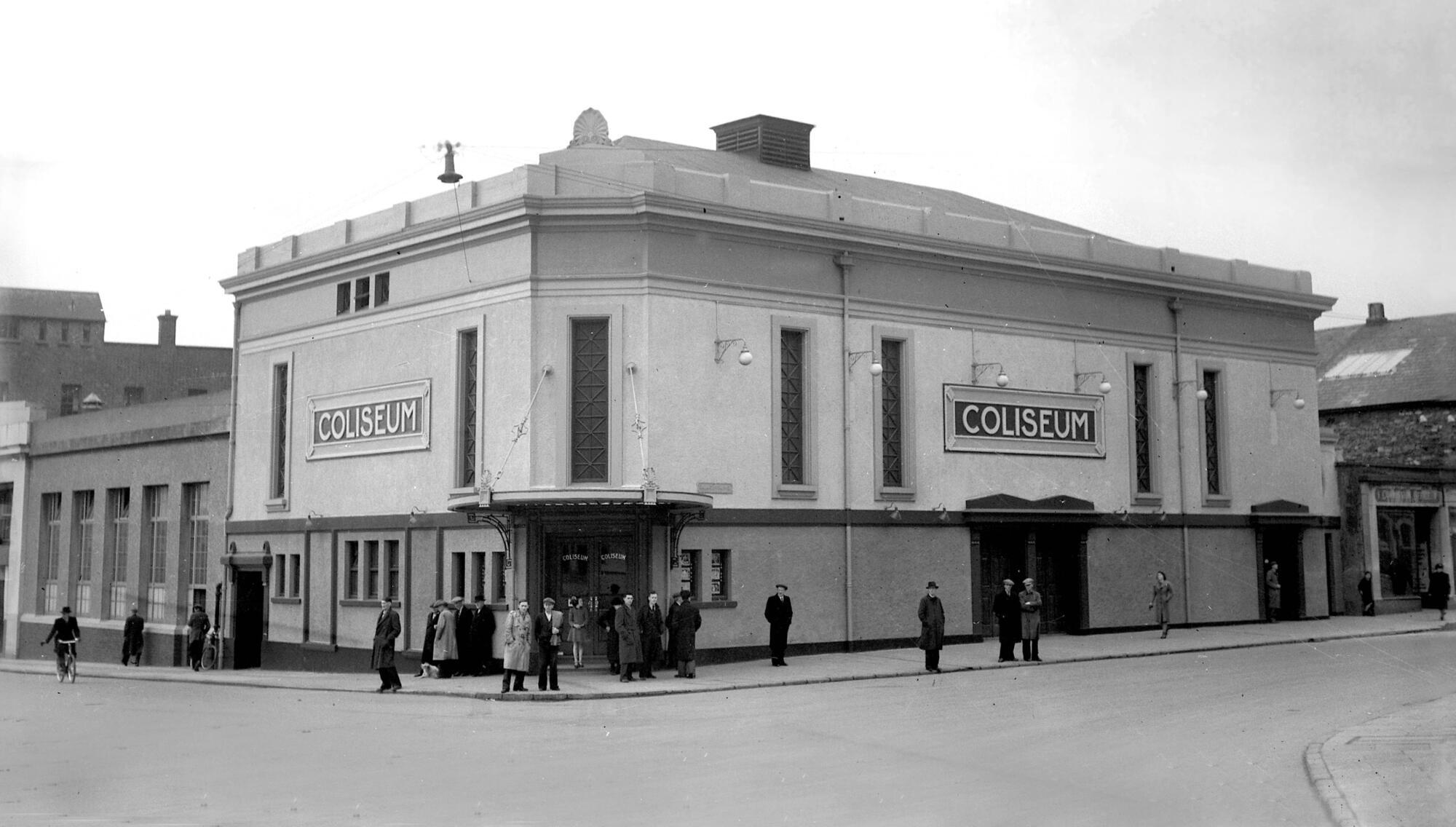
View of the old Coliseum cinema, at the East end of MacCurtain St, in Cork. Picture: Irish Examiner Archive/Ref 756C
MANY thanks to the person who forwarded on the old clip of Frank OâConnor talking to Huw Wheldon of the BBC programme Monitor.
Youâve probably seen it. Grainy footage from 1961 of the great Cork writer ruminating on his native city to the interviewer (âYou donât have to sell Cork to me, Huw,â OâConnor says. âTo me, itâs the most important city in the world.â)
Some of OâConnorâs points about the influence of the Church, for instance, are eerily prescient, but other remarks were true then and true now. OâConnor says of certain parts of Cork âyou get the impression that at any moment you may meet one of Jane Austenâs old ladies among the bow-fronted housesâ.
Those houses are still there if you search for them. Is that constancy a true reflection of a city, though? Isnât change a fairer expression of the urban experience?
Our reflexive position is to pause on our ramblings and remember what stood there before. To slow the car and point out to your backseat passengers how much a corner of the city has altered in your own lifetime.
(In your columnistâs experience the backseat passengers are always more interested in the music du jour, which is constancy in and of itself; when he was a backseat passenger he had the same level of interest in the changes being pointed out by the driver.)
Those quick-potted histories serve a couple of different functions. On the one hand, they establish your bona fides as a genuine urban dweller, one who has seen establishments come and go, emporia rise and fall.
The great Colson Whitehead summed this up perfectly years ago when talking about his own city: âNo matter how long you have been here, you are a New Yorker the first time you say, âThat used to be Munseyâsâ or âThat used to be the Tic Toc Lounge.â That before the internet cafe plugged itself in, you got your shoes resoled in the mom-and-pop operation that used to be there. You are a New Yorker when what was there before is more real and solid than what is here now.â
No arguments here. In Cork do you refer to the Coliseum or the Leisureplex, for instance? Are you old enough to track the time when one became the other, and old enough to resist the new name?
In trying to recently direct a newcomer to a location up the road from Coliseum, I tried to orient him around Coburg and Pine Streets and ended up referring to the An Stad and the Devonshire Arms.
I was this close to saying the chimney stack of the brewery was nearly visible from the front door of each establishment.
Emotional charge
Thereâs an emotional charge in such resistance, of course. We always revert to the old name, the old occupant, the old premises; those are the anchoring presences that make sense of the swirl of glass and concrete that replaces them, the suddenly smoothed streets and tidied footpaths.
Those new quartiers are often held up to ridicule for being soulless and barren. Rather than being integrated corners of the city, theyâre seen instead as enormous boxes, worker-repositories, absorbing workers for the dayâs work, spitting them out at 5pm, leaving echoing manmade canyons behind.
If you stood on Albert Quay or Horganâs Quay 10 years ago and were suddenly magicked forward in time to the modern streetscape, youâd be hard-pressed to identify your surroundings.
But this is part of the cityâs inevitability as well. As a case study, look at Austin, Texas: your columnistâs desire to visit that city burns like a steady flame in his heart, a flame which flared considerably after reading a recent piece by the great Lawrence Wright.
Wright, author of God Save Texas: A Journey into the Soul of the Lone Star State, wrote about the recent eruption of high-rise buildings and business districts in Austin.
A city that for decades was a byword for a certain kind of rackety individualism is now a zone of sleek skyscrapers, and Wright says Austin locals are now complaining about the new buildings, â... such complaints are signposts of a booming economy â the kinds of problems many people elsewhere would love to have.
âIn any city whose identity is changing, it can be hard to avoid the sense that a golden age has slipped away. Newcomers to Austin fall prey to this nostalgia almost instantly â and, with a longtime resident like me, the symptoms can become comically acute.â
The idea that newcomers fall prey to such nostalgia â and may do so even faster than locals â is an astute observation, and hard to argue with.
In an interesting echo of Corkâs experience, Wright explained that Austinâs future was sealed as far back as 1983, when the Microelectronics and Computer Technology Corp, Americaâs first for-profit industry research and development consortium, was located in the city, sparking its growth. Shades of Apple and the National Microelectronics Research Centre opening up in Cork around that same time.
Question of honesty
Those developments were badly needed at the time in Cork, which brings us to another part of the urban-industrial-nostalgia complex: weâre often less than honest about the city before it changed.
Frank OâConnor wasnât. In discussing the beautiful houses of Cork with Huw Weldon, for instance, he pointed out that his familiarity with them ran to picking up his mother after she finished cleaning them, adding: âThere was poverty here in those days and there still is. Behind all the gracious houses there are the lanes of little country cabins, each of them with its two rooms and the loft overhead.
âAnd not a few dozen of them either but scores, hundreds perhaps of them. They may not look so squalid now but believe me, they were hell to live in ....
âI was only a baby when my mother one day put me down on a chair in one of these cabins and I saw her through the bedroom door saying the last prayers over a young fellow who was dying of a tubercular haemorrhage.â
Everyone is entitled to remember what they want, of course, but facts wonât be gainsaid. The reality of places in the city that have disappeared often doesnât match up to what we choose to recall, but even acknowledging that fact sidesteps the central issue: change is the constant.
The city behind Frank OâConnor in that short clip from over 60 years ago is recognisable in broad outline, but close observers will see plenty of change over his shoulder. Merchantâs Quay, for instance, has lost its line of individual buildings in favour of the large shopping centre which frowns down on the Lee.
You may be sure that in 60 yearsâ time that shopping centre will be gone but will still be the focus of warm nostalgia. What replaces it is beside the point. Change is the point. It always is.

Subscribe to access all of the Irish Examiner.
Try unlimited access from only âŹ1.50 a week
Already a subscriber? Sign in
CONNECT WITH US TODAY
Be the first to know the latest news and updates
More in this section