Terry Prone: The old-school leader would roar at you, but always fight your corner
Terry Prone: The old-school leader would roar at you, but always fight your corner

Brian Looney died on January 9, aged 63.

It may not be much of a claim to fame, but at least it’s unique.

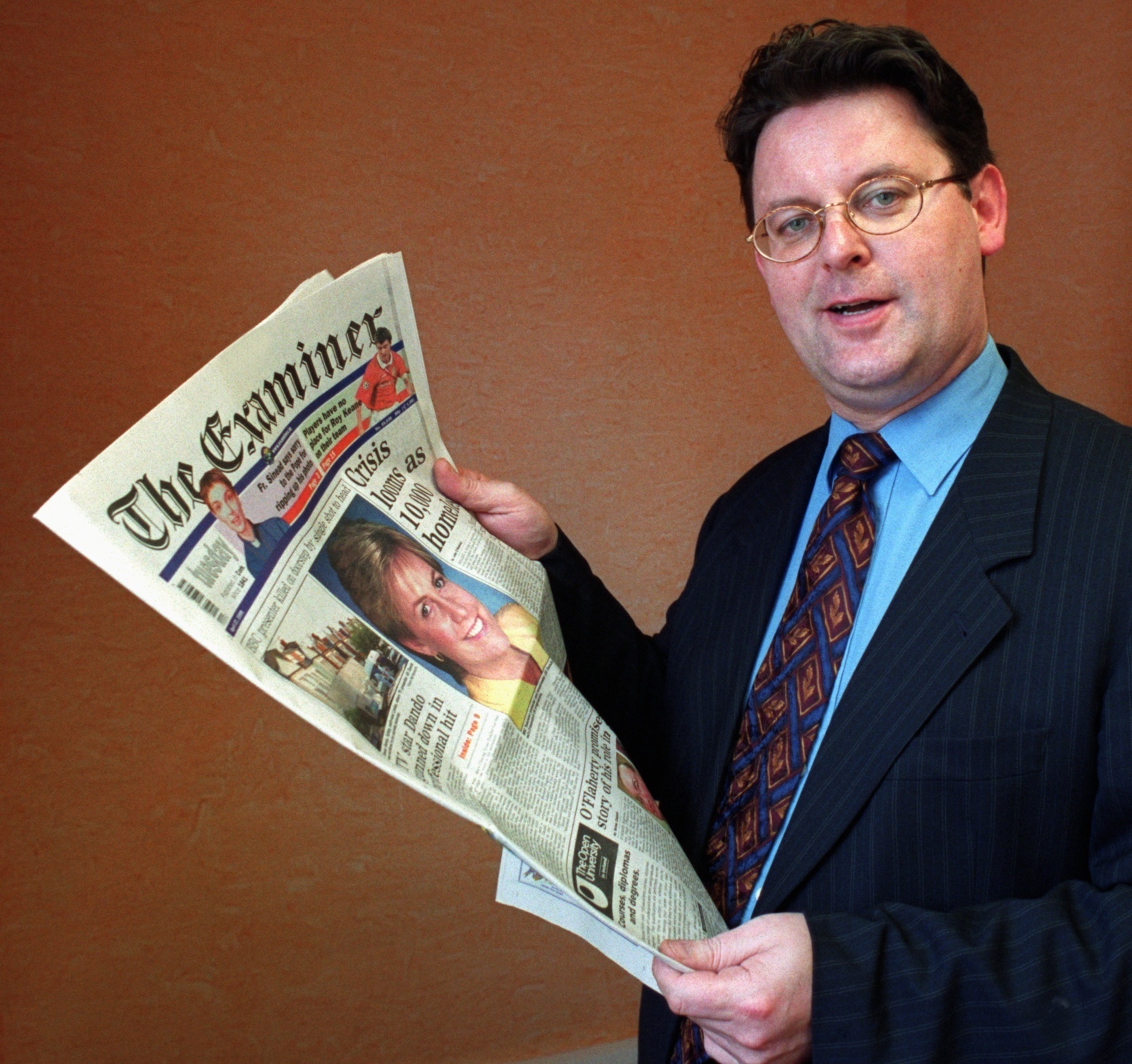
I was yelled at in public, sworn at and called names by the editor of the Irish Examiner.

Not the current editor. We’re not on such intimate terms, him and me.

What happened was that, after an overnight gig in Cork, I was in the airport waiting for a flight to Dublin.

Fresh cup of coffee to hand. Copy of the Examiner on my lap, already covered with flakes from a Danish pastry.

The front page from more than 20 years ago carried a story, shallow but broad, across maybe five columns.

It wasn’t the lead, but it was a hell of a scoop, detailing serious allegations against a leading scientist.

The only problem was that the photograph wasn’t of the scientist. The face looking solemnly out of the page belonged to a public servant of impregnable rectitude and not the accused.

I knew the public servant, who was nearing retirement at the time.

Like any hack encountering an error of damaging scale, I sat, chilled to the bone by weirdly reflected guilt.

I flicked the pastry shards into the waste paper basket and read the thing again. The story was solid.

The only problem was that some unfortunate under pressure had selected the wrong picture of the man under investigation.

This was a major problem, although the man whose face stared tranquilly out of the paper would get over it. As would the paper. In time, I thought, it would be a forgotten blip.

It was at that point that I glanced up and saw, at the other end of that long, sunlit departures lounge, the then editor of the Irish Examiner, Brian Looney, walking towards me.

Our eyes met and for one split complicit second, each of us thought of pretending our eyes hadn’t met.

No go. He ploughed on towards me, a face like thunder on him. In fairness, that wasn’t that rare. It was obvious he had seen the paper and registered the importance of the problem. 

And there I was, caught rotten, the story staring up from my lap.

With an unerring instinct for the wrong move, I laughed. I laughed so completely, so loudly, that travellers around me began looking around them for clues as to what was so funny.

Looney arrived in front of me and bellowed at me.

I was a this and a that and a the other. I nodded in dumb acceptance of all the descriptions — and then laughed again. As did he.

At this point, half the people in departures who didn’t know either of us, edged away from these two crazy people. The other half, who knew one or the other of us, stuck around to see what would happen next.

What happened was that Brian sat down beside me, hands clasped between his knees, shaking his head in disbelief.

How had I known the picture was wrong, he asked?

I’d known the man in the shot for more than 20 years, I told him. As a client, sometimes, as a friend, always.

Immediately, the curiosity kicked in. What was he like? “The victim, you mean?” I teased and he gave me a look that quelled the teasing instinct.

When I told him the man was gentle, professional, principled and extremely old-style Catholic, he buried his face in his hands and said something about how hard it would be for a man like that.

Of course it would be — and was — financially sorted, but even at the time, it was striking that the editor would move first, not to defence of his own realm, but to concern for an injured party.

Much later, when it was proper to do so, I asked the man whose picture had been on the front page that day to recount what had happened in his neck of the woods that morning.

Well, he said, he had first of all, as he always did, brought his wife a cup of tea in bed.

Then he had made himself some toast and sat down with the Irish Examiner, which was delivered to his home every morning. He considered the front-page story over his breakfast.

Then he got up, put on his overcoat, carefully folded the paper into one of the pockets, called upstairs to his wife that he was on his way to work, and headed to the main street of the regional town where he lived. There, he visited his solicitor, handed over the newspaper and “left the issue with him”.

People he met during the day expected him to be furious. In fact, he was sympathetic. These things happen.

If Looney didn’t immediately, on that occasion, spring to the defence of his team, it was a rare opportunity foresworn, because that was always his instinct.

He was — very consciously — an old-style editor who would bawl you out ,but then go and fight for you with whoever had criticised you.

RTÉ News had his like at the time, a man whose personal volume button was turned to “roar” from the moment he got up and who got through two telephones a week in the newsroom because he banged down the receiver with such force, having made a point to whatever “effing eejit” on his staff had most recently failed him.

The great thing about this man, if you were a junior in the station, was that even down the other end of the sizeable office, you were able to get a free tutorial on journalistic methods/ethics/standards several times a day without moving any closer to him, his voice carried so clearly.

Looney was like that. Vivid, funny, outrageous — and determined to edit a great paper.

The first time I met him was when he and six of those who reported to him attended a media skills course in my company, all the better to get the most out of radio and TV “secondary” coverage of stories the paper printed.

He was at his physical best: Bright-eyed, looking as if that morning he had started out formally dressed and had met a dishevelling crisis somewhere along the way.

But it was clear within the first hour that Looney was never going to concentrate on the language and preparation necessary if he was going to be a regular contributor to radio and TV.

For the very good reason that he didn’t want to be such a contributor. His concentration was on those around him who would go on to stellar careers in this paper, in other newspapers and in new media.

One friend quietly confided this weekend that “Brian’s finger always hovered above the self-destruct button”. Once he was done, as editor, he was done.

Of course other jobs followed. None ever engaged him in full profane joy as this one had.

Brian Looney, who edited the Irish Examiner from 1994 to 2001 died on January 9.

More in this section

Revoiced

Newsletter

Sign up to the best reads of the week from irishexaminer.com selected just for you.

Cookie Policy Privacy Policy Brand Safety FAQ Help Contact Us Terms and Conditions

© Examiner Echo Group Limited