Elaine Loughlin: Vicky taught us to stand up to authority in all its forms
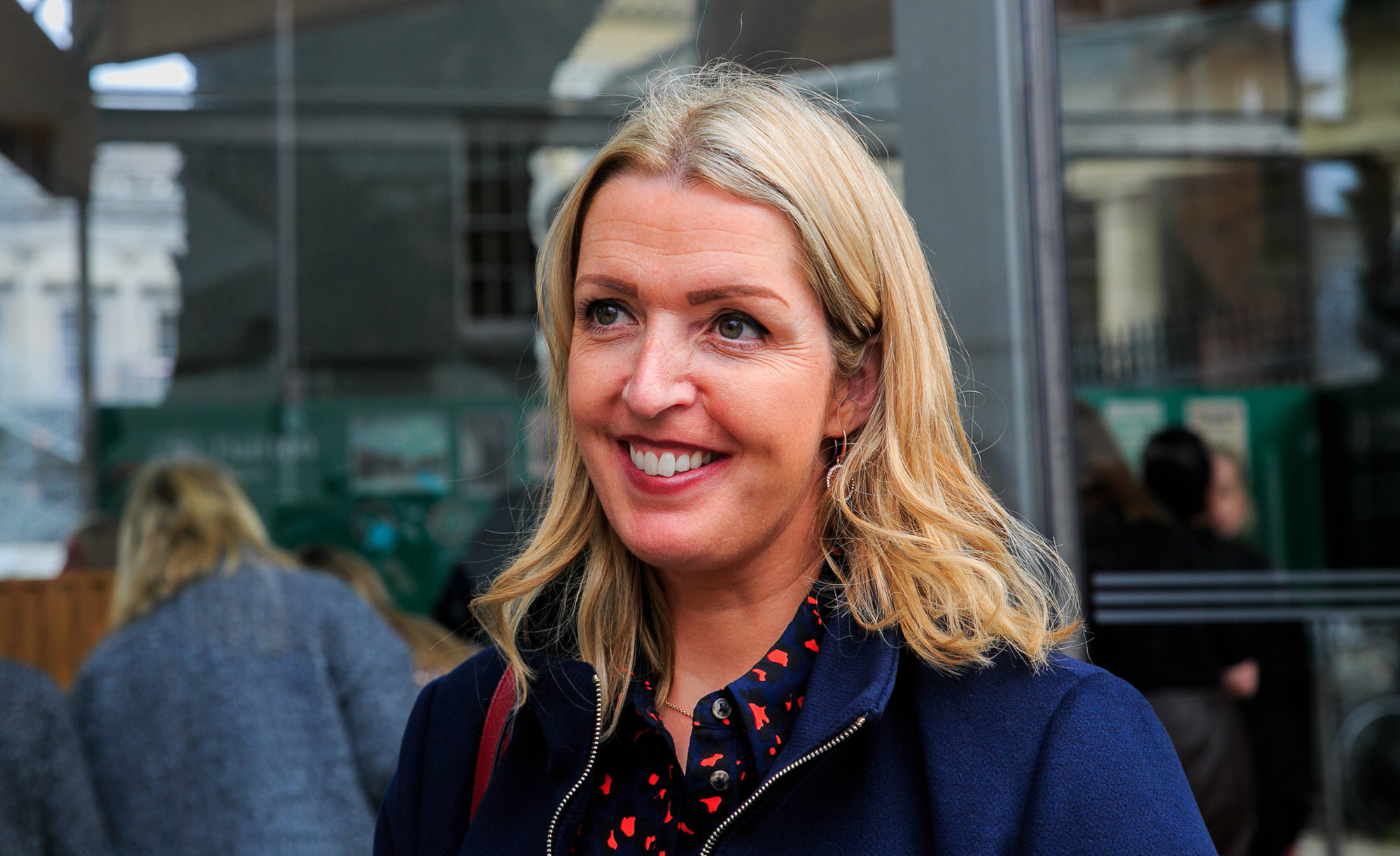
Vicky Phelan is survived by her children, Amelia and Darragh, and her husband, Jim. Picture: Gareth Chaney/Collins
Vicky Phelan wouldn’t have wanted this piece to be published, she never sought tributes. In truth, it should never have come to this. But as journalists, it is our writing that allows us to fight for change, for purpose, for holding power to account.
Politicians can create and change the laws that govern each of us.
Doctors have the knowledge and power to treat us when we are sick. We put ourselves in their hands and the best ones also put us at ease, instead of leaving us vulnerable and in the dark.
Systems do not have to be immovable behemoths, they are run by people in authority, who have the capacity the overhaul those systems.
Vicky Phelan, during her too-short life, used her voice to transform not only women's healthcare in Ireland, but women's views of how they should be cared for in the health system.
Where do we go from here?
How do we fill this void?
With actions. With change. With accountability.
The powers that be must support positive, systemic change, yes, but Vicky taught us all as individuals to quietly stand up for ourselves, to constantly ask questions so we can finally break the stranglehold authority — in all its forms — has had over our lives in this country.
There have been so many things said and written in the hours since the passing of Vicky Phelan that it can all just seem like meaningless words, words like warrior, inspiration, fighter, advocate, campaigner.
As a nation, we mourn Vicky.
Because Vicky Phelan, the mother, daughter, wife, and friend had become a national hero, we all feel her loss.
Vicky, with wrecking ball force, was less into words and more into action.
Well before she appeared on the steps of the High Court after refusing to sign a confidentiality agreement, Vicky had started to dig.
When she was informed of the audit of her smear slides, she sought out her own records and forensically investigated them, questioning why one of the documents had a page missing.
The redaction spoke to a wider issue in this country of vulnerable people who often feel like they're not fully informed, are not listened to, and can't speak up to power. It also highlighted the long history in this country of resorting to cover-ups and obfuscation when things go wrong.
In her book, she described how waiting in a hospital bed, she began leafing through her files looking for any details of the audit and happened upon the omission of a page.
"I knew something wasn’t right. I took out my phone and started taking photos of the document and anything else on my file relating to my smear history and CervicalCheck. The nurse was coming back. I quickly put the file back on the table. It was time to go for the biopsy.
"Walking through the hospital, I felt a sense of unease, like I couldn’t trust the system."
From that day on she fought the system, and the system is now the better for it.

An unwavering determination to seek out the truth, not only for herself, but for every single woman impacted, led to the establishment of the 221+ group, the rollout of HPV testing, the Scally Independent Investigation, and a State apology.
Without her, the nation might never have become aware of the CervicalCheck scandal.
But it goes further than CervicalCheck, her actions have resulted in the establishment of the women’s health task force, which promises to deliver specialised services for menopause and endometritis; to carry out the first maternity bereavement survey; and to introduce legislation to strengthen the regulation of assisted human reproduction.
Vicky wanted to see change in her lifetime and thankfully she did.
But there have also been failings.
- The Patient Safety Bill, which would require the mandatory open disclosure of serious patient safety incidents, has been snaking its way through the Oireachtas since 2019, but has yet to be enacted.
- The Cervical Check Tribunal, which many campaigners hoped would provide an alternative to the High Court for the hundreds of women and their families, has been a failure and did not address the needs of those it sought to assist.
- A new national screening lab has been promised, but the examination of slides has yet to return to Ireland with all smear tests still being sent out of the country.
- A Dying with Dignity Bill, which Vicky had advocated for and had hoped would be in place before the end of her life, has now been sent for scrutiny to a special Oireachtas committee.
In taking on her fight against an entire system that so badly let her and others down, Vicky taught us to always question authority: be it the court system; the healthcare system; our doctors; our lawyers; our teachers; our politicians; our editors.
Her dogged and determined stance taken at every point highlighted how we should all take more control of our own health and ask more questions.
Throughout her treatment she continued to question the approach and sought out new cancer care options, her own research led her to what would be a life-extending drug Pembro and brought her to the US for proton beam therapy.
Vicky spoke out with a forceful dignity for thousands who couldn't. But in doing so, she showed us the power of questioning.

As her good friend and Labour TD Alan Kelly said: "She empowered everyone in Ireland to think differently about their health, to ask questions and fight for the best treatments and health service that everyone deserves."
As journalists, we should learn from Vicky to never accept the first answer provided.
As a society, we all need to question a little more. Vicky is gone, it is now up to us.
Between my finger and my thumb, the squat pen rests, for Vicky, I'll dig with it.