Fergus Finlay: We are paying a high price due to cruel and absurd economics
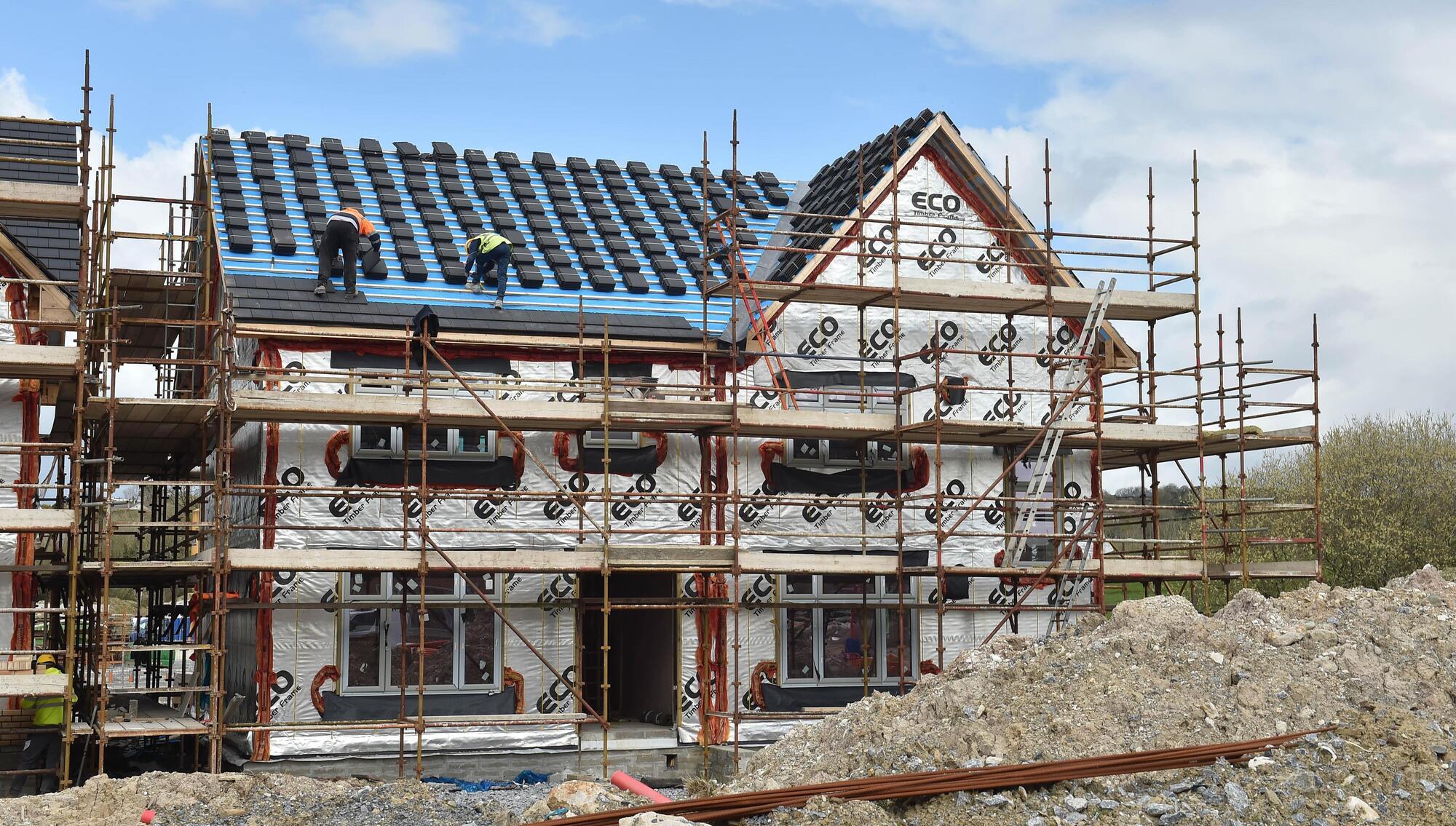
'There was a time where things I thought I understood, like the law of supply and demand, were stood on their head. We built thousands of houses back then. And yet the more we built, the more expensive the houses became.'
I admit to being slow. I have a degree in economics. It’s pretty old, and it sure wasn’t a highly distinguished degree in the first place. And it has slowly dawned on me that I haven’t a clue what economics is really about.
That’s despite the fact that I’ve done stuff in my life. A lot of that stuff demanded a working knowledge of some of the basic rules of economics. At least I figured out, over the years, what kind of questions to ask — and I definitely learned that there is no such thing as a stupid question.
But what’s going on right now convinces me finally what a poor grasp I had of the basic principle of economics.
Economics is for the rich and the middle classes. Economics is about self-interest above all else. It’s about protecting wealth and increasing it. Economics isn’t supposed to care about vulnerable old people in damp or freezing homes. And it doesn’t. It cares about things like “sustainability”, which means keeping profits high, or “prudence” which means only giving to those who can pay back, or (the worst one) “efficiency”, which means devil take the hindmost.
The economics of the poor, on the other hand, come from the Bible. I’m no biblical scholar, but I do know the story of the rich man, dressed in purple and well-fed. And the beggar named Lazarus who laid at his gate hoping only to be fed with the crumbs which fell from the rich man's table.
Do you remember all those crumbs in the years of the Celtic Tiger? That was a time where things I thought I understood, like the law of supply and demand, were stood on their head. We built thousands of houses back then. We even built whole housing estates for the workers we were importing from Eastern Europe to build the houses. We built them in places where people didn’t really want to live — miles from their jobs, for instance.
And yet the more we built — the more supply outstripped demand, if you like — the more expensive the houses became. What should have been a buyers’ market remained (until the collapse) a sellers’ market.
If you want more proof, look at what seems to pass for economics right now.
The news on the radio started the other day with three headlines, one after the other. The Irish economy is growing at a phenomenal rate. Exchequer returns are at an all-time high (which means the government is running a profit). And 40% of the population is now living in fuel poverty, and that number will grow.
How can those things live side by side? Maybe we can’t control escalating fuel prices, and maybe we can’t figure out how it is possible that the higher prices go, the bigger the profits of the fuel suppliers become. But we’re getting richer and richer as a country, and we can’t protect people in hardship from a terrible winter.
Yes, the government is promising a budget in three weeks that will address the issue. I think I can promise you now that it will address real hardship in a tiny, marginal way. People who are unable to heat their homes now and are already having to make hard choices between food and heat, will find it tougher and tougher this winter, no matter what promises the government makes.
Already, the “experts” are warning that the high growth isn’t sustainable, and that the government must seek to hoard its surplus as much as possible. When they’re asked about the need to support people, they say that’s social policy, not economics.
In this definition of economics, public policy becomes private policy. Good quality childcare is an expensive commodity, sold by thousands of private operators. Providing for the residential needs of frail elderly people is the basis of a highly profitable industry (who’d have thought there’s money to be made from dementia?). Public healthcare must sit side by side with lucrative private hospitals.
All of that is subsidised by the state — to make sure that no-one in the private sector has to worry too much. Whenever there’s a crisis, their spokespeople are wheeled out to make sure someone else is to blame.
Then there’s housing. From the foundation of the State successive governments acknowledged an implicit right to decent and dignified shelter. At times when the State was struggling, it still built houses and neighbourhoods and parks.
Then, just when we could afford to do more, we decided that from now on housing was a commodity, to be built and sold for profit. That was an ideological choice, a way of enabling the rich to get richer rather than meet the needs of families. But that choice is now so embedded that it’s no longer ideological. It’s an almost unbreakable rule of the new economics.
One of the very first columns I ever wrote in this newspaper was in opposition to the then privatisation of our entire telecommunications system. I wasn’t just in a minority of one, I was scoffed at for being an eejit. People were queuing up at the time to borrow money to buy shares in Telecom Eireann the minute they were offered, and they were being egged on by ideologues and experts all over the place.
We all know what happened. People who bought shares and sold them quickly made a packet, but thousands of others were in debt for years when the shares went wallop. The company itself was pillaged during several takeovers and was completely unable to invest in the quality of the stuff it was selling.
But here’s a funny thing. One of this weekend’s papers reports that that same privatised company, now called Eir, has just paid out a massive dividend — €300 million. They’re doing that while at the same time selling off half their fibre network. Every now and again they sell off a bit of the company — mobile phone masts in 2020 — and then pay another dividend. And that’s even though the company’s earnings are in steady decline.
At least, says you, the taxpayer or the citizen will get something back. But no. These dividends are being paid to a Frenchman called Xavier Neil. He’s a multi-billionaire and he seems to have bought Eir as a modest little cash cow. Every time he needs a dividend, he sells a bit of it. When we (his customers) need better broadband, we get a hollow laugh.
Nothing we can do about any of that. It’s just economics, as we now define it. There’s a line in Leonard Cohen’s 'Tower of Song' that goes: “The rich have got their channels in the bedrooms of the poor”. He does add “there's a mighty judgment coming, but I may be wrong”. I hope he’s not, because I’m longing for that mighty judgement.