Michael Moynihan: 'Ní neart go cur le chéile' as Cork pupils and teachers rally behind Ukraine
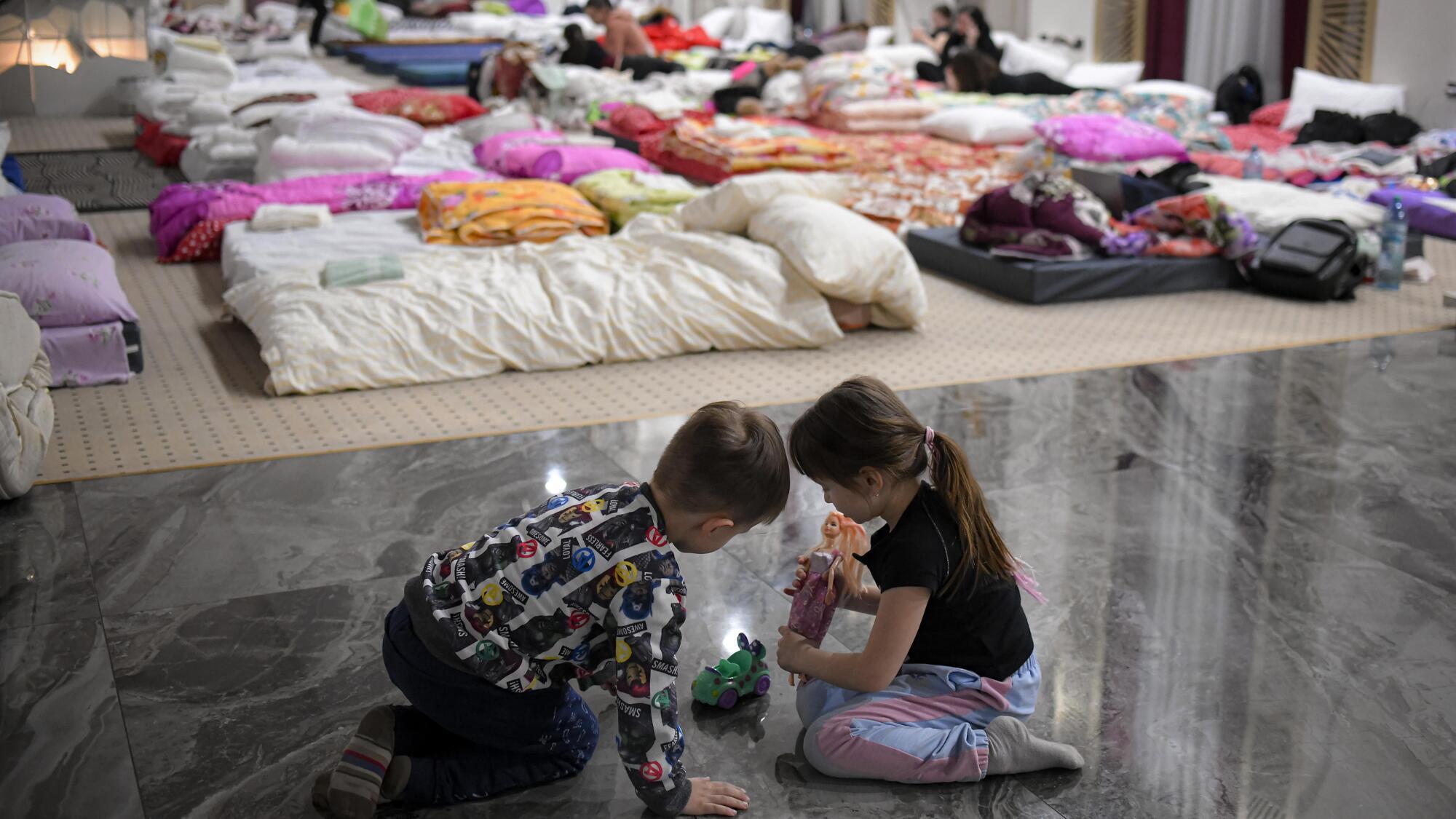
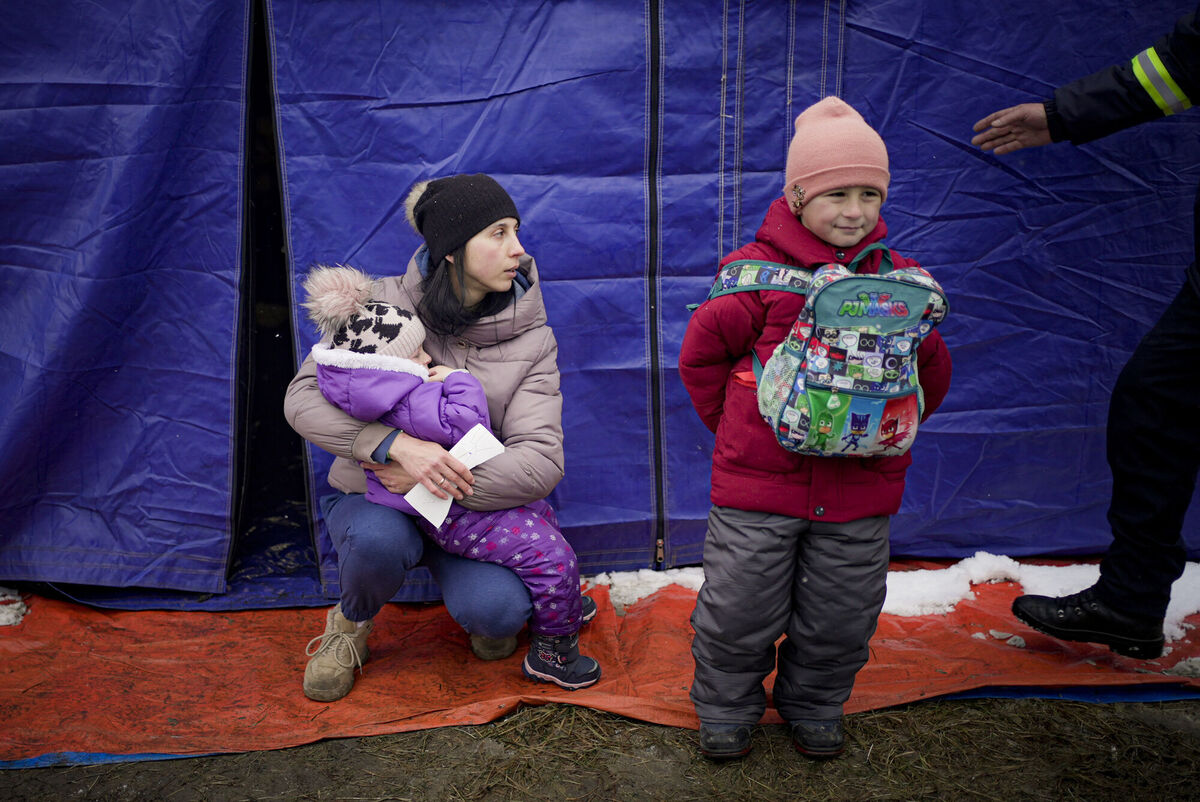
Children play in a hall in Siret, Romania, the same room where dozens of families try to sleep at night after fleeing the conflict in Ukraine. Picture: Andreea Alexandru/AP

Tuesday teatime, Gaelscoil na Dúglaise in Cork.
The hall was heaving with activity, but not with small kids spilling and teeming in the usual haphazard lines, the usual dancing and jumping. No: the activity was far more focused.
Adults were packing goods in cardboard boxes: 'Biscuits and sweets' written on one, 'nappies' written on another. Tins of beans were lined in ranks under one table, a shopping bag stuffed with bars of soap flopped sideways under another. All of it bound for Ukraine, to help in some way the people in a country under savage, sustained assault
Tá an turas fada ag tosnú ar maidin. Buíochas mór le Twomey Bros Tarmacadam don chéad chuid. Ní neart go cur le chéile @saolodheas @Gaeloid @echolivecork @PaulByrne_1 @MikeMoynihanEx #StandingWithUkraine #GnaD https://t.co/99LeUcKIRm pic.twitter.com/ORUKpNoWg3
— Gaelscoil na Dúglaise (@gaelscoilnadug1) March 2, 2022
Niamh Ní Mhaoláin, the príomhoide of the Cork City Gaelscoil, explained the background to Tuesday’s surge of activity.
When the school returned after last week’s midterm break, she found herself entertaining a small delegation on the first morning back. She explained:
“That’s a challenge unto itself, children and what’s going on there," says Ms Ní Mhaoláin. "There’s a couple of aspects to this — on one hand, you’re shielding children completely from this, thinking 'should they know anything about war', and yet on the other they’re exposed to so much information all the time, so you have to ask yourself a different question. Can you really shield them from everything?
“We’re focusing on the goodness out there, on how people are coming together to help Ukraine, on what they can do, but there’s an element of fear as well. You’re telling them Ireland won’t be attacked but it’s something that’s very real to them.”
She took the note and the boys’ intentions to heart and she and the staff started thinking about what they might be able to do: “Our parents’ association is very active, and one of them had a contact in Hendrick European [a transport and logistics firm] up in Fermoy, who are bringing out a truck to the Poland-Ukraine border today. It didn’t give us a lot of time, but we got working.”
They hit on the idea of a drop-off and started by hitting Whatsapp among their own contacts, then on social media the idea took off like a rocket, with the word spreading all over Cork. Ms Ní Mhaoláin was surprised with the extent of the interest at first:
“What’s very interesting is what you notice about people when they come in — for instance, I can see that people have gone to Aldi and filled the trolley and can feel they’ve done something, at least.
“Looking at what’s there I can see a lot of materials for babies — nappies and so on — as well as a lot of feminine hygiene products.
“And it’s all brand new, in fairness. I know there’s always a concern when you do something like this that people could just clear out the shed and drop off what they find, but it’s obvious that people went shopping first and then dropped off what they bought, just a few minutes later.”
There’s “a strong argument” for alternative ways of helping, she adds.
“I know that people have said you can always make a donation to the Red Cross or another organisation as well, absolutely we acknowledge that, but the truck was down to leave today, we knew it would be going out very soon. And we also wanted to do something that would be tangible for the kids in the school, something that they could see and recognise.
“Look, what we’re doing is a drop in the ocean, we know that, but we’re hoping it’ll help some few people.”
Digging down to find the reasons for people wanting to help Ukraine hasn’t been too hard, though. Ms Ní Mhaoláin says the demeanour of those coming into the hall with shopping bags full has been instructive:
“There were a lot of older people, for instance, who would have no real connection to the school through their kids or anything, but they’ve come in to make donations and it’s clear how upset they are. Why? I know people have pointed out that we had a war in Europe in the early '90s in Yugoslavia, but I think everyone feels this is closer than that in some way.
“To me there’s no comparison. Back then that conflict seemed very far away, very exotic. I wouldn’t have known people from Yugoslavia that time, and they were really ‘foreign’, if that makes sense. On top of that, we didn’t know the ins and outs of what was happening there at the time, I think.
“Now what’s happened is far clearer but more importantly we all know people from Poland, from the Baltic States, from all over Eastern Europe.
“Their kids are in the schools, their parents are your neighbours, they’re part of Cork.
“I think the images we’ve seen of children in Ukraine, in the metro stations and walking along the roads, have been particularly affecting for people here.
“We don’t have any kids in the school whose parents are Ukrainian but the man who does our photographs, Vitaly, he’s from Ukraine — I texted him the other evening just to ask how he was — but that’s the difference. It might be happening a thousand miles away from us but it’s very near at the same time for all of us.
“When I saw the Ukrainians leaving the airport on RTÉ News the other evening… We’re great procrastinators here, I know I am. but they’re going back to help.
The way an idea on Monday morning kindled into action on Tuesday brought home to Ms Ní Mhaoláin how keen people were to help. When they ran low on packing boxes and she texted out an appeal for more, she was “inundated” with offers.
“I just think people can empathise with the fact that a couple of weeks ago people in Ukraine were going around doing their business as we were, and now this has happened.
“I’m living in Ballinlough and, as someone said to me the other day, ‘imagine if you were told to just head to Tipperary right now with whatever belongings you could squeeze into your suitcase — to just go with that in your hand’. It’s incredible.”
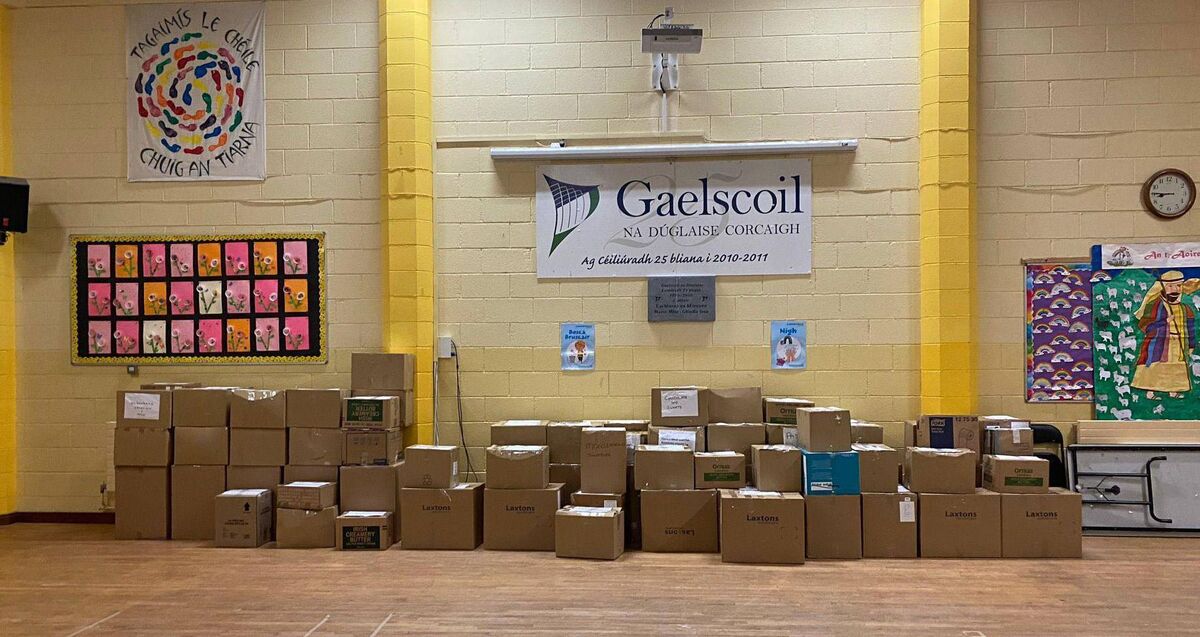
The work went on into the night on Tuesday, long past that 7.30pm cutoff.
People were still coming into the school as that deadline loomed and passed, with kids’ buggies piled with goods, shopping bags bulging with new purchases.
The evening was chilly and dark, but all minds were on a darker, colder night a thousand miles to the east.

CONNECT WITH US TODAY



Be the first to know the latest news and updates