Ronan O'Gara: Can Ireland get it all right on the night this time?
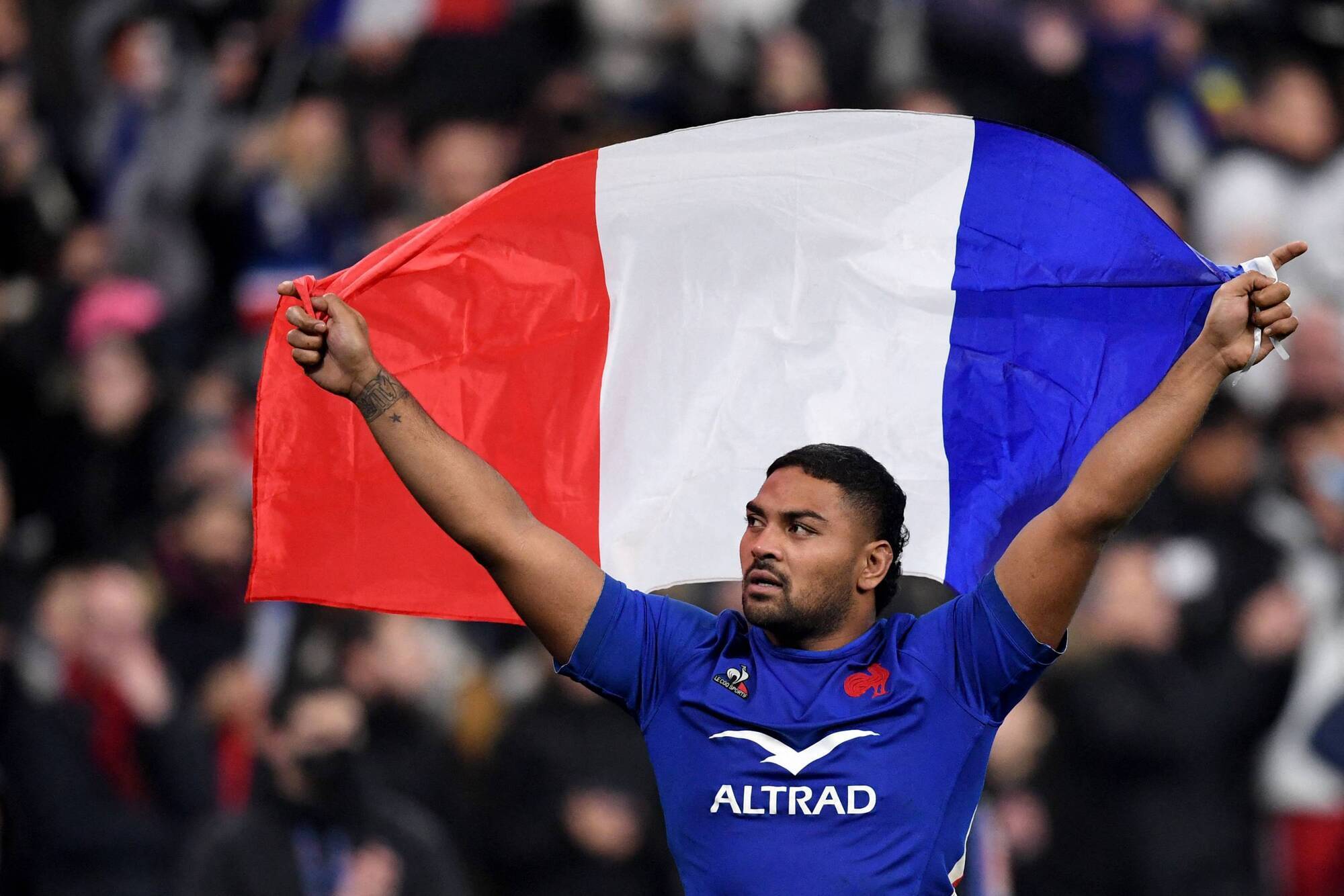
TOPSHOT: France's hooker Peato Mauvaka celebrates after his side defeated the All Blacks. The French are getting ahead of themselves - maybe they are more like the Irish than we thought. Picture: Getty Images

Never reverse into the column, they told me once. Even so, it seems an appropriate opportunity to talk about periodisation.
Which is fancy coaching lingo for getting it right on the night.
It’s comforting to see Ireland isn’t the only country completely losing the run of itself when things are going well. In the wake of Saturday’s 40-25 win over the All Blacks, France has collapsed in a heap of excitement. There may be two years still to the next World Cup but it’s all academic, because France has the Webb Ellis tagged and bagged.
This time next year, it will still be almost twelve months to the 2023 World Cup. We are at the midway point from the last tournament in Japan and we know how long ago that seems and how much has happened in the meantime. Those on the margins have lost the plot. But the ones inside the tent, planning the next 24 months? They’re the ones who can shape all our destinies.
It’s been interesting to observe at close quarters La Rochelle’s Greg Alldritt and his own approach to periodisation. Elite players understand it is impossible to peak for months at a time. Over the course of the last 10 weeks, Greg has been building himself to a peak for last Saturday night against the All Blacks. It’s not like he hasn’t been doing his stuff at club level, but he recognises that even an elite player can only get to a peak pitch periodically.
For an hour on Saturday night, he was close to that. Every player is different. People can talk about the ‘team’ superceding everything, but a team is made up of individuals and each of their make-ups are entirely different.
Ireland, whatever way you come at it, has got its periodisation wrong – sometimes badly – for the important cycles. We have been extremely strong in November, except when it mattered every fourth year for the World Cup. What was striking again about the three internationals in Dublin was how much more energetic and stronger Ireland looked. Same old, same old or too soon to judge? The latter for me.
One assumes Ireland will be just as bright and bushy-tailed in the spring when Wales come to town. The interesting one is the summer tour to New Zealand. It’s from that three-Test trip to winter down in Auckland and Wellington that the clock begins in earnest on Ireland’s World Cup plans for France.
You play professional rugby in Ireland because everything is managed from the top-down, compared to the club-based power in England and France. In Ireland, and in New Zealand, the unions own the clubs, and that’s the massive advantage in terms of managing players and periodising their preparation. That conversation between Andy Farrell and David Nucifora is key but should be very manageable.
Farrell and Nucifora recognise that the momentum of this autumn is not portable and not sustainable for the next two years. In nearly all respects, the recent three wins will have no material bearing on plans for 2023. Ireland have a Six Nations where everything is possible – including losing three of their five games. And yet, they could just as easily win a Grand Slam.
The big Irish winner from the weekend is Farrell’s management team because they now have Joey Carbery as a live option at ten. Plus Harry Byrne got game time. After the Japan and NZ wins, it felt like the team couldn’t function without Johnny Sexton. Now a heap of lads are pushing up on the established group. For certain, the portents are exciting but whatever are the takeaways from next year’s Six Nations will already be dated by what happens on the summer tour to New Zealand.
Ireland have good options and a noticeable emphasis on how they want to play the game. You can see how the game can be played differently when you park the box kick. It’s unfair how Conor Murray is typecast as the poster boy for it, but he has a challenge now to change perception and reinvent himself in time for the next World Cup with Gibson Park in front of him and Craig Casey chasing him down. Murray and Johnny Sexton is dated as a combination but one of them may still survive to France.
What has also transformed Ireland’s game is the running lines of their forwards and how well they carry the ball. Not just Doris, all of them. Tadhg Furlong playing for the Lions and for Ireland are like two different people.
No wonder the Six Nations organisers are licking their lips. Home advantage remains a huge determinant, probably more in rugby than any other sport. How England beat South Africa last Saturday, I don’t know. Credit to them for finding a way but the Springboks were very unlucky.
As ever, someone’s value is most apparent when they are gone. In La Rochelle it’s Uini Atonio; for England, it’s Owen Farrell and Manu Tuilagi, who they lost early to a hamstring injury against the Boks. I had reason to watch back the Ireland win over New Zealand. The amount of ball that Bundee Aki carried and the threat he posed were remarkable. One man carrying into three and finding a route to get out quick ball is gold for a coach.
The French are not short of those talents. On top of that, Fabien Galthie will be delighted with the return from Melvyn Jaminet, the Perpignan full-back. The expectation was that November would cement Brice Dulin at 15, but Jaminet was excellent and his goalkicking had a bit of Maurice Fitzgerald pureness about it.
The radio chat here agrees on one thing - France now have real strength in depth. It was a five-point game in the 68th minute when David Havili’s loop pass is intercepted by Damien Penaud. The All Blacks had clawed back a 24-6 half-time deficit to 30-25, and yet the post-mortems in both countries couldn’t have been more different.
We’ve established France has lost its marbles. Is New Zealand being excessively pessimistic with all the takeaways Ian Foster will bring into the summer break down there? Again, I revert to the issue of the combinations in the All Blacks backline. I’ve no issue with the quality of player, but for instance, I struggle to see the Richie Mo’unga who plays for the Crusaders in an All Blacks shirt. Over the last two weekends, and for the first time in a long period, you saw players in a black jersey playing without confidence.
Which brings us back to periodisation: At the end of their 2021 season, does New Zealand want twenty guys fighting for seven back positions or do they prefer their starters nailed down? The case for competition is clear, but when it comes to ownership and driving the team, a lot of players sense ‘I’m not too sure where I stand in this team, so I am not going to stick my head above the parapet here, I am going to sit here at this meeting and just watch’. All the good teams I have been involved in have been driven by leaders who feel confident in their environment and being backed by coaches. I don’t see that in New Zealand at the moment, and that’s a problem for them.
You keep moving the chess piece around the board in the hope that something clicks and things can quickly descend into a hotch-potch with no shape or combinations. Where are the All Blacks on a scrum half? Brad Weber, Finlay Christie, TJ Perenara and Aaron Smith are all there. The latter two still look the best options, but perhaps the NZRU now realise they have better players overseas who could play for the All Blacks – such as Tawera Kerr-Barlow here in La Rochelle. Yes I’m biased but not wrong.
The only thing not to forget is that the All Blacks’ scope for getting back to where they need to be is greater now than it is for South Africa, England, France or Ireland. And that’s a dangerous scenario for everyone else.
Andy Farrell and his management will go at the Six Nations as they should; there will be priceless information to be gleaned from it. But when we are getting up for an early breakfast next summer and tuning into a cold, wet Auckland, then we are beginning to see the first draft of Ireland’s plan for 2023.
Walk easy there for a while, I’d say.