Maeve Higgins: Why we need to look a little closer at 'The Closer'
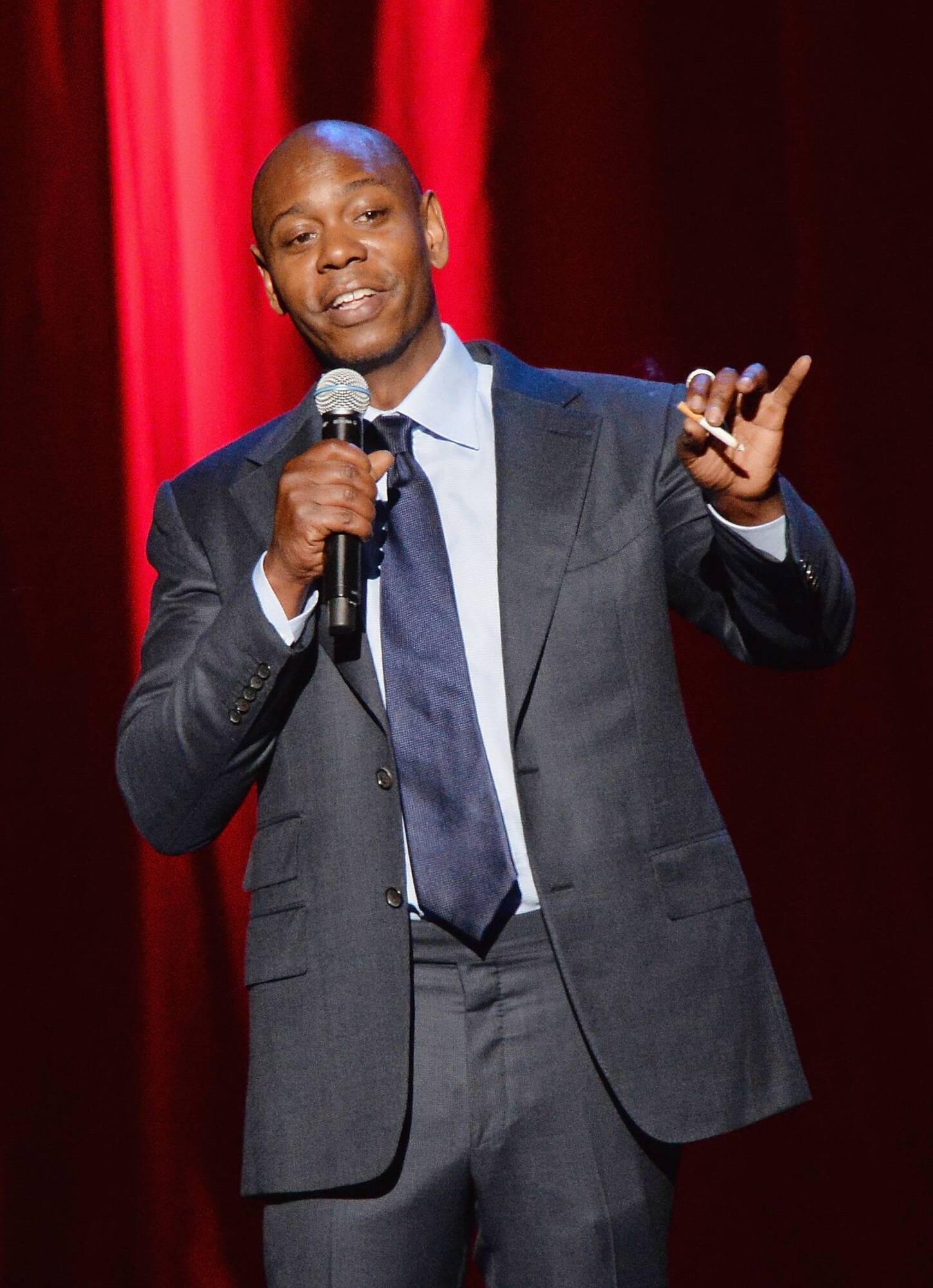
One disturbing routine from comedian/actor Dave Chappelle in 'The Closer' sees him beat up a masculine-presenting lesbian who had challenged him in a club, to the troubling delight of at least one particular member of the audience. It was more than comedy, this time the transphobic showed he meant what he said. Picture: Mike Coppola/Getty Images
There's this strange moment in Dave Chappelle's latest stand-up special, , on Netflix that nobody, as far as I can tell, is talking about. This is doubly odd because if you've got even a passing interest in stand-up comedy and its role in the culture wars, you will know that everybody is talking about plenty of other moments in this show. There's the lazy reference to hate crimes against Asian people in the US. The archaic crack about some women being too ugly to rape. And there is the show's substance, the reason so many are talking about it; the considerable chunk of stage time he devotes to his preoccupation with transgender people.
Chappelle has successfully trolled the LGBTQ+ community for many years now and seems particularly obsessed with transgender people.
That is the context, a familiar one to those of us in the comedy world: a wealthy, middle-aged, straight man in a suit, airing his unasked-for-observations and grievances about minorities into a microphone.
The moment that shook me was not anything Chappelle said; it was something that occurred in this one shot of the audience.
There are not a lot of audience shots in , and this one stuck with me. It captures a man in the audience, one man so thrilled by one of Chappelle's jokes that he gets to his feet and applauds wildly. He's a big man in a light-coloured shirt, beaming with adulation, moved to a standing ovation by his hero's musings. The point at which the man leaps to his feet is the culmination of a routine that sees Chappelle beat up a masculine-presenting lesbian who had challenged him in a club. Specifically, the laugh line: "I tenderised them titties like chicken cutlets. I whooped the toxic masculinity out of that bitch."
Let me explain what happened here, with the caveat that David Chappelle is better at the craft of stand-up comedy than I am. I should also point out that he sees stand-up comedy as art, whereas I do not. I do have a comedian's brain, and I know the craft.
So, I understand that the story that drove this man to rapturous applause was embellished and that Chappelle did not actually hit the woman in the story. I know that this woman probably does not even exist but is likely inspired by a combination of real and imagined interactions Chappelle has had. I understand the rhythms and the cadences he delivered the story with, the clever, learned patterns that made it easy for the audience to understand their role; when to laugh, how to laugh, when to wait, etc.

However violent and unfunny the routine about beating up the woman was, Chappelle built it well and employed alliteration in the punchline, and all of that paid off.
The crowd duly roared and clapped their hands, but the lines in question resonated mightily with this one man in the light-coloured shirt. As soon as I saw him jump up so gleefully, I thought of another audience member at another Chappelle show, another audience member enjoying himself a little too much. According to Chappelle himself, this other audience member was one of the reasons he left ; a juggernaut of a show he co-created with Neal Brennan for Comedy Central back in 2003.
In 2004 Chappelle was set to make a reported $50 million from an ongoing deal that would see continue to air, but he had misgivings.
It was a stressful job, and he worried about the demographic of the audience — about who enjoyed the show and why that might be.
This move, walking away, made him legendary in the business, the rare comedian who would put his principles before his profits.
Of course, years later, he would be paid approximately the same amount of money, $50 million, for two Netflix specials, including .
But that's jumping ahead — months after leaving ; he explained during a TV interview with Oprah Winfrey that he wanted a quiet life with his family in his Ohio home. Chappelle let it be known that he felt hemmed in by mainstream American television's very white and very corporate structures.
In the panicked weeks after he left, he spoke to a reporter from magazine. In that interview, Chappelle recalled a sketch he had filmed for the TV show in front of a live audience, a sketch about magic pixies embodying racial stereotypes.
He wore blackface and played the Black pixie and was horrified when one audience member, a white man, laughed a little while too long and just that bit too hard at the sketch. Us comics know that laugh — a horrible kind of laughter, the kind that means they've taken the joke to a place you didn't mean for it to get to, the response that happens when you're speaking to an ugly part of a person you never intended to reach.
"When he laughed, it made me uncomfortable," said Chappelle. "As a matter of fact, that was the last thing I shot before I told myself I gotta take time out after this. Because my head almost exploded."
Why then didn't he flinch when that same laugh emerged from the man in the light-coloured shirt, the cheering man in the audience of ? To me, to my comedian's brain, it was the same laugh. It was the same hysterical support lent by a bully watching someone else do the punching, a thrilled response to a dark impulse validated, the delight that comes with continued permission to hate. It's a laugh that says, "He said it! He said it out loud, on a stage, and he's getting paid millions of dollars to say it, and that means I can say it too!".
But Chappelle didn't flinch; he didn't walk away; he kept going because he meant what he said. Chappelle is a gender essentialist, afraid of and threatened by transgender people, and he devotes much of his time to threatening them, trying to make them afraid of him. A master of the craft, nothing is unintentional. He's been telling us that he's transphobic for years now; it's time we believed him. Chappelle wants that feedback loop of laughs now more than he ever has. He has devoted himself to getting those laughs, so he must need them very badly on some level. It's up to us to decide whether or not to give them to him.