Clodagh Finn: Why we need to make empathy a mandatory subject in schools
Why aren’t we willing to embrace a system that teaches us not just to have sympathy for others, but to understand them and emotionally identify with them? 
Clodagh Finn: Why we need to make empathy a mandatory subject in schools

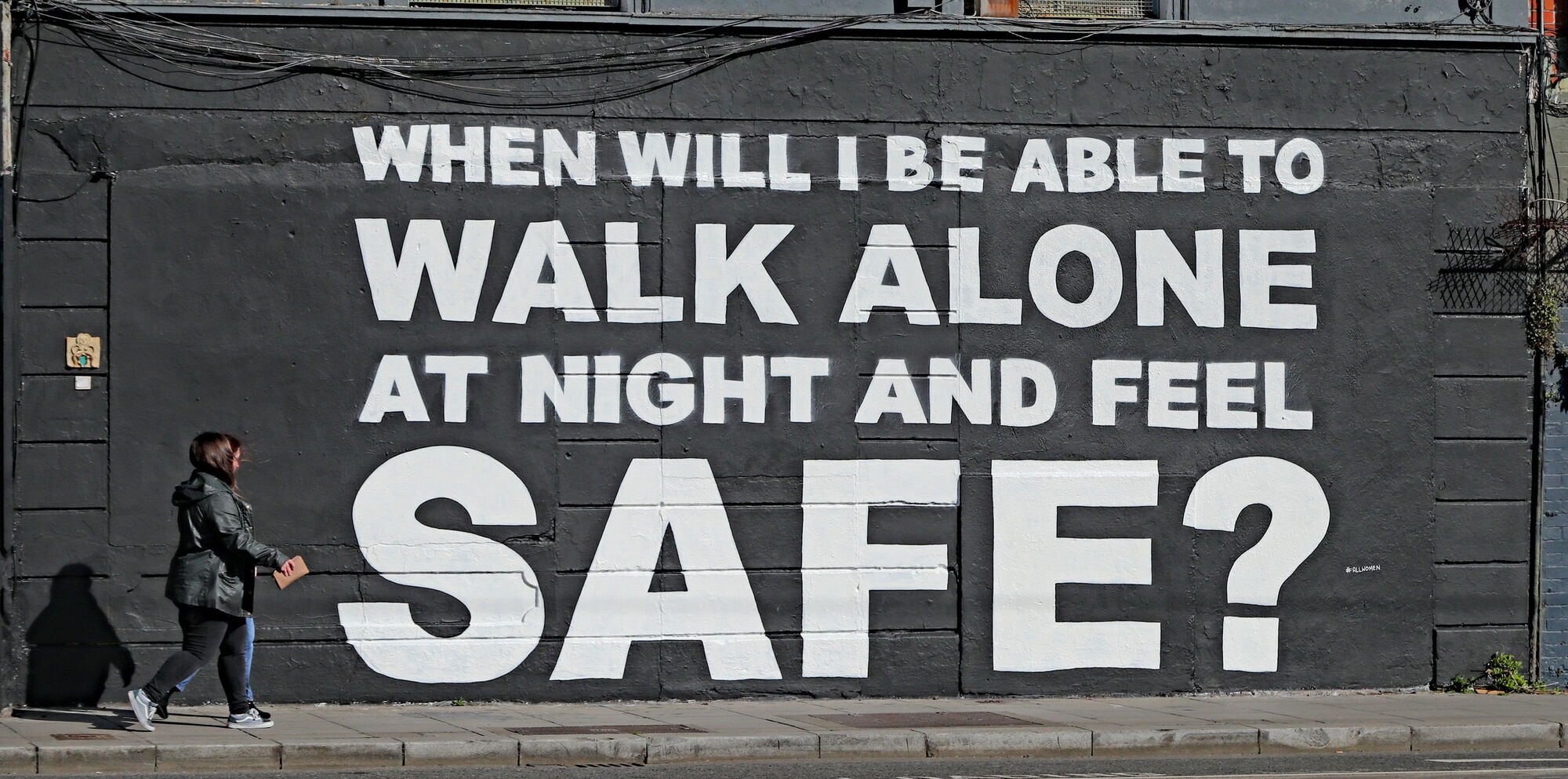
A member of the public walks past the latest mural by Irish artist Emmalene Blake in Dublin's city centre. Picture: Niall Carson/PA Wire

There was a day last week when I had to turn everything off — the TV, the radio and the push notifications that push (they are appropriately named) the violent outside into your inside pocket, which is where I keep my smartphone.

Pocket atrocities, I call them not just because that is where they are delivered, but because the rolling headlines make reports of individual misery so banal that they are somehow rendered pocket-sized. Small, forgotten news briefs in an ever-moving cycle.


Is it me, or is the news particularly grim at the moment? Or has everyone, as I did last week, simply shut down? Or become so desensitised that the graphic news stories just don’t register?

How else might we account for the lack of response to the stream of violence, very often gendered, being brought to our attention?

To return to that day last week, this was the top story pinging in my pocket: “Cork man told wife: ‘I’d bate the shit out of you if you were a man,’ court hears.”

It was followed by this: “Cork woman tells trial her brother raped her so many times she felt ‘like a robot’.”

The week before, a headline about a ‘rape chant’ on a night-time Dart in Dublin was one of the most-read items in my newsfeed. 

Fine Gael TD Alan Farrell tweeted that he had heard a group of lads chanting “Let’s rape her” as a woman stepped off the train. He later confronted them at Malahide station in Dublin.

Little wonder that more than half of Irish women say they would not use public transport after dark or late at night, according to a Transport Infrastructure Ireland report, ‘Travelling in a Woman’s Shoes’. 

A third of women said feeling unsafe had stopped them going out altogether, while 33% of public transport users said they had seen or experienced some form of harassment or violence while using public transport.

And on and on the stories of violence go. Every. Single. Day.

This week, we got an overall view of that degradation of body, mind and spirit with the publication of figures showing that gardaí received 43,500 calls reporting domestic violence in 2020, an average of about 120 every day.

That represents a 17% increase on 2019, according to the Garda Annual Report for 2020.

And that isn’t even a complete picture. As CEO of Women’s Aid Sarah Benson has said, the figures represent “the tip of the iceberg”. 

They don’t reflect the number of male victims of abuse either, who continue to fall under the radar, according to CEO of Men’s Aid Ireland, Kathrina Bentley.

Covid-19 has, at least, brought the ongoing suffering of so many into the public consciousness. That prompted the launch, in April 2020, of Operation Faoiseamh, a Garda service that increased contacts made with victims as well as prosecutions against the perpetrators.

We’ve also seen the first convictions under new coercive control legislation, which should help to increase awareness that emotional violence can be as, if not more, damaging than physical violence.

And yet, to quote Safe Ireland CEO Mary McDermott, we’ve just had a budget that ignored the issue. It is “bewildering that political and public policymakers have ignored the epidemic of domestic violence, failed to take note of evidence of how to redress the problem, and have not acted to bring [domestic violence] infrastructure up to date”.

Protests took place in cities including Cork following the murder of Sarah Everard in London. Picture: Larry Cummins

It is not as if the people closest to the issue haven’t proposed solutions. During the height of the pandemic, Airbnb teamed up with Safe Ireland to provide emergency refuges for those escaping violence in the home.

Mary McDermott later outlined how everyone, from business, community and workplaces, could take part in a series of initiatives to create a safer future for women and children.

Those are conversations that we need to have if we are to begin to tackle the violence that has become so commonplace in our society that we have almost become numb to it.

Conversations like the one prompted by High Court Judge, Ms Justice Deirdre Murphy, when she called for access to internet pornography to be addressed at primary school in a case where a teenager was given a suspended sentence for raping his niece. He was, the court thought, “playing out” pornographic scenes he had been watching since the age of nine or ten.

Justice Murphy said there was no point talking about consent at third-level if young people were watching pornography at primary level.

Rape Crisis Network Ireland wholeheartedly agreed, saying the case was a wake-up call to face the reality that, in Ireland, the majority of boys first access pornography before the age of 13.

While it is certainly time to talk about internet porn in schools, we might start with empathy. We seem to have forgotten what it means.

Barnardos already delivers ‘Roots of Empathy’ to some primary-school children. It has “shown significant effect in reducing levels of aggression among school children by raising social-emotional competence and increasing empathy”.

Imagine what might happen if that were available in every primary school in Ireland?

Meanwhile, the inspiring Activating Social Empathy programme is nurturing empathy skills at second-level where it helps students to build a strong sense of connectedness to their school and to their community. But the course, developed by Dr Ciara Boylan and Professor Pat Dolan in 2017, needs to be nationwide.

Empathy is just as important as Maths, Science or English, according to Prof Pat Dolan, joint founder and director of the Unesco Child and Family Research Centre at NUI Galway.

We might also question our heavy reliance on formal education at the expense of social and emotional learning, which has the potential to build a better world by fostering empathy, social responsibility and civic behaviour.

The evidence from neuroscience shows that when children and young people are taught empathy and understanding, their academic achievements improve. “That alone should be enough for schools to embrace it,” says Prof Dolan.

“More importantly,” he continues, “in a world where narcissism, hate speech, racism and self-centred behaviours are increasing… the solution of developing altruism in youth through empathy education in school and community settings may be key to the future stability of Irish society.”

The research, across a range of disciplines, is conclusive. It shows that the presence of empathy is related to positive academic, social, psychological and personal developmental outcomes.

Why, then, aren’t we willing to embrace a system that teaches us not just to have sympathy for others, but to understand them and emotionally identify with them? Imagine the world we might create if empathy was a subject on every school curriculum?

Just as I finish this article, my smartphone pings another update: “Passengers used phones to record rape on US train without intervening.”

I’m tempted to turn off again but instead let’s start to think about ways to increase empathy in this indifferent world. 

Lesson one might recall the name of the Transport Infrastructure Ireland report and encourage people to think about what it is like ‘Travelling in a Woman’s Shoes’.

More in this section

Revoiced

Newsletter

Sign up to the best reads of the week from irishexaminer.com selected just for you.

Cookie Policy Privacy Policy Brand Safety FAQ Help Contact Us Terms and Conditions

© Examiner Echo Group Limited