Louise O'Neill: For the whole first year of college, I felt as if I was an alien
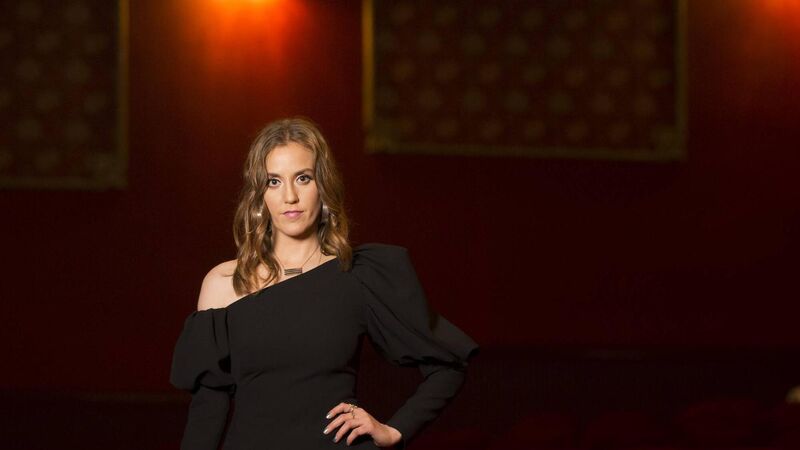
Louise O'Neill. Photo: Cathal Noonan

When I read the latest installment in the wonderful series (out October 8), I was struck by co-authors Emer McLysaght and Sarah Breen’s uncanny ability to tap into the Irish 'everywoman' with such humour and incisiveness. I frequently have a similar reaction when reading McLysaght’s weekly newspaper column. From the dangers of quicksand (kids movies in the 90s really did lead me to believe this would be a greater threat in my daily life than it has been so far) to desperate hopes to win a home in a raffle, (seems a better bet than the current housing market) I feel very seen.
Never was this more apparent than a piece McLysaght wrote a few months ago about her time as a culchie at Trinity College, which closely mirrored my own. Given the success of Sally Rooney’s , and subsequent novels such as Louise Nealon’s and Eimear Ryan’s — all coming-of-age novels set in TCD’s Arts Block, I have been asked if I will also contribute something to the ‘Trin-Lit’ genre. It seems unlikely, I say, given that most of the experiences I thought were so unique to me have been told and re-told in other people’s novels.
It was 2003 and I had just won a place to study English and History. I’d always wanted to go to Trinity and although I said it was because I’d visited the Book of Kells when I was a child and fell in love with the place, my desire to study there was because a) it was as far away from my home town as I could imagine at that age and b) I liked the kudos attached to being a Trinner. (18-year-old me was impressed by such things)
My first day was… challenging, to say the least. I got on the bus in Rathmines and handed the driver a fiver, only to be told brusquely that it was “exact change only”; a queue of people tut-tutting as I pushed past them to get off again. When I finally disembarked at Stephen’s Green shopping centre — yes, I had to ask the driver to tell me when we got there — it took me two hours to find Trinity. I repeat – two hours.
I think I went right at Merrion Square and just kept walking, asking strangers, “Ou est l’université?” in a terrible French accent. That seemed preferable to admitting that I was a culchie who couldn’t read street signs. For the whole first year, I felt as if I was an alien, transplanted to this planet to observe how the natives lived.
From a random party at Halls, where a red-faced boy in deck shoes (a criminal offence in Clonakilty) told me he went to Clongowes, waiting for my response. Having no idea what A Clongowes was – nor did I understand that this conversation was an attempt to determine my social class — I gave a bewildered smile and said, “that’s nice, I went to Sacred Heart?”
“What does your father do?”, I was asked after a classmate spotted me in Hodges Figgis buying a book on meditation and another on politics for Dad’s Christmas present. After being told he owned a butcher shop, they furrowed their brow and said incredulously, “and he likes books like that?”
As tempting as it was to reply, “yes, we’re so proud of him for learning to read,” I just shrugged it off. I said less and less. It was as if I was choking on my own sense of inadequacy, of not being good enough, until finally, I stopped attending lectures.
“Oh my god,” a girl said when I took my seat at our exams. “We all thought you’d dropped out.” Second-year was better, primarily because I met a group of young women who are still amongst my closest friends today. By the start of fourth-year, when it became clear I needed a year off books due to my eating disorder and hospitalisation, I cannot say enough good things about the English department who did everything they could to ensure that, despite being such a mediocre student, my return would be as smooth as possible.
That final year was very different — I attended my lectures, wrote essays with care, felt brave enough to voice my opinions in tutorials. I was older, more confident, and crucially, in better health, all of which helped enormously. But I often think of those lost years with a pang of regret, wishing that I’d auditioned for plays, joined the Hist.
That I had actually given myself enough time and space to find my feet rather than assuming I was inherently broken. That’s the thing, I suppose. When you’re going through it, you think you’re the only person who feels this way, that everyone else is finding the transition effortless.
That you’re the only person who feels overwhelmed and scared. The comfort in reading books like or is the understanding that lots of other students are struggling to, they might just be better at disguising it. Instead of insisting that college will be the best time of their lives, I wish we told young people, that it’ll be okay. They just need to hold on.