Maeve Higgins: Sanitation workers as important as politicians
Labor Day in the US has never been fully connected to workers. Rather, I associate it with stampedes at shopping centres, with shoppers tripping over themselves to get ever bigger TVs at ever lower prices
Maeve Higgins: Sanitation workers as important as politicians

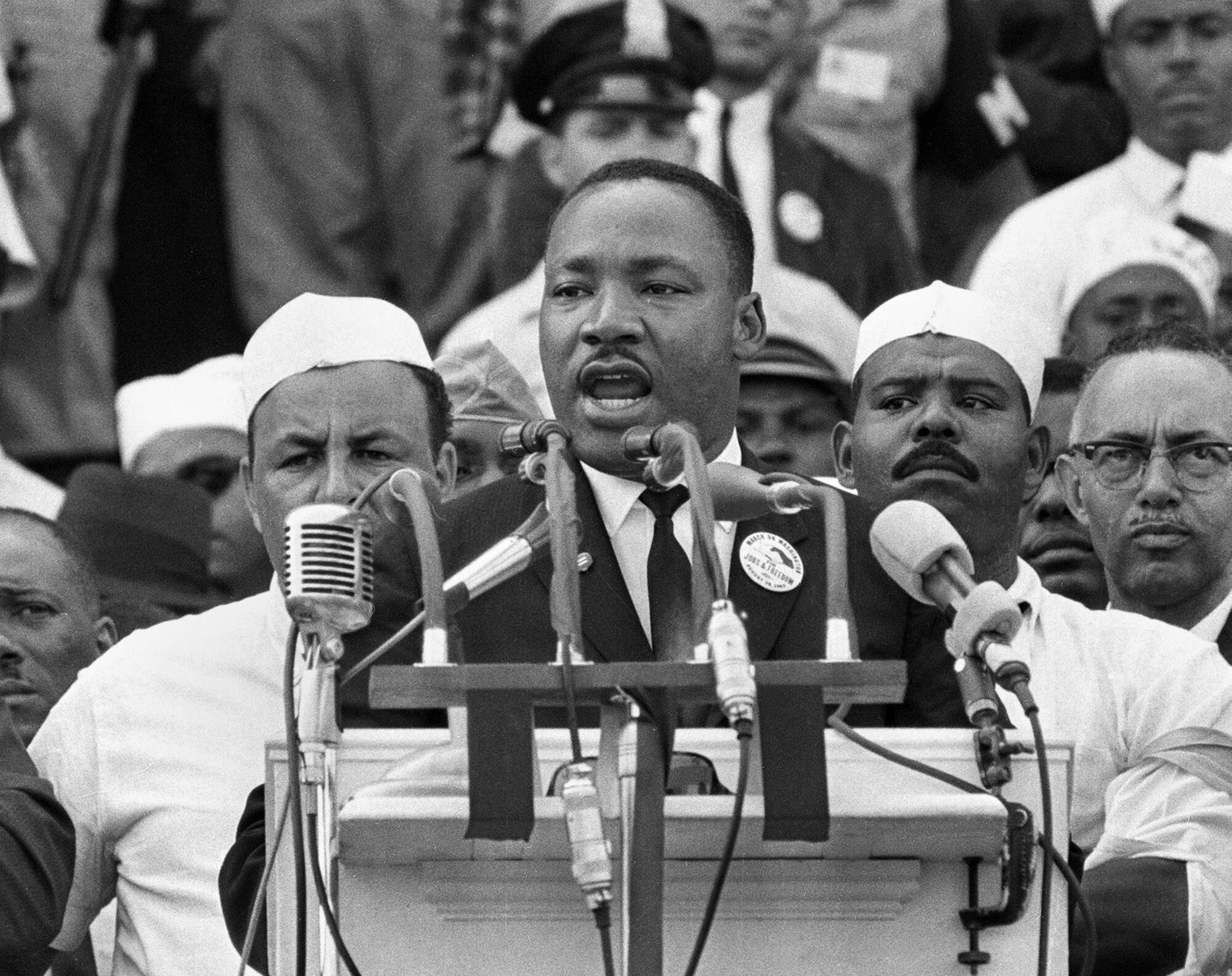
Dr Martin Luther King Jr: In 1968, Dr King was going from state to state in support of the Poor People’s Campaign for economic justice. Picture: AP 

I never know quite what to do with myself on American holidays. Joining in with traditions I didn’t grow up with can feel a little forced. Cut to a viral video of me wearing a cowgirl hat and stars-and-stripes tankini winning a hot-dog eating competition in Coney Island this coming Labor Day!

I wish — but that can’t actually happen because I won’t be anywhere near Coney Island or candy floss or any other fun places this Monday. It is Labor Day in the US, a federal holiday, but like many of us I will be too busy working to celebrate.

Labor Day is an odd one in any case, competing as it does with May 1 (aka May Day), which is celebrated around the world as International Workers’ Day.

May Day has deep historical ties with the socialists, communists and trade unionists who organised the movement for an eight-hour workday in the late 19th century. They chose that day in commemoration of the Haymarket Affair, which happened in Chicago back in 1886.

Police intervened in a confrontation between striking workers and strikebreakers, and horror ensued. As the police shot into the crowd, somebody detonated a bomb that killed police and civilians. Later, four anarchists were hanged for conspiracy. Their deaths and the preceding events galvanised the wider labour movement.

In contrast to May Day’s impeccably bloody lineage, President Grover Cleveland established Labor Day. He was a conservative politician and his announcing the holiday was seen in some quarters as a tokenistic and cynical move towards re-election, and this contributes to the fact that Labour Day has never had the same clout as May Day.

Stampedes at shopping centres

In my mind at least, Labor Day in the US has never been fully connected to workers. Rather, I associate it with stampedes at shopping centres, with shoppers tripping over themselves to get ever bigger TVs at ever lower prices.

I’m not standing in judgement of those bargain hunters, I’m counting down the days to the next season of Succession and plan to watch it on the largest screen I can lay my greedy eyes on. It is just ironic that a holiday created to honour the sacrifices and reflect on the contributions of workers is instead a bonanza for capitalists.

It’s ironic too that Labor Day has also become a day that signifies the end of the summer, meaning no more holidays, and is instead a time to buckle down and go back to work — and workers in the US work a lot.

In a country like this, with very few safety nets to catch you if you fall, earning enough money to ensure that not just your lifestyle, but your life is secure is crucial. We all understand that working and earning are two different things, and that feels especially true here.

That has been the case since the beginning; remember those earliest labour rights organisers campaigning for an eight-hour day for a fair wage more than a century ago. Yet it is still not a reality or even a possibility for many workers in the US today.

I’m curious as to why that is and I’m also cognisant of the time we’re in right now, deep into a pandemic where some of those same workers struggling to make ends meet were deemed essential, so I wonder if this Labor Day will be different.

In March and April last year, during the first wave of stay-at-home orders, local governments were clear on what needed to happen. New York City’s government stated that whoever was able to had to work from home, but wider guidance quickly became necessary.

In August, 46 states and Washington, DC issued guidance on which sectors and industries they considered “essential” despite pandemic-related restrictions. According to the US Department of Homeland Security, essential workers are those who conduct a range of operations and services that are essential to continue critical infrastructure operations. 

The Critical and Infrastructure Security Agency advised: “There are 16 critical infrastructure sectors whose assets, systems, and networks, whether physical or virtual, are considered so vital to the United States that their incapacitation or destruction would have a debilitating effect on security, national economic security, national public health or safety, or any combination thereof.”

Opinion writer is not an essential worker

I checked the list and it turns out ‘opinion writer’ and ‘fun auntie’ were not in any way essential, so I was off the hook and free to watch the first two seasons of Succession on repeat.

Who was on the list? Truly a huge and diverse set of workers — like something from a Richard Scarry Busytown book; a horror version desperately freighted with the danger of a deadly virus. There were workers that were obviously essential in a health crisis, such as ambulance drivers, immunologists and respiratory specialists. There were also fast food workers, farm workers, and sanitation workers, not exactly the high-octane work that’s usually assigned any kind of status — not usually, but sometimes.

In the case of sanitation workers, one of those times was so beautiful and stirring that even reading an account of it makes me wish I was a witness to it. I found that account in The Radical King, a selection of writing and oration by  Martin Luther King Jr, introduced and edited by  Cornel West.

Martin Luther King Jr acknowledges the crowd at the Lincoln Memorial for his 'I Have a Dream' speech during the March on Washington, DC, on August 28, 1963. The march was organised to support proposed civil rights legislation and end segregation. Picture: AP Photo

In 1968, Dr King was going from state to state in support of the Poor People’s Campaign for economic justice. In a Memphis church two months before he was assassinated and one month into a strike by more than 1,000 sanitation workers, Dr King spoke to those strikers and their community about the plight of all workers, especially those in the service industries.

“So often we overlook the work and the significance of those who are not in professional jobs, of those who are not in the so-called big jobs. But let me say to you tonight, that whenever you are engaged in work that serves humanity and is for the building of humanity, it has dignity, and it has worth. One day our society must come to see this.”

Stunning and prescient

Isn’t that stunning and prescient? The Poor People’s Campaign is ongoing, still working for economic justice. Since 2012, it has worked on The Fight for $15, a political movement to raise the minimum wage to $15 an hour. It has seen some real success at local and state levels, helping to lift service workers out of poverty.

Work that serves humanity has dignity and, this Labor Day, I will hold on to that truth as well as the other truths that followed in Dr King’s speech that night. “One day our society will come to respect the sanitation worker if it is to survive, for the person who picks up our garbage, in the final analysis, is as significant as the physician, for if he doesn’t do his job, diseases are rampant. All labour has dignity."

More in this section

Revoiced

Newsletter

Sign up to the best reads of the week from irishexaminer.com selected just for you.

Cookie Policy Privacy Policy Brand Safety FAQ Help Contact Us Terms and Conditions

© Examiner Echo Group Limited