Maeve Higgins: The Philippines is a real conversation-ender at Fourth of July parties
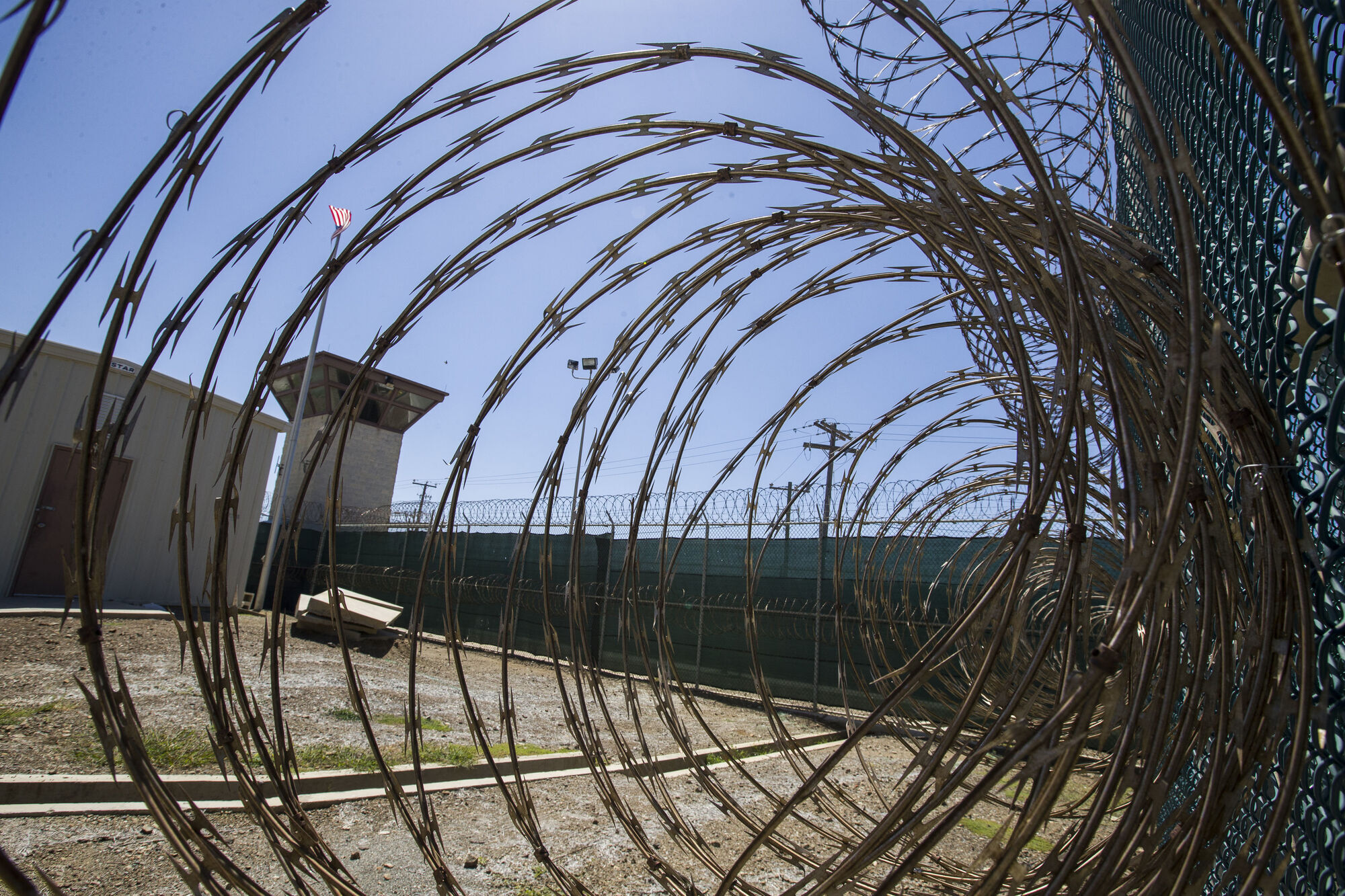
Itâs inaccurate to conflate Philippine experience with US customs and border protection agents in Irish airports, or extrajudicial American prisons on GuantĂĄnamo Bay, or the ongoing struggle for Puerto Rican autonomy. But what these places have in common is that all of them are points on a deliberately blurred map of the United States. AP Photo/Alex Brandon, File
When returning to the US from a visit home, I usually fly from Shannon Airport or sometimes Dublin Airport. Despite neither of them being in Cork, both are pleasant enough. And both offer the convenience of âpreclearanceâ.
Preclearance means that after you check-in and pass through airport security you will â in fact, you must â pass through US immigration, customs, and agriculture inspections. This is handy because you donât have to go through those inspections when you arrive. Instead, you just skip out into a US domestic terminal and pick up your luggage. Itâs convenient but it also feels peculiar, lining up to speak to an agent from US Customs and Border Protection â a branch of US Homeland Security â as American flags hang inert along the walls of the purpose-built pre-clearance facility at Dublin Airportâs Terminal 2.Â

The agents, Americans, sit beneath framed portraits of the sitting US president as they check passports and visas, asking where youâre headed and why.Â
These strange patches of the US on Irish soil force the question, just where is the United States? It has a history of popping up in places youâd least expect.
Having grown up in Ireland, a former British colony, the word âempireâ connotes pale queens and ancient grudges, neither of which I associate with the US.Â
However, despite a dearth of queens and grudges, looking squarely at the history of the US will teach you that âempireâ is the only word for it. Isnât that confusing though, to think of the US as an empire? It shouldnât be confusing really, considering their war with Mexico where they captured the latterâs northern half for themselves, or their purchase of Alaska and annexation of Hawaiâi. Itâs just that, back in the day, the brand new nation famously fought for the democratic ideal âthat this nation, under God, shall have a new birth of freedom and that government of the people, by the people, for the people, shall not perish from the earth".Â

Abraham Lincolnâs words from Gettysburg during the American civil war ring particularly hollow once you turn your attention to the US territories.Â
Today, Puerto Rico, Guam, American Samoa, the US Virgin Islands, and the Northern Mariana Islands are neither sovereign places nor states, rather they are governed by the US federal government.Â
Together these places have a total population of around four million people; US citizens but not quite, not fully, because only select parts of the US constitution apply to them.
In 2019, Daniel Immerwahr, an American historian, published a book that helped to reorient my thinking around the historical and current colonising power held by the US, titled .Â
The US has an obvious military might that it wields across the entire globe in ways that are undoubtedly imperialist, but thatâs not exactly the thing that makes it an empire.Â
Anyone who has ordered a Starbucks in South Korea or seen a Disney film in Mali understands that US corporations and the nationâs huge cultural output have left no part of the world untouched, but that isnât it either.
Immerwahr argues that calling the US an empire is correct because that is âa way of describing a country that, for good or bad, has outposts and colonies.Â
In this sense, empire is not about the countryâs character, but its shape. And by this definition, the United States has indisputably been an empire and remains one today.â So you see itâs about territory, it has been and it still is.
The US used to control much more territory than it does today, particularly after the Second World War when the overseas area under US jurisdiction held a combined population of around 135m people.Â
That figure is wild considering that was three million more people than lived on the US mainland at that time. One of the most extraordinary stories to emerge from the US empire is the story of the colonisation of The Philippines, made more intriguing by the largely successful American effort to forget it ever happened.
That the Philippines was a US colony for almost 50 years is a revelation to many Americans today, but the fact remains that the Philippines was once the largest of the US colonies, ever since the US wrested control of the nation following the Spanish-American war in 1898 and declared military control.Â
That war is also how the US got hold of Puerto Rico and Guam. American politicians argued at the time that taking these places over was not empire-building, rather it was almost humanitarian.
âManifest destinyâ allowed them to believe that what they were doing was preordained and noble, as opposed to brutal and plunderous. As the historian Mae Ngai writes in her book, : âCentral to the colonial project was the belief that the new territories were inhabited by backward races incapable of self-rule. Americans saw Filipinos as a motley-coloured race comprising innumerable uncivilised tribes. While it was common to view all non-European peoples as backward, casting Filipinos as âtribalâ was essential because it denied them the status of nationhood.âÂ
Philippine revolutionaries were horrified; they had seen the Americans as allies in their fight against their previous Spanish colonisers. The fledgling nation had even designed their new flag in red, white, and blue in appreciation for the US.Â
The Filipinos refused to accept US authority over their country but, following a brutal three-year struggle, the Philippine-American War, the US emerged victorious and replaced military rule with US civil government.

In the decades that followed, the US wrestled with how best to deal with their conquest, more than 8,000 miles from the mainland. After the Second World War, they granted independence to The Philippines, but not because of any ethical or moral code. Rather, they worried about the cost of maintaining this colony, and simultaneously, racist nativists were objecting to Filipinos moving to the mainland. There are still a small number of US troops stationed across military bases in the Philippines, a crucial area for access to the contested South China Sea, and that part of the story is yet to see an ending.
However resolutely you ignore past behaviours, they will find a way into the present, or the future. Itâs inaccurate to conflate Philippine experience with US customs and border protection agents in Irish airports, or extrajudicial American prisons on GuantĂĄnamo Bay, or the ongoing struggle for Puerto Rican autonomy. But what these places have in common is that all of them are points on a deliberately blurred map of the United States, one that only comes into focus when you look hard enough.