Joyce Fegan: The challenge of reacclimating to normal life
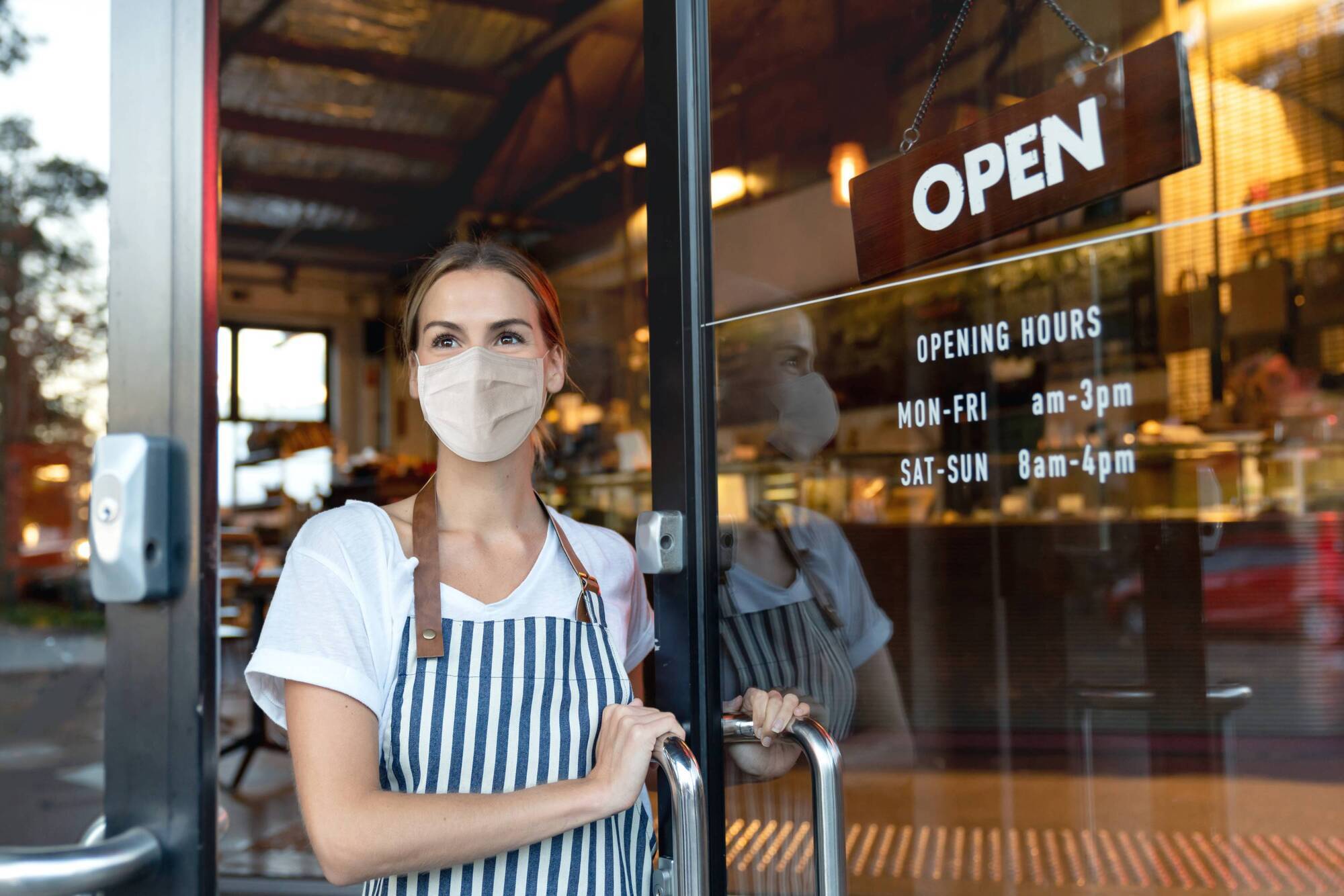
When Covid-19 restrictions are eased this time around, we are much closer to an end, but there is a distinct lack of an uplift
It's ending, but it's not actually over.
The pandemic started with a bit of a bang. We watched the news as graphs and maps tracked the spread of this unknown, unpredictable and highly contagious virus from east to west across the globe.Â
After we tracked the spread-map across the globe, we watched the ticker. One case became three, which became nine, which became thousands.
Then there was the definite bang of lockdown. There was no uncertainty, no ambiguity. Do not move outside your 2km radius. There was an app for that. For some, the guidance was, do not move outside the perimeter of your property.Â
For all of us, the rule was "keep 2m apart". We should have called this physical distancing, instead we named it "social distancing" — and now we have, among other things, to recover from that too.
This week, research in Canada found that more than half of their population is "somewhat anxious" about "going back to normal".
After 14 months of designing our lives to fit within regulation and rule-shaped boxes, the concept of "going back to normal", seems out of reach.
We've gotten used to wearing lycra - who's going to willingly swap that out for its stiffer-fabric cousin denim? Sports bras replaced the underwired kind and make-up and its night time removal also got their P45. Two hours of daily commutes got reduced down to a seven- or eight-step walk from one room to another.Â
Read More
And social obligations like visiting six cousins, meeting up with three college friends and attending your uncle-in-law's musical society's show, all in the space of a single Saturday, were removed from our life overnight, guilt free.
"Going back to normal" - what does that mean now? Does it mean going back to living life at breakneck speed? Shopping as a hobby, for clothes you might wear once? Having a full social calendar, attending events you're only mildly interested in with people you're only somewhat fond of? Or sitting on the Dunkettle Interchange or M50, with the gear stick in neutral, as opposed to even being able to creep along in first?
At the height of the pandemic - a concept called "surge capacity" went viral. A group of scientists and psychologists contributed to an article about how our "surge capacity is depleted" and "it's why you feel awful". The premise was that we had been living in a prolonged state of flight or fright, when really we should only draw on those nervous system states for very short periods.
And now, the term doing the rounds is "languishing". That's thanks to organisational psychologist Adam Grant's April article in The New York Times. That lockdown blah you’re feeling? It’s called languishing, he wrote.
But languishing isn't his term. It was coined nearly 20 years ago by sociologist Corey Keyes, after he observed that many people who were not depressed, were not exactly thriving either. The absence of depression does not equal the presence of joy.
Keyes came up with a mental health continuum that we exist on, it goes from languishing to flourishing.
In his research of thousands of adults aged between 25 and 74, he found that 17.2% were flourishing, 56.6% were "moderately mentally healthy", 12.1% were languishing and 14.1% fit the criteria for having a major depressive episode. And we each can move in and out of these categories throughout our lives.
We are getting our hair cut and coloured, our eyebrows plucked and tinted and our nails filed and manicured - all with nowhere to go to. We are making trips to Penneys and Brown Thomas and Dundrum, buying clothes and shoes, in the hope of someday soon having an occasion to wear them to.
When the restrictions were eased the last time it was Christmas, and the haircuts and rig-outs got their outing. This time around, we are much closer to an end, but there is a distinct lack of an uplift, a definite moment that announces that this is all over.
That's why the term "languishing", that state of being stuck in a psychological limbo, seems to have helped some make meaning of where we are now.
The New Yorker this week heralded "the beginning of the end of the American pandemic". But in the same breath stated: "the pandemic's final chapter will come to a close not through official decree but with a gradual realisation that Covid-19 no longer dominates our lives".
What started with a bang of spread-maps, counting cases and 2km zones, will end far less abruptly with a coffee here and one day in the office there.
But for some of us, we've gotten so used to a smaller, quieter life. In Canada this week, when the research about the anxiety of returning to normal was published, a professor of psychology made a pertinent point.
Professor Christine Purdon said a lot of people really enjoyed being at home, not having a commute and not having to wear make-up. For those who experienced anxiety pre-Covid, the pandemic afforded them a situation where they had more control over their environment.
We've gone from maxing out on our surge capacity to this limbo of languishing in this pandemic purgatory, but maybe there is another state in there too - reluctance.
Who willingly wants to hurtle headlong back into the rat race of traffic jams and social calendars - filled not with social occasions - but with social obligations?
We've been living a life where we selectively and intentionally chose the essential few who made up our social bubble. We identified the key things that helped with our wellbeing; walking, swimming or reading. And we streamlined our lives to fit within restrictions imposed upon us.
There are a few things at play here. Firstly, it's not over, even though it feels like it is. Not everyone is immunised, not nearly, but vaccine rollout is in progress.Â
Secondly, we can't let our new hair down and dine indoors or spontaneously arrange a gang to come over to break bread with. Thirdly, there is that sense of reluctance to return to how things were with the commute and the rat race and the obligations. We got used to a slower, more intentional pace of life.
And lastly, there is that languishing. We got used to not meeting up with our best friend of 50 years for a pint and idle chat. We got used to taking a yoga class online. We got used to bookclub and bridge club taking place over Zoom. And we got used to never making plans and planning face-to-face social interaction.
They are all good and healthy things that are essential to our wellbeing as human beings.
Somewhere in our current lockdown limbo, there must be a place between the languishing and the reluctance, where we expand our lives just slightly to consciously let that good stuff back in, in a paced manner and with intention. Is that what's missing?Â
Maybe we need a public health campaign, or roadmap, to guide us back out of our lockdown-ed lives, the way there was one to guide us in.