Terry Prone: Diana's desperate need to be heard made her vulnerable to Bashir's con
The Dyson report should be a warning to us all: Con artists get away with it because their victims go halfway to meet them
Terry Prone: Diana's desperate need to be heard made her vulnerable to Bashir's con

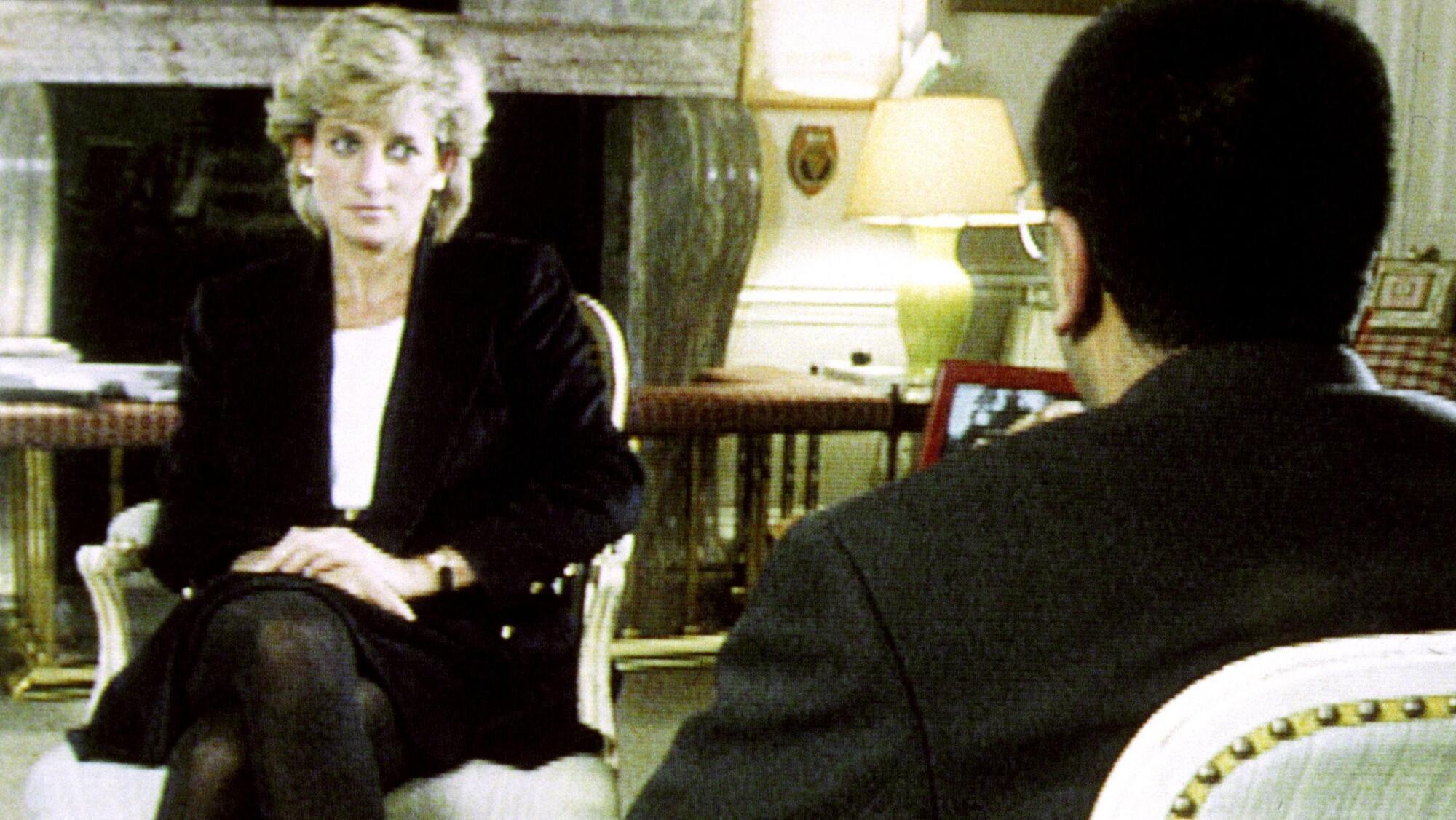
Martin Bashier’s 1995 Panorama interview with Princess Diana came under the spotlight over ethical irregularity. File picture: BBC

More than a hundred pages written by a retired British high court judge. Not, you might think, a cracking weekend read, but John Dyson’s report is exactly that. Any bestselling thriller writer would be hard put to compete with the excitement delivered by the crisp short sentences.

The report was completed in a remarkably short time, at a cost of £1.5m (€1.74m). Cheap at the price. It should be on the curriculum of every third-level media course. And on the curriculum of An Garda Síochána’s training college in Templemore. Not to mention on the curriculum of every corporate governance course. It’s that good, quite apart from being that entertaining.

The learnable skill of detecting lies

Arguably the best thing about it is Dyson’s interviews with Martin Bashir, the man who persuaded Britain’s Princess Diana to give Panorama — and him — the interview wherein she burned her house down. Dyson doesn’t do theatrical cross-examination, just good listening followed by gentle repetition of the unanswered question.

The report into the controversial Panorama interview delivered by former UK supreme court judge John Dyson should be on the curriculum of every third-level media and corporate governance course. Picture: Yui Mok/PA

It is breathtakingly effective as a technique. It clearly establishes that Bashir didn’t abide, even in the most token way, by the guidelines provided him by the BBC. But it also does something even more instructive.

The capacity to spot when people are lying is crucial to cops, HR people, and compliance managers — but relatively few of them undergo training in this learnable skill, and those who do are subjected, for the most part, to nonsense about body language, which is notoriously inadequate as an indicator of deception.

Liar language is a unique lexicon

The truth about lying is staring us all in the face, all the time, and it is to be found in real, not body, language. Liars have a unique lexicon. Record and transcribe them and they leap off the page, the contrasts between the language used by liars and truth-tellers.

Which raises the question: If liar language is so obvious, why don’t liars learn how to avoid giveaway phraseology? They don’t because they don’t need to, for the simple reason that those on the other side of the interrogation table don’t know what they’re looking for and consequently don’t recognise it when they find it.

Liar language is conditional. Always conditional. Instead of “no, I didn’t hit my spouse”, liars say “I would never have beaten my spouse” or “I would not have been the kind of person who would hit their spouse”.

So Bashir tells Dyson “I must have believed
”, “it might also have been possible
”, and so on. When Dyson asks him a simple factual question, he lays out so many conditions that, after several runs at it, this attempt to clarify happens:

Dyson: Oh, so you don’t accept that you were in breach of the guidelines?

Bashir: No, no, sorry, forgive me. What I’m saying is that the mocking up of those documents was a mistake.

Dyson: I know it was a mistake. But was it in breach of straight and fair dealing?

Bashir: Well, at the stage at which I was showing them, I believed...

Conditionality. Repetition. Charm. All to be found in that short exchange, and all the characteristics of the conman. But the fact is that this conman created a false situation that made him rich and famous more than two decades ago, so why has it taken until now for it to be nailed down?

We go halfway to meet the conman

The answer to that lies in the core rule of conmanship: It takes two to tango. Most cons work not because the conman is a genius, but because the person being conned meets them more than halfway. That is demonstrably true of the Bashir con. Diana’s brother Charles Spencer acknowledged to Dyson that he had been “groomed” by the reporter, which is true.

It would have required greater insight than Spencer had to identify what need in Diana’s brother made him so amenable to grooming. But Spencer was furious with a security guy who had worked for him and Bashir used that weakness to feed him the kind of dross the latter should have seen a mile off. But Spencer was gulled, and agreed to introduce Bashir to Diana.

During their tripartite meeting, perhaps because Bashir’s charm was now directed only at Diana, Spencer saw Bashir for what he was, afterwards warning Diana against him. His phoniness was that obvious. But, again, Diana’s need to talk on primetime TV about her corrosive marriage outweighed her brother’s warnings.

And there’s the complication that they hadn’t talked for two years after Spencer had refused his sister’s request to come live with him. 

Against that background, he suddenly rings her up about a reporter he’s prepared to vouch for, yet after one meeting at which she gets imprinted by the reporter, Spencer suddenly claims that the reporter is a dud. Diana, whose boots have been charmed off her, and whose every paranoid strand has been tweaked, ignores Spencer’s sudden reversal. Like any conman’s victim, she has a need to meet him more than halfway — a need so strong, it clouds any judgment she has.

She wasn’t alone. The BBC’s need, after the broadcast, was to protect the provenance of an interview that was making them money and parlaying their Panorama brand right across the world. So they did exactly the same.

Newspaper smelled a rat

What happened was that, speedily after the interview went out on air, the Mail on Sunday looked at it and smelled a rat. Here was a freelance reporter way down the fame rankings, and he had — without any explanation — captured the interviewee every broadcasting entity in the world was hunting.

Martin Bashir's con worked not because he is a genius, but rather because each of the people he conned — Princess Diana and her brother Charles Spencer — had some need in them that drove them to meet him halfway.  Picture: PA

More experienced and more famous Panorama presenters were moved to one side to allow this relative unknown to do an interview which turned him into a global household name. Meanwhile, the graphic artist who had mocked up the forgeries used to persuade Spencer to facilitate a meeting between his sister and Bashir, smelling the same rat, told his former bosses in the Beeb something was amiss.

The Mail’s pointed questions and the evidence from the graphic artist should have been more than enough for the organisation revered for its public service broadcasting standards to stop dead, accept that Bashir was a purposeful forger who had flagrantly breached the guidelines designed to protect those standards, and ask more questions of more people.

Blaming the whistleblowers

The BBC didn’t do that. The BBC enthusiastically engaged in all of the corporate behaviours that should be listed as banned in a notice in every boardroom. They blamed and pursued the whistleblowers. They kidded themselves they had done tough investigations — Oh My God, Martin Bashir had even CRIED during one of the meetings... They lined up mutually incompatible possibilities to accept: That a reporter who had forged documents to no purpose was still an honourable man.

They were conned as Diana was conned and for the same reason. Their needs led them to meet a conman halfway. To the detriment of truth and of a great organisation.

More in this section

Revoiced

Newsletter

Sign up to the best reads of the week from irishexaminer.com selected just for you.

Cookie Policy Privacy Policy Brand Safety FAQ Help Contact Us Terms and Conditions

© Examiner Echo Group Limited